Explore herbs bioactive compounds

  • 10547 Plants
  • |
  • 22410 Compounds
  • |
  • 460 Activities
  • |
  • 132161 Studies

Explore Herbs


Alphabet


Biological Activity

View all →

Bioactive Compounds

View all →

List of herbs bioactive compounds

Showing 433-460 out of 460 results

crocin

Crocin is a potent carotenoid pigment responsible for the vibrant yellow and orange colors found in various medicinal plants. It is highly valued for its antioxidant and neuroprotective properties and can be found in herbs such as Crocus sativus, Carica papaya, and Gardenia jasminoides.

Associated herbs: 4

Occurs naturally in

Carica papaya

Crocus sativus

Gardenia jasminoides

View all crocin herbs →

dioscin

Dioscin is a bioactive flavonoid glycoside known for its potent anti-inflammatory, antioxidant, and anticancer properties. This compound can be found in various medicinal herbs, such as Borassus flabellifer, Costus afer, and certain species of Allium.

Associated herbs: 19

Occurs naturally in

Allium sativum

Borassus flabellifer

Costus afer

View all dioscin herbs →

eriodictyol

Eriodictyol is a potent bioactive flavonoid known for its significant antioxidant, anti-inflammatory, and neuroprotective properties. It can be found in various medicinal plants, such as Afzelia africana, Anthemis altissima, and Arachniodes exilis.

Associated herbs: 39

Occurs naturally in

Afzelia africana

Anthemis altissima

Arachniodes exilis

View all eriodictyol herbs →

ginkgolide B

Ginkgolide B is a potent bioactive terpene found in medicinal plants that acts as a powerful antagonist to platelet-activating factor (PAF). This compound is a signature constituent of the Ginkgo biloba tree, where it plays a significant role in modulating blood circulation and inflammatory responses.

Associated herbs: 1

Occurs naturally in

Ginkgo biloba

View all ginkgolide B herbs →

maslinic acid

Maslinic acid is a potent pentacyclic triterpenoid known for its diverse pharmacological properties, including significant anti-inflammatory, antioxidant, and anticancer activities. This bioactive compound can be found in various medicinal plants, such as Agastache rugosa, Crataegus species, and Durio kutiejensis.

Associated herbs: 26

Occurs naturally in

Agastache rugosa

Crataegus

Durio kutejensis

View all maslinic acid herbs →

myricitrin

Myricitrin is a natural flavonoid glycoside known for its potent antioxidant, anti-inflammatory, and potential anticancer properties in various biological systems. This bioactive compound can be found in several medicinal plants, including Ampelopsis grosseedentata, Anabasis setifera, and Bauhinia microstachya.

Associated herbs: 27

Occurs naturally in

Ampelopsis grossedentata

Anabasis setifera

Bauhinia microstachya

View all myricitrin herbs →

phytosterol

Phytosterols are bioactive plant compounds structurally similar to cholesterol that play crucial roles in regulating cell membrane fluidity and exhibiting anti-inflammatory properties. These compounds can be found in various medicinal and model organisms, such as Aloe greatheadii var. davyana, Andrographis paniculata, and Arabidopsis thaliana.

Associated herbs: 33

Occurs naturally in

Aloe greatheadii var. davyana

Andrographis paniculata

Arabidopsis thaliana

View all phytosterol herbs →

picrocrocin

Picrocrocin is a bioactive carotenoid glycoside responsible for the characteristic bitter taste found in several medicinal plant species. It is commonly found in herbs such as Crocus sativus, Crocus cancellatus, and Buddleja davidii.

Associated herbs: 3

Occurs naturally in

Buddleja davidii

Crocus cancellatus

Crocus sativus

View all picrocrocin herbs →

serine

Serine is a non-essential amino acid that plays a vital role in protein synthesis, metabolic processes, and the structural integrity of cell membranes. This bioactive compound can be found in various medicinal herbs, such as Allium sativum (garlic), Allium tuberosum (chives), and Bauhinia variegata var. candida.

Associated herbs: 30

Occurs naturally in

Allium sativum

Allium tuberosum

Bauhinia variegata var. candida

View all serine herbs →

4-hydroxybenzoic acid

4-hydroxybenzoic acid is a naturally occurring phenolic compound known for its potent antioxidant, anti-inflammatory, and antimicrobial properties. This bioactive molecule can be found in various medicinal plants, including Acorus calamus var. angustatus, Anadenanthera colubrina, and Arum elongatum.

Associated herbs: 37

Occurs naturally in

Acorus calamus var. angustatus

Anadenanthera colubrina

Arum elongatum

View all 4-hydroxybenzoic acid herbs →

GSH

Glutathione (GSH) is a potent endogenous antioxidant that plays a critical role in neutralizing free radicals and protecting cells from oxidative stress. This bioactive compound is synthesized within various plant species, including medicinal and model organisms such as Allium cepa (onion), Allium sativum (garlic), and Arabidopsis thaliana.

Associated herbs: 30

Occurs naturally in

Allium cepa

Allium sativum

Arabidopsis thaliana

View all GSH herbs →

Rb2

Rb2 is a specific type of ginsenoside, a bioactive saponin known for its potential neuroprotective and anti-inflammatory properties. This compound is primarily found in medicinal herbs of the Panax genus, such as Panax ginseng, Panax notoginseng, and other related species.

Associated herbs: 4

Occurs naturally in

Panax

Panax ginseng

Panax notoginseng

View all Rb2 herbs →

Thymol

Thymol is a potent monoterpene phenol known for its significant antimicrobial, antioxidant, and antifungal properties. This bioactive compound can be found in various medicinal herbs, including species such as Achillea wilhelmssii, Adenosmum buchneroides, and Allium hooshidaryae.

Associated herbs: 19

Occurs naturally in

Ajuga iva

Aloe barbadensis

Halimium voldii

View all Thymol herbs →

cichoric acid

Chicoric acid is a potent bioactive polyphenol known for its significant antioxidant, anti-inflammatory, and hepatoprotective properties. This compound is commonly found in various medicinal herbs, such as Cichorium intybus, Crepis incana, and Dracocephalum palmatum.

Associated herbs: 14

Occurs naturally in

Cichorium intybus

Crepis incana

Dracocephalum palmatum

View all cichoric acid herbs →

compound 1

Since you did not provide the specific name of "Compound 1," I have used a placeholder below. Please insert the name of your compound into the bracketed space. [Compound 1] is a bioactive constituent found in various medicinal herbs that contributes to their therapeutic efficacy through specific pharmacological actions. For example, this compound is notably present in plants such as Andrographis paniculata, Areca catechu, and Aspidopterys obcordata.

Associated herbs: 48

Occurs naturally in

Andrographis paniculata

Areca catechu

Aspidopterys obcordata

View all compound 1 herbs →

costunolide

Costunolide is a sesquiterpene lactone found in various medicinal plants, recognized for its diverse pharmacological activities including anti-inflammatory, antimicrobial, and anti-tumor properties. This bioactive compound is primarily present in herbs such as Saussurea costus (formerly Aucklandia costus), Aucklandia lappa, and Cannabis sativa.

Associated herbs: 18

Occurs naturally in

Aucklandia costus

Aucklandia lappa

Cannabis sativa

View all costunolide herbs →

dopamine

Dopamine is a vital neurotransmitter and bioactive compound that plays a key role in regulating mood, motivation, and motor control within the central nervous system. Certain medicinal herbs, such as Andrographis paniculata, Arachis hypogaea, and Bacopa monnieri, contain compounds that can influence or support dopamine pathways to enhance cognitive function and emotional balance.

Associated herbs: 29

Occurs naturally in

Andrographis paniculata

Arachis hypogaea

Bacopa monnieri

View all dopamine herbs →

gastrodin

Gastrodiin is a bioactive phenolic glycoside primarily recognized for its neuroprotective properties and its ability to enhance cognitive function. This compound is found in various medicinal herbs, including Anoectochilus formosanus, Cremastra appendiculata, and Datura stramonium.

Associated herbs: 8

Occurs naturally in

Anoectochilus formosanus

Cremastra appendiculata

Datura stramonium

View all gastrodin herbs →

gibberellin

Gibberellins are a class of plant hormones that play a crucial role in regulating various growth processes, such as seed germination, stem elongation, and flowering. These bioactive compounds can be found in various botanical species, including medicinal and model plants like Andrographis paniculata, Aloe vera, and Arabidopsis thaliana.

Associated herbs: 26

Occurs naturally in

Aloe vera

Andrographis paniculata

Arabidopsis thaliana

View all gibberellin herbs →

isoimperatorin

Isoimperatorin is a natural coumarin derivative found in various medicinal plants that exhibits diverse pharmacological activities, including anti-inflammatory, anti-tumor, and antioxidant properties. This bioactive compound is commonly extracted from herbs such as Acconitum laciniaatum, Angelica archangelica, and Angelica dahurica.

Associated herbs: 18

Occurs naturally in

Aconitum laciniatum

Angelica archangelica

Angelica dahurica

View all isoimperatorin herbs →

ketones

Ketones are a diverse class of bioactive organic compounds characterized by a carbonyl group bonded to two carbon atoms, often playing critical roles in metabolic processes and pharmacological activities. Many medicinal herbs contain these compounds, with examples found in species such as Allamanda cathartica, Artemisia argyi, and Arundina graminifolia.

Associated herbs: 33

Occurs naturally in

Allamanda cathartica

Artemisia argyi

Arundina graminifolia

View all ketones herbs →

linarin

Linarin is a bioactive flavone glycoside known for its potential pharmacological properties, including antioxidant and anti-inflammatory activities. This compound can be found in various medicinal herbs such as Artemisia capillaris, Artemisia rupestris, and Bombax malabaricum.

Associated herbs: 31

Occurs naturally in

Artemisia capillaris

Artemisia rupestris

Bombax malabaricum

View all linarin herbs →

madecassic acid

Madecassic acid is a bioactive triterpene found in certain medicinal plants that is primarily recognized for its potent anti-inflammatory and wound-healing properties. It is a key active component found in herbs such as Centella asiatica, commonly known as Gotu Kola.

Associated herbs: 1

Occurs naturally in

Centella asiatica

View all madecassic acid herbs →

nerolidol

Nerolidol is a naturally occurring sesquiterpene alcohol renowned for its diverse pharmacological properties, including potent anti-inflammatory, antimicrobial, and sedative effects. This bioactive compound is found in various medicinal herbs, such as Acorus calamus, Aframomum pruinosum, and Aquilaria sinensis.

Associated herbs: 32

Occurs naturally in

Acorus calamus

Aframomum pruinosum

Amomum tsao-ko

View all nerolidol herbs →

patchouli alcohol

Patchouli alcohol is a sesquiterpene compound known for its distinct earthy aroma and significant therapeutic properties, including anti-inflammatory and antimicrobial activities. This bioactive constituent can be found in various medicinal herbs such as Pogostemon cablin, Asarum insigne, and Nardostachys chinensis.

Associated herbs: 4

Occurs naturally in

Asarum insigne

Nardostachys chinensis

Pogostemon cablin

View all patchouli alcohol herbs →

procyanidins

Procyanidins are a class of polyphenolic compounds known for their potent antioxidant and anti-inflammatory properties, which help protect cells from oxidative damage. These bioactive molecules are found in various medicinal plants, including species such as Acacia albida, Acacia laeta, and Acacia saligna.

Associated herbs: 44

Occurs naturally in

Acacia albida

Acacia laeta

Acacia saligna

View all procyanidins herbs →

terpene

Terpenes are a diverse class of organic compounds produced by plants that often serve as key bioactive agents with significant anti-inflammatory, antimicrobial, and antioxidant properties. These compounds are found in various medicinal herbs, such as Achillea millefolium, Artemisia annua, and Calligonum polygonoides.

Associated herbs: 23

Occurs naturally in

Achillea millefolium

Artemisia annua

Calligonum polygonoides

View all terpene herbs →

triterpenoid

Triterpenoids are a diverse class of bioactive compounds derived from isoprene units that play critical roles in plant defense and exhibit significant pharmacological activities, such as anti-inflammatory and anticancer effects, in humans. These compounds are found in various medicinal herbs, including Artemisia annua, Brucea asiatica (often associated with Brucea chinensis or Brucea javanica), and Bupleurum chinense.

Associated herbs: 34

Occurs naturally in

Artemisia annua

Bruguiera gymnorhiza

Bupleurum chinense

View all triterpenoid herbs →

(E)-caryophyllene

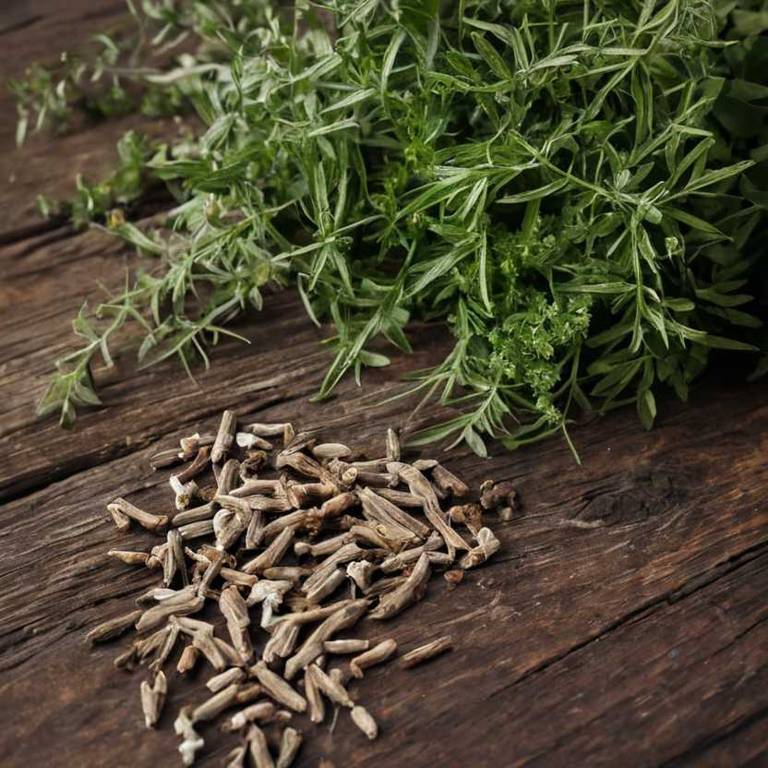
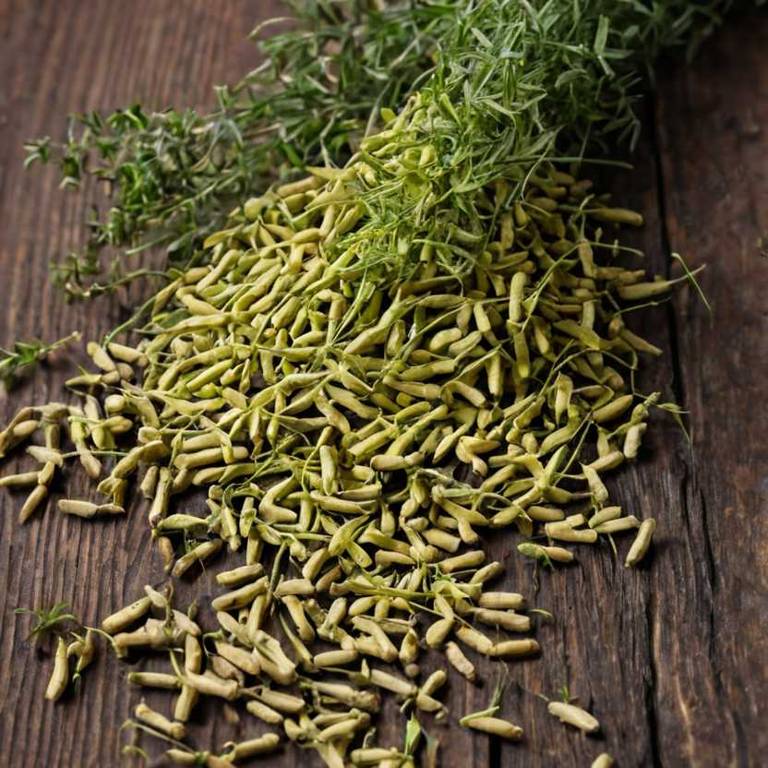
(E)-caryophyllene is a prominent sesquiterpene known for its significant anti-inflammatory, antioxidant, and analgesic properties in medicinal applications. This bioactive compound can be found in various medicinal herbs, including Aegle marmelos, Allium eriophyllum, and Campomanesia phaea.
Associated herbs: 35

Occurs naturally in

Aegle marmelos

Allium eriophyllum

Campomanesia phaea

View all (E)-caryophyllene herbs →

20-hydroxyecdysone

20-hydroxyecdysone is a potent bioactive steroid hormone found in various medicinal herbs that plays a significant role in stimulating metabolic processes and enhancing physical performance. This compound is notably present in several plant species, such as Achyranthis japonicae, Ajuga bracteosa, and Ajuga iva.

Associated herbs: 30

Occurs naturally in

Achyranthes japonica

Ajuga bracteosa

Ajuga iva

View all 20-hydroxyecdysone herbs →

Apigenin

Apiin is a bioactive flavone known for its potent antioxidant, anti-inflammatory, and neuroprotective properties in medicinal herbs. It can be found in various plant species, including Abrus precatorius, Acalypha wilkesiana, and Achillea atraata.

Associated herbs: 28

Occurs naturally in

Achillea millefolium

Albizia adianthifolia

Alcea rosea

View all Apigenin herbs →

Catechin

Catechin is a potent bioactive polyphenol known for its significant antioxidant, anti-inflammatory, and cardioprotective properties. This compound is found in various medicinal plants, including Abelmoschus esculentus, Acacia catechu, and Acacia hydaspica.

Associated herbs: 33

Occurs naturally in

Bergenia pacumbis

Beta vulgaris

Camellia sinensis

View all Catechin herbs →

K+

Potassium ($\text{K}^+$) is a vital mineral electrolyte that plays a crucial role in maintaining cellular osmotic pressure, nerve impulse transmission, and muscle function within medicinal plants. This essential bioactive component can be found in various botanical sources, such as Achras sapota, Azadirachta indica, and Brassica napus.

Associated herbs: 21

Occurs naturally in

Achras sapota

Azadirachta indica

Brassica napus

View all K+ herbs →

NAA

NAA (Naphthalene acetic acid) is a bioactive compound often studied for its role as a synthetic auxin that regulates plant growth and demonstrates various pharmacological activities. This compound can be found within the chemical profiles of medicinal herbs such as Aerva lanata, Ajuga lupulina, and Anoectochilus roxburgii.

Associated herbs: 42

Occurs naturally in

Aerva lanata

Ajuga lupulina

Anoectochilus roxburghii

View all NAA herbs →

Triptolide

Triptolide is a potent diterpenoid triepoxide found in medicinal herbs that exhibits significant anti-inflammatory, immunosuppressive, and antitumor activities. It is most notably derived from plants in the genus Tripterygium, such as Tripterygium wilfordii (also known as Tripterygium hypoglaucum or Tripterygium wilfordii Hook. f.).

Associated herbs: 6

Occurs naturally in

Tripterygium wilfordii

Tripterygium wilfordii hook

Tripterygium wilfordii hook f

View all Triptolide herbs →

arecoline

Arecoline is a psychoactive alkaloid known for its stimulant effects on the central nervous system and its ability to influence muscular contractions. This bioactive compound is primarily found in medicinal plants such as Areca catechu (betel nut) and Piper betle (betel leaf).

Associated herbs: 2

Occurs naturally in

Areca catechu

Piper betle

View all arecoline herbs →

bicyclogermacrene

Bicyclogermacrene is a bioactive sesquiterpene characterized by its unique bicyclic structure, which often contributes to the diverse pharmacological activities of medicinal plants. This compound can be found in various botanical species, including Ageratum fastigiatum, Annona verpertorum, and Artemisia pallens.

Associated herbs: 39

Occurs naturally in

Ageratum fastigiatum

Annona vepretorum

Artemisia pallens

View all bicyclogermacrene herbs →

citronellal

Citronellal is a key monoterpene alcohol found in many essential oils, known for its potent antimicrobial, insecticidal, and anti-inflammatory properties. This bioactive compound is prominently present in medicinal herbs such as Alpinia galanga, Citrus hystrix, and Cupressus macrocarpa.

Associated herbs: 12

Occurs naturally in

Alpinia galanga

Citrus hystrix

Cupressus macrocarpa

View all citronellal herbs →

cycloartenol

Cycloartenol is a pentacyclic triterpenoid that serves as a vital precursor in the biosynthesis of phytosterols and exhibits significant pharmacological activities, including anti-inflammatory and anticancer properties. This bioactive compound can be found in various medicinal plants, such as Artemisia argyi, Bauhinia forficata, and Bergia ammannioides.

Associated herbs: 24

Occurs naturally in

Artemisia argyi

Bauhinia forficata

Bergia ammannioides

View all cycloartenol herbs →

daucosterol

Daucosterol is a bioactive sterol found in various medicinal plants that is studied for its potential pharmacological properties, including anti-inflammatory and antioxidant activities. This compound can be identified in several herbal species, such as Acorus calamus var. angustatus, Acropiltum repens, and Agastache rugosa.

Associated herbs: 175

Occurs naturally in

Acorus calamus var. angustatus

Acroptilon repens

Agastache rugosa

View all daucosterol herbs →

essential amino acids

Essential amino acids are vital bioactive compounds that the human body cannot synthesize on its own, making them necessary components for protein synthesis and overall metabolic function. These fundamental building blocks are found in various medicinal plants, including Abelmoschus esculentus (okra), Adenopus breviflorus, and Cannabis sativa.

Associated herbs: 24

Occurs naturally in

Abelmoschus esculentus

Adenopus breviflorus

Cannabis sativa

View all essential amino acids herbs →

estragole

Estragole is a natural bioactive compound found in various medicinal herbs that is primarily known for its distinct aromatic properties and potential therapeutic effects. It is a key constituent in plants such as Acorus macrospadiceus, Agastache foeniculum, and Agastache mexicana.

Associated herbs: 20

Occurs naturally in

Acorus macrospadiceus

Agastache foeniculum

Agastache mexicana

View all estragole herbs →

furanocoumarins

Furanocoumarins are a class of bioactive secondary metabolites found in various medicinal plants that are known for their potent phototoxic and pharmacological properties. These compounds are commonly present in herbs such as Ammi majus, Angelica, and Angelica archangelica.

Associated herbs: 28

Occurs naturally in

Ammi majus

Angelica

Angelica archangelica

View all furanocoumarins herbs →

matrine

Matrine is a bioactive quinolizidine alkaloid known for its diverse pharmacological activities, including anti-inflammatory, antiviral, and antitumor properties. This compound can be found in various medicinal herbs such as Euchresta tubulosa, Rehmannia glutinosa, and Scutellaria baicalensis.

Associated herbs: 8

Occurs naturally in

Euchresta tubulosa

Rehmannia glutinosa

Scutellaria baicalensis

View all matrine herbs →

monoterpene

Monoterpenes are a class of small, volatile organic compounds composed of ten carbon atoms that often provide medicinal herbs with their distinct aromatic scents and therapeutic properties. These bioactive molecules are commonly found in various plants, such as Achillea millefolium, Artemisia asiatica, and Artemisia tournefortiana.

Associated herbs: 25

Occurs naturally in

Achillea millefolium

Artemisia asiatica

Artemisia tournefortiana

View all monoterpene herbs →

saikosaponins

Saikosaponins are a group of bioactive triterpenoid saponins known for their potent anti-inflammatory, analgesic, and hepatoprotective properties. These compounds are primarily found in herbs of the Bupleurum genus, such as Bupleurum chinense and Bupleurum falcatum.

Associated herbs: 11

Occurs naturally in

Bupleurum

Bupleurum chinense

Bupleurum falcatum

View all saikosaponins herbs →

sinapic acid

Sinapic acid is a potent bioactive phenolic compound found in various medicinal herbs, known for its significant antioxidant, anti-inflammatory, and antimicrobial properties. This compound can be identified in several botanical species, including Adenanthera pavonina, Adenia viridiflora, and Anastatica hierochuntica.

Associated herbs: 37

Occurs naturally in

Adenanthera pavonina

Adenia viridiflora

Anastatica hierochuntica

View all sinapic acid herbs →

trypsin inhibitor

Trypsin inhibitors are bioactive compounds found in various plants that function by binding to and neutralizing the enzyme trypsin, thereby hindering protein digestion. These compounds are present in a diverse range of botanical species, including Acacia confusata, Adansonia digitata, and Arabidopsis thaliana.

Associated herbs: 33

Occurs naturally in

Acacia confusa

Adansonia digitata

Arabidopsis thaliana

View all trypsin inhibitor herbs →