Zygophyllum scabrum
Zygophyllum scabrum · Accepted scientific name
Scientific literature: Very Sparse (6 studies) · ★☆☆☆☆
, scientifically known as Zygophyllum scabrum, is a resilient succulent shrub native to the arid regions of Southern Africa. Often called the "scabrous caltrop," this medicinal plant is valued in traditional healing for its ability to treat various ailments, including skin irritations and digestive issues, thanks to its unique properties.
- Family
- Zygophyllaceae
- Native range
- Africa
- Parts used
- Not available
- Common names
- Not available
- Scientific synonyms
- Fagonia Taeckholmiana · Fagonia Sinaica Var. Pseudocretica · 16 more
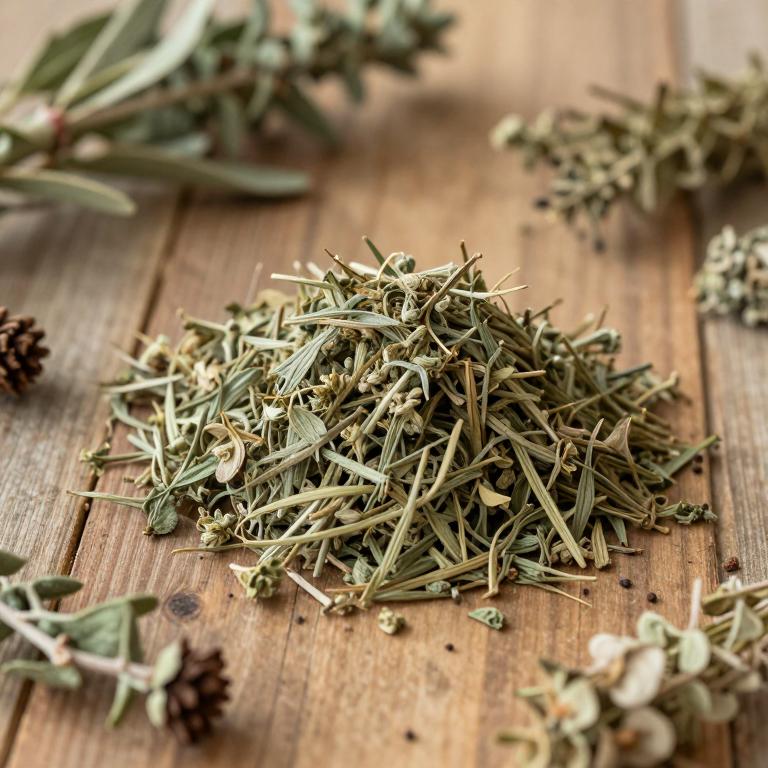
Names and Synonyms
Scientific Names
Accepted name
Zygophyllum scabrumSynonyms
- Fagonia taeckholmiana
- Fagonia sinaica var. pseudocretica
- Fagonia scabra
- Fagonia sinaica
- Fagonia sinaica var. albiflora
- Fagonia sinaica var. kahirina
- Fagonia sinaica var. longipes
- Fagonia kahirina
- Fagonia kahirina var. longipes
- Fagonia kahirina var. pedunculata
- Fagonia kahirina var. pseudocretica
- Fagonia microphylla
- Fagonia longipedicellata
- Fagonia fruticans
- Fagonia fruticans var. decumbens
- Fagonia getula
- Fagonia albiflora
- Fagonia sinaica var. microcarpa
Sources: Wikidata
Taxonomical Classification
This plant belongs to the kingdom Plantae within the phylum Streptophyta and is classified under the class Equisetopsida. It is further organized into the subclass Magnoliidae and the order Zygophyllales. Finally, it is a member of the family Zygophyllaceae and falls under the genus Zygophyllum.
| Rank | Classification |
|---|---|
| Kingdom | Plantae |
| Phylum | Streptophyta |
| Class | Equisetopsida |
| Subclass | Magnoliidae |
| Order | Zygophyllales |
| Family | Zygophyllaceae |
| Genus | Zygophyllum |
Sources: The World Checklist of Vascular Plants (WCVP)
Distribution
This plant is found across several distinct regions within Northern Africa. Its distribution includes the expansive landscapes of Algeria and Egypt. Furthermore, it can be located throughout the territory of Libya. The species also inhabits parts of Morocco and Tunisia. Consequently, its presence is widespread across these five North African nations.
| Region | Area |
|---|---|
| Northern Africa | Algeria |
| Northern Africa | Egypt |
| Northern Africa | Libya |
| Northern Africa | Morocco |
| Northern Africa | Tunisia |
| Western Asia | Palestine |
| Western Asia | Sinai |
Sources: The World Checklist of Vascular Plants (WCVP)
Botanical Identification
Morphology
The morphology of Zygophyllum scabrum is characterized by its status as a woody, independent organism that lacks parasitic tendencies, functioning entirely as a non-obligatory, independent species. It exhibits a growth form that transitions between a shrub and a subshrub, reflecting a structural complexity common to its genus. While many plants in similar ecological niches may occupy aquatic or semiaquatic environments, this species is strictly terrestrial in its habitat preference. Its physical structure is defined by a woody constitution, providing the necessary rigidity to support its subshrub-like habit within its dry, terrestrial environment.
- Aquatic :
- terrestrial
- Growth form :
- shrub
- Growth form :
- subshrub
- Parasite :
- independent
- Woodiness :
- woody
Sources: Global Inventory of Floras and Traits (GIFT)
Chemicals
Zygophyllum scabrum has 6 reported phytochemicals identified across 0 scientific publications and several other databases. The most consistently reported chemicals include Apigenin 7-O-glucoside, Kaempferol 3,7-di-O-rhamnoside, Kaempferol 3-O-glucoside, Quercetin 3-O-glucoside, apigenin.
| Chemical | Supporting sources | Consensus |
|---|---|---|
| Apigenin 7-O-glucoside | 1 supporting sources | ★☆☆☆☆ |
| Kaempferol 3,7-di-O-rhamnoside | 1 supporting sources | ★☆☆☆☆ |
| Kaempferol 3-O-glucoside | 1 supporting sources | ★☆☆☆☆ |
| Quercetin 3-O-glucoside | 1 supporting sources | ★☆☆☆☆ |
| apigenin | 1 supporting sources | ★☆☆☆☆ |
| quercetin | 1 supporting sources | ★☆☆☆☆ |
Apigenin 7-O-glucoside
- Carbohydrate research
Kaempferol 3,7-di-O-rhamnoside
- Carbohydrate research
Kaempferol 3-O-glucoside
- Carbohydrate research
Quercetin 3-O-glucoside
- Carbohydrate research
apigenin
- Carbohydrate research
quercetin
- Carbohydrate research
Preparations
Zygophyllum scabrum has 1 reported preparations identified across 0 scientific publications and several other databases. The most consistently reported preparations include methanolic extract.
| Preparation | Supporting sources | Consensus |
|---|---|---|
| Methanolic extract | 1 supporting sources | ★☆☆☆☆ |
Methanolic extract
- Carbohydrate research