Zygophyllum propinquum
Zygophyllum propinquum · Accepted scientific name
Scientific literature: Very Sparse (3 studies) · ★☆☆☆☆
, scientifically known as Zygophyllum propiqnuum, is a resilient succulent native to arid African landscapes. Renowned for its therapeutic potential, this plant is traditionally utilized in various herbal remedies. Its unique chemical composition offers fascinating insights into natural medicine, making it a subject of significant ethnobotanical interest and study.
- Family
- Zygophyllaceae
- Native range
- Africa
- Parts used
- Not available
- Common names
- Not available
- Scientific synonyms
- Tetraena Propinqua
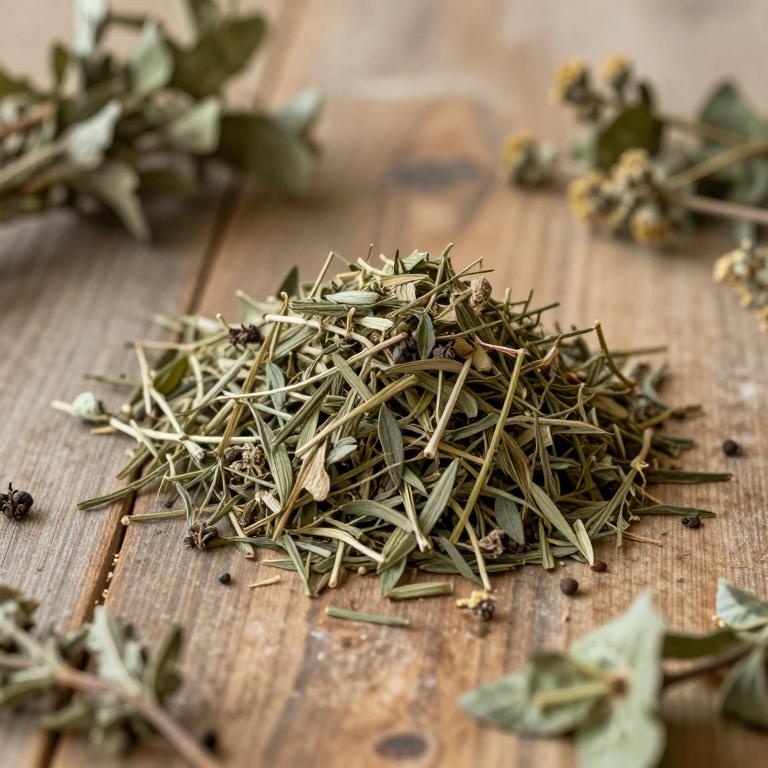
Names and Synonyms
Scientific Names
Accepted name
Zygophyllum propinquumSynonyms
- Tetraena propinqua
Sources: Wikidata
Taxonomical Classification
This plant belongs to the kingdom Plantae and is classified under the phylum Streptophyta and the class Equisetopsida. Within the subclass Magnoliidae, it is organized under the order Zygophyllales and the family Zygophyllaceae. Finally, it is identified by its specific genus, Zygophyllum.
| Rank | Classification |
|---|---|
| Kingdom | Plantae |
| Phylum | Streptophyta |
| Class | Equisetopsida |
| Subclass | Magnoliidae |
| Order | Zygophyllales |
| Family | Zygophyllaceae |
| Genus | Zygophyllum |
Sources: The World Checklist of Vascular Plants (WCVP)
Distribution
This plant exhibits a specific geographical distribution across parts of Northern Africa and Western Asia. In Northern Africa, its presence is recorded within the borders of Egypt. Moving into Western Asia, the species can be found spanning through Afghanistan and Iran. It also inhabits significant portions of Iraq within this same region. Finally, the plant extends its range across the Levant, specifically covering the Lebanon-Syria area.
| Region | Area |
|---|---|
| Northern Africa | Egypt |
| Western Asia | Afghanistan |
| Western Asia | Iran |
| Western Asia | Iraq |
| Western Asia | Lebanon-Syria |
| Western Asia | Palestine |
| Western Asia | Sinai |
| Arabian Peninsula | Kuwait |
| Arabian Peninsula | Saudi Arabia |
| Indian Subcontinent | Pakistan |
Sources: The World Checklist of Vascular Plants (WCVP)
Botanical Identification
Life history
The life history of Zygophyllum propiquinnum is characterized by its status as a perennial organism, allowing it to persist through multiple growing seasons within its ecological niche. In terms of its structural development and survival strategy, the plant functions as a therophyte, completing its ephemeral vegetative growth cycles and relying on specific survival mechanisms to endure environmental fluctuations. This classification as a therophyte, alongside its designation within the life form categories of therophyte, indicates a life cycle focused on rapid seasonal development and seed-based persistence to navigate its specific habitat requirements.
- Life form :
- therophyte
- Lifecycle :
- perennial
Morphology
The morphology of Zygophyllum propiquinnum is characterized by its growth habit as a terrestrial organism, lacking any epiphytic tendencies. Unlike many specialized species, it does not function as a parasite, maintaining an independent life cycle where it is neither an obligatory nor a facultative parasite, but rather a fully independent plant. Its structural development is typical of its genus, often featuring woody or semi-woody stems and specialized leaf structures adapted to its specific environmental niche, all while remaining firmly rooted in the soil as a terrestrial species.
- Epiphyte :
- terrestrial
- Parasite :
- independent
Sources: Global Inventory of Floras and Traits (GIFT)
Chemicals
Zygophyllum propinquum has 2 reported phytochemicals identified across 0 scientific publications and several other databases. The most consistently reported chemicals include Flavonoids, SAPONIN.
| Chemical | Supporting sources | Consensus |
|---|---|---|
| Flavonoids | 1 supporting sources | ★☆☆☆☆ |
| SAPONIN | 1 supporting sources | ★☆☆☆☆ |
Flavonoids
- Life (Basel, Switzerland)
SAPONIN
- Life (Basel, Switzerland)