Zygophyllum creticum
Zygophyllum creticum · Accepted scientific name
Scientific literature: Very Sparse (44 studies) · ★☆☆☆☆
scientifically known as Zygophyllum creticum, is a resilient succulent shrub native to arid Mediterranean regions. Renowned for its ability to thrive in harsh, dry environments, this plant holds significant ethnobotanical value. Traditional medicine often utilizes its parts for their unique bioactive properties, offering potential therapeutic benefits in various applications.
- Family
- Zygophyllaceae
- Native range
- Europe
- Parts used
- Leaf
- Common names
- Not available
- Scientific synonyms
- Fagonia Hispanica · Fagonia Desertorum · 6 more
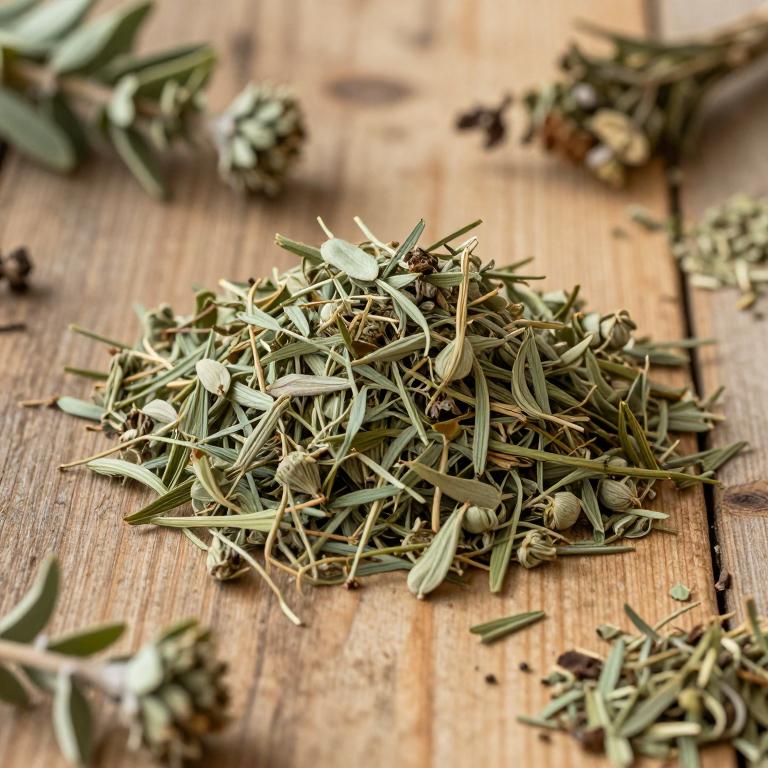
Names and Synonyms
Scientific Names
Accepted name
Zygophyllum creticumSynonyms
- Fagonia hispanica
- Fagonia desertorum
- Fagonia forskalii
- Fagonia elongata
- Fagonia erecta
- Fagonia cretica
- Fagonia deflexa
- Fagonia virens
Sources: Wikidata
Taxonomical Classification
This plant belongs to the kingdom Plantae and is classified under the phylum Streptophyta within the class Equisetopsida. As a member of the subclass Magnoliidae and the order Zygophyllales, it is further categorized into the family Zygophyllaceae. Finally, it is identified by the genus Zygophyllum.
| Rank | Classification |
|---|---|
| Kingdom | Plantae |
| Phylum | Streptophyta |
| Class | Equisetopsida |
| Subclass | Magnoliidae |
| Order | Zygophyllales |
| Family | Zygophyllaceae |
| Genus | Zygophyllum |
Sources: The World Checklist of Vascular Plants (WCVP)
Distribution
This plant exhibits a wide distribution across several regions of the Mediterranean basin. In Southwestern Europe, it can be found throughout Spain and Portugal. It is also present within the Baleares archipelago of the same region. Moving toward Southeastern Europe, the species is documented in Greece. Finally, its range extends to include parts of Italy.
| Region | Area |
|---|---|
| Southwestern Europe | Baleares |
| Southwestern Europe | Portugal |
| Southwestern Europe | Spain |
| Southeastern Europe | Greece |
| Southeastern Europe | Italy |
| Southeastern Europe | Kriti |
| Southeastern Europe | Sicilia |
| Northern Africa | Algeria |
| Northern Africa | Egypt |
| Northern Africa | Libya |
Sources: The World Checklist of Vascular Plants (WCVP)
Botanical Identification
Ecology
The ecology of Zygophyllum creticum is characterized by its adaptation to arid and semi-arid Mediterranean environments, where it typically thrives in rocky substrates, sandy soils, and disturbed habitats such as coastal dunes or dry shrublands. As a resilient perennial, it has evolved to withstand high solar radiation and seasonal water scarcity through specialized physiological mechanisms. Regarding its survival strategies, the plant exhibits distinct defensive traits; it possesses a "yes" for chemical or physical defense mechanisms, often utilizing specialized structures or secondary metabolites to deter herbivory in nutrient-poor landscapes. This ability to implement defense strategies is a critical component of its niche, allowing it to persist in ecosystems where grazing pressure from insects and mammals is prevalent. Its distribution is closely tied to specific microclimates that provide the necessary thermal stability and intermittent moisture required for its reproductive cycles.
- Defense :
- yes
Life history
The life history of Zygophyllum creticum is characterized by a perennial lifecycle, allowing the plant to persist through multiple growing seasons within its natural habitat. Structurally, it exhibits a chamaphyte life form, meaning its perennating buds are located close to the soil surface, typically just above the ground level. This combination of a long-lived perennial nature and a low-growing growth habit enables the species to adapt to its specific environmental conditions, maintaining stability and regrowth capabilities over time.
- Life form :
- chamaephyte
- Lifecycle :
- perennial
Morphology
The morphology of Zygophyllum creticum is characterized by a growth form that functions as both a herb and a subshrub, exhibiting a non-woody texture throughout its structure. This plant is primarily terrestrial in its habitat, though it can exist in semiaquatic or aquatic environments. Its shoots are oriented in a prostrate manner, spreading along the ground rather than growing upright, and while it is classified as self-supporting rather than a vine or liana, it maintains a stable physical structure. The shoots typically reach a length ranging from a minimum of 10 cm to a maximum of 40 cm. Furthermore, the plant is an independent organism, meaning it does not function as an obligatory or facultative parasite.
- Aquatic :
- terrestrial
- Climber :
- self-supporting
- Growth form :
- herb
- Growth form :
- subshrub
- Parasite :
- independent
- Shoot length max:
- 40 cm
- Shoot length min:
- 10 cm
- Shoot orientation :
- prostrate
- Woodiness :
- non-woody
Physiology
The physiology of Zygophyllum creticum is characterized by a specialized morphological structure and a specific metabolic strategy adapted to its environment. The plant utilizes a C3 photosynthetic pathway, which dictates its carbon fixation processes and water-use efficiency. Its foliage is morphologically defined by linear leaf forms that are arranged in an opposite pattern along the stem. The dimensions of these leaves are relatively small, with a leaf length ranging from a minimum of 0.5 cm to a maximum of 1.5 cm. Additionally, the leaf width is quite narrow, varying from a minimum of 0.1 cm to a maximum of 0.4 cm, contributing to its overall physiological profile.
- Leaf arrangement :
- opposite
- Leaf form :
- linear
- Leaf length max:
- 1.5 cm
- Leaf length min:
- 0.5 cm
- Leaf width max:
- 0.4 cm
- Leaf width min:
- 0.1 cm
- Photosynthetic pathway :
- C3
Reproduction
The reproduction of Zygophyllum creticum is characterized by a distinct flowering period that typically commences in March and concludes in June, though the timing can be variable. During this reproductive phase, the plant produces violet-colored flowers that measure between 0.8 cm and 0.95 cm in length. Following successful pollination, the plant develops fruits that range in length from 0.7 cm to 0.9 cm and in width from 0.6 cm to 0.8 cm. The resulting seeds are quite small, with a consistent mass of approximately 0.00529 g. These seeds exhibit specific morphological dimensions, featuring a length of between 4 mm and 5 mm and a width ranging from 3 mm to 4 mm.
- Flower colour :
- violet
- Flower length max:
- 0.95 cm
- Flower length min:
- 0.8 cm
- Flowering time :
- Mar
- Flowering time :
- Jun
- Fruit length max:
- 0.9 cm
- Fruit length min:
- 0.7 cm
- Fruit width max:
- 0.8 cm
- Fruit width min:
- 0.6 cm
- Seed length max:
- 5 mm
- Seed length min:
- 4 mm
- Seed mass mean:
- 0.00529 g
- Seed width max:
- 4 mm
- Seed width min:
- 3 mm
Sources: Global Inventory of Floras and Traits (GIFT)
Plant Parts
Zygophyllum creticum has 1 reported plant parts identified across 1 scientific publications and several other databases that are studied for medicinal purposes. The most consistently reported plant part include leaf.
| Plant part | Supporting sources | Consensus |
|---|---|---|
| Leaf | 1 supporting sources | ★☆☆☆☆ |
Leaf
- Indian journal of medical sciences
Chemicals
Zygophyllum creticum has 18 reported phytochemicals identified across 1 scientific publications and several other databases. The most consistently reported chemicals include Betulin, CATECHIN, D-Pinitol, FLAVANONE, Flavonoids.
| Chemical | Supporting sources | Consensus |
|---|---|---|
| Betulin | 1 supporting sources | ★☆☆☆☆ |
| CATECHIN | 1 supporting sources | ★☆☆☆☆ |
| D-Pinitol | 1 supporting sources | ★☆☆☆☆ |
| FLAVANONE | 1 supporting sources | ★☆☆☆☆ |
| Flavonoids | 1 supporting sources | ★☆☆☆☆ |
| Herbacetin 3,8-dimethyl ether | 1 supporting sources | ★☆☆☆☆ |
| Isorhamnetin | 1 supporting sources | ★☆☆☆☆ |
| Isorhamnetin-3-O-rutinoside | 1 supporting sources | ★☆☆☆☆ |
| Kaempferol-3-O-rutinoside | 1 supporting sources | ★☆☆☆☆ |
| Lupeol | 1 supporting sources | ★☆☆☆☆ |
Betulin
- Dr. Duke
CATECHIN
- Microscopy research and technique
D-Pinitol
- Microscopy research and technique
FLAVANONE
- Microscopy research and technique
Flavonoids
- Microscopy research and technique
Herbacetin 3,8-dimethyl ether
- Microscopy research and technique
Isorhamnetin
- Microscopy research and technique
Isorhamnetin-3-O-rutinoside
- Planta medica
Kaempferol-3-O-rutinoside
- Planta medica
Lupeol
- Microscopy research and technique
Activities
Zygophyllum creticum has 18 reported activities identified across 1 scientific publications and several other databases. The most consistently reported activities include Anticancer, Antioxidant, Cytotoxic, AntiHIV, Antibacterial.
| Activity | Supporting sources | Consensus |
|---|---|---|
| Anticancer | 4 supporting sources | ★★☆☆☆ |
| Antioxidant | 2 supporting sources | ★☆☆☆☆ |
| Cytotoxic | 2 supporting sources | ★☆☆☆☆ |
| AntiHIV | 1 supporting sources | ★☆☆☆☆ |
| Antibacterial | 1 supporting sources | ★☆☆☆☆ |
| Anticarcinomic | 1 supporting sources | ★☆☆☆☆ |
| Anticoagulant | 1 supporting sources | ★☆☆☆☆ |
| Antifeedant | 1 supporting sources | ★☆☆☆☆ |
| Antiflu | 1 supporting sources | ★☆☆☆☆ |
| Antiinflammatory | 1 supporting sources | ★☆☆☆☆ |
Anticancer
- Microscopy research and technique
- Journal of ethnopharmacology
- Zeitschrift fur Naturforschung. C, Journal of biosciences
- Scientific reports
Antioxidant
- Phytomedicine : international journal of phytotherapy and phytopharmacology
- Microscopy research and technique
Cytotoxic
- Dr. Duke
- Microscopy research and technique
AntiHIV
- Dr. Duke
Antibacterial
- Zeitschrift fur Naturforschung. C, Journal of biosciences
Anticarcinomic
- Dr. Duke
Anticoagulant
- Evidence-based complementary and alternative medicine : eCAM
Antifeedant
- Dr. Duke
Antiflu
- Dr. Duke
Antiinflammatory
- Dr. Duke
Preparations
Zygophyllum creticum has 11 reported preparations identified across 1 scientific publications and several other databases. The most consistently reported preparations include crude extracts, Ethanol extracts, Fagonia cretica extract (FCE), Fagonia cretica mediated biosynthesized selenium nanoparticles, FcSeNPs.
| Preparation | Supporting sources | Consensus |
|---|---|---|
| Crude extracts | 2 supporting sources | ★☆☆☆☆ |
| Ethanol extracts | 1 supporting sources | ★☆☆☆☆ |
| Fagonia cretica extract (fce) | 1 supporting sources | ★☆☆☆☆ |
| Fagonia cretica mediated biosynthesized selenium nanoparticles | 1 supporting sources | ★☆☆☆☆ |
| Fcsenps | 1 supporting sources | ★☆☆☆☆ |
| Aqueous extract | 1 supporting sources | ★☆☆☆☆ |
| Aqueous extracts | 1 supporting sources | ★☆☆☆☆ |
| Crude ethanolic and methanolic extracts | 1 supporting sources | ★☆☆☆☆ |
| Ethanolic extract | 1 supporting sources | ★☆☆☆☆ |
| Leaf extracts | 1 supporting sources | ★☆☆☆☆ |
Crude extracts
- Evidence-based complementary and alternative medicine : eCAM
- Phytomedicine : international journal of phytotherapy and phytopharmacology
Ethanol extracts
- Pakistan journal of pharmaceutical sciences
Fagonia cretica extract (fce)
- Scientific reports
Fagonia cretica mediated biosynthesized selenium nanoparticles
- Biomedicine & pharmacotherapy = Biomedecine & pharmacotherapie
Fcsenps
- Biomedicine & pharmacotherapy = Biomedecine & pharmacotherapie
Aqueous extract
- Microscopy research and technique
Aqueous extracts
- Zeitschrift fur Naturforschung. C, Journal of biosciences
Crude ethanolic and methanolic extracts
- Current computer-aided drug design
Ethanolic extract
- Journal of ethnopharmacology
Leaf extracts
- Indian journal of medical sciences