Zygophyllum bruguieri
Zygophyllum bruguieri · Accepted scientific name
Scientific literature: Very Sparse (1 studies) · ★☆☆☆☆
Zygophyllum bruguieri, scientifically known as Zygophyllum bruguieri, is a resilient succulent shrub native to arid African regions. Renowned for its medicinal properties, this plant is traditionally utilized to treat various ailments, including skin inflammations and digestive issues, making it a significant botanical resource in desert ethnobotany and pharmacology.
- Family
- Zygophyllaceae
- Native range
- Africa
- Parts used
- Not available
- Common names
- Not available
- Scientific synonyms
- Fagonia Diversifolia · Fagonia Echinella · 12 more
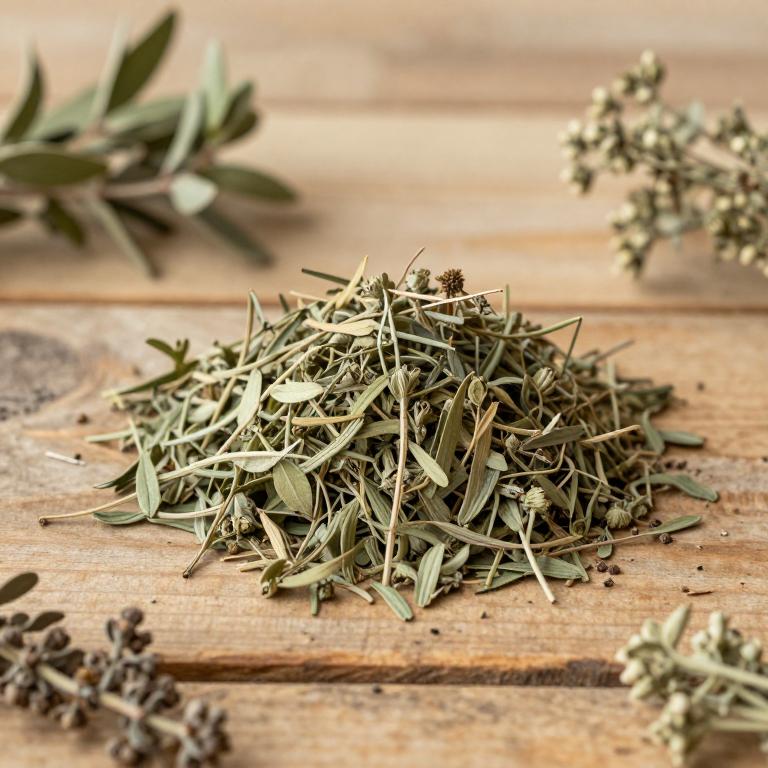
Names and Synonyms
Scientific Names
Accepted name
Zygophyllum bruguieriSynonyms
- Fagonia diversifolia
- Fagonia echinella
- Fagonia bruguieri
- Fagonia bruguieri var. ehrenbergii
- Fagonia bruguieri var. haplotricha
- Fagonia bruguieri var. laxa
- Fagonia bruguieri var. purpurascens
- Fagonia bruguieri var. rechingeri
- Fagonia schimperi
- Fagonia kassasii
- Fagonia olivieri var. glandulosa
- Fagonia bruguieri var. myriacantha
- Fagonia haplotricha
- Fagonia myriacantha
Sources: Wikidata
Taxonomical Classification
This plant belongs to the kingdom Plantae and the phylum Streptophyta, placing it within the class Equisetopsida and subclass Magnoliidae. It is further classified under the order Zygophyllales and the family Zygophyllaceae. Finally, its specific taxonomic identity is defined by the genus Zygophyllum, which includes the species Zygophyllum bruguieri.
| Rank | Classification |
|---|---|
| Kingdom | Plantae |
| Phylum | Streptophyta |
| Class | Equisetopsida |
| Subclass | Magnoliidae |
| Order | Zygophyllales |
| Family | Zygophyllaceae |
| Genus | Zygophyllum |
Sources: The World Checklist of Vascular Plants (WCVP)
Distribution
This plant is primarily distributed across the vast landscapes of Northern Africa. Specifically, its presence is noted within the borders of Algeria and Egypt. It also occupies significant territories throughout Libya and Morocco. Furthermore, the species can be found extending into the region of Western Sahara. Together, these locations define its specific geographical range across the African continent.
| Region | Area |
|---|---|
| Northern Africa | Algeria |
| Northern Africa | Egypt |
| Northern Africa | Libya |
| Northern Africa | Morocco |
| Northern Africa | Western Sahara |
| West Tropical Africa | Mali |
| West Tropical Africa | Mauritania |
| West Tropical Africa | Niger |
| West Tropical Africa | Senegal |
| Northeast Tropical Africa | Chad |
Sources: The World Checklist of Vascular Plants (WCVP)
Botanical Identification
Ecology
The ecology of Zygophyllum bruguieri is characterized by its adaptation to specific altitudinal gradients within its natural habitat. This species typically flourishes within an elevational range that spans from a minimum of 600 m AMSL to a maximum of 1100 m AMSL. Occupying these middle-elevation niches, the plant is integrated into ecosystems that provide the specific environmental conditions necessary for its growth and survival within this defined vertical distribution.
- Elevational range max:
- 1100 m AMSL
- Elevational range min:
- 600 m AMSL
Life history
The life history of Zygophyllum bruguieri is characterized by its classification as a perennial species, allowing it to persist through multiple growing seasons within its specific ecological niche. In terms of its physical structure and growth habit, the plant functions as a chamaephyte, maintaining its permanent buds at or very near the soil surface, which often aids in its survival against environmental stressors. This combination of a long-term lifecycle and a low-growing life form enables the plant to establish stable presence in its habitat, navigating seasonal variations through its specialized physiological adaptations.
- Life form :
- chamaephyte
- Lifecycle :
- perennial
Morphology
The morphology of Zygophyllum bruguieri is characterized by a growth form that functions primarily as a subshrub or herb, exhibiting a non-woody structure throughout its development. As a terrestrial species, it does not inhabit aquatic or semiaquatic environments, maintaining its presence in dry soil conditions. The plant is strictly self-supporting rather than acting as a climber, and it operates as an independent organism, lacking any parasitic tendencies toward other vegetation.
- Aquatic :
- terrestrial
- Climber :
- self-supporting
- Growth form :
- herb
- Growth form :
- subshrub
- Parasite :
- independent
- Woodiness :
- non-woody
Reproduction
The reproduction of Zygophyllum bruguieri is characterized by a specific seasonal flowering period that facilitates its reproductive cycle. The flowering process typically begins in March, marking the onset of the plant's reproductive phase. This period continues through the spring months until the flowering cycle reaches its conclusion in May. While the specific timing can be influenced by environmental variables, the core window for floral development and potential pollination occurs between these two months.
- Flowering time :
- Mar
- Flowering time :
- May
Sources: Global Inventory of Floras and Traits (GIFT)
Chemicals
Zygophyllum bruguieri has 1 reported phytochemicals identified across 0 scientific publications and several other databases. The most consistently reported chemicals include ascorbic acid.
| Chemical | Supporting sources | Consensus |
|---|---|---|
| ascorbic acid | 1 supporting sources | ★☆☆☆☆ |
ascorbic acid
- PloS one