Zygophyllum album
Zygophyllum album · Accepted scientific name
Scientific literature: Very Sparse (27 studies) · ★☆☆☆☆
, scientifically known as Zygophyllum album, is a resilient succulent shrub native to the arid regions of Southern Africa. Renowned for its striking white flowers and fleshy leaves, this plant holds significant ethnobotanical value. Traditional healers utilize its unique properties to treat various ailments, showcasing its importance in natural medicine.
- Family
- Zygophyllaceae
- Native range
- Europe
- Parts used
- Leaf
- Common names
- Not available
- Scientific synonyms
- Tetraena Alba · Zygophyllum Album Var. Amblyocarpum · 4 more
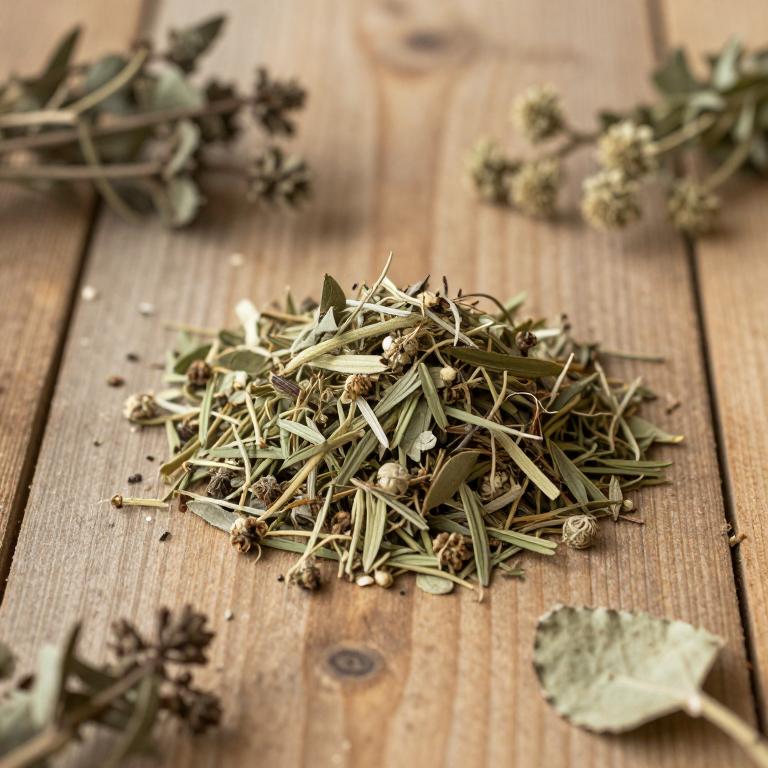
Names and Synonyms
Scientific Names
Accepted name
Zygophyllum albumSynonyms
- Tetraena alba
- Zygophyllum album var. amblyocarpum
- Zygophyllum proliferum
- Zygophyllum amblyocarpum
- Tetraena alba var. amblyocarpa
- Tetraena alba var. arabica
Sources: Wikidata
Taxonomical Classification
This plant belongs to the kingdom Plantae and is classified under the phylum Streptophyta within the class Equisetopsida. As a member of the subclass Magnoliidae and the order Zygophyllales, it is further organized into the family Zygophyllaceae. Finally, its specific taxonomic designation is within the genus Zygophyllum.
| Rank | Classification |
|---|---|
| Kingdom | Plantae |
| Phylum | Streptophyta |
| Class | Equisetopsida |
| Subclass | Magnoliidae |
| Order | Zygophyllales |
| Family | Zygophyllaceae |
| Genus | Zygophyllum |
Sources: The World Checklist of Vascular Plants (WCVP)
Distribution
This plant exhibits a widespread distribution across several distinct Mediterranean regions. In Southwestern Europe, its presence is specifically noted within the borders of Spain. Moving toward Southeastern Europe, it can be found growing on the island of Kriti. The species also extends into Northern Africa, where it inhabits the landscapes of Algeria. Furthermore, its geographical range encompasses the North African nations of both Egypt and Libya.
| Region | Area |
|---|---|
| Southwestern Europe | Spain |
| Southeastern Europe | Kriti |
| Northern Africa | Algeria |
| Northern Africa | Egypt |
| Northern Africa | Libya |
| Northern Africa | Tunisia |
| West Tropical Africa | Mauritania |
| Northeast Tropical Africa | Djibouti |
| Northeast Tropical Africa | Eritrea |
| Northeast Tropical Africa | Socotra |
Sources: The World Checklist of Vascular Plants (WCVP)
Botanical Identification
Life history
The life history of Zygophyllum album is characterized by a perennial lifecycle, allowing the plant to persist through multiple growing seasons within its habitat. In terms of its structural development and survival strategy, the species is classified as a chamaephyte, a life form where the permanent buds are located close to the soil surface, often protected by a layer of leaf litter or the substrate itself. This growth habit, consistent across its various life form classifications as a chamaephyte, enables the plant to withstand environmental stressors while maintaining a stable presence in its ecological niche.
- Life form :
- chamaephyte
- Lifecycle :
- perennial
Morphology
The morphology of Zygophyllum album is characterized by a growth form that functions as both a shrub and a subshrub, exhibiting a woody structure throughout its development. It typically reaches a mean plant height of approximately 0.5 m and operates as a self-supporting plant rather than a climber. As a terrestrial species, it does not exhibit aquatic or epiphytic tendencies, maintaining an independent lifestyle without acting as a parasite.
- Aquatic :
- terrestrial
- Climber :
- self-supporting
- Epiphyte :
- terrestrial
- Growth form :
- shrub
- Growth form :
- subshrub
- Parasite :
- independent
- Plant height mean:
- 0.5 m
- Woodiness :
- woody
Physiology
The physiology of Zygophyllum album is characterized by a specific metabolic framework and nutrient acquisition strategy. The plant utilizes the C3 photosynthetic pathway, meaning it fixes carbon dioxide through the Calvin cycle without the specialized carbon-concentrating mechanisms found in C4 or CAM species. In terms of nutrient cycling, this species is not a nitrogen fixer, lacking the symbiotic relationships with diazotrophic bacteria required to convert atmospheric nitrogen into bioavailable forms.
- Nitrogen fixer :
- no
- Photosynthetic pathway :
- C3
Sources: Global Inventory of Floras and Traits (GIFT)
Plant Parts
Zygophyllum album has 1 reported plant parts identified across 1 scientific publications and several other databases that are studied for medicinal purposes. The most consistently reported plant part include leaf.
| Plant part | Supporting sources | Consensus |
|---|---|---|
| Leaf | 1 supporting sources | ★☆☆☆☆ |
Leaf
- Pharmaceutical biology
Chemicals
Zygophyllum album has 8 reported phytochemicals identified across 1 scientific publications and several other databases. The most consistently reported chemicals include Saponins, Sterols, Flavonoids, Lipase, OLEANOLIC ACID.
| Chemical | Supporting sources | Consensus |
|---|---|---|
| Saponins | 2 supporting sources | ★☆☆☆☆ |
| Sterols | 2 supporting sources | ★☆☆☆☆ |
| Flavonoids | 1 supporting sources | ★☆☆☆☆ |
| Lipase | 1 supporting sources | ★☆☆☆☆ |
| OLEANOLIC ACID | 1 supporting sources | ★☆☆☆☆ |
| Quinovic acid | 1 supporting sources | ★☆☆☆☆ |
| Triterpenes | 1 supporting sources | ★☆☆☆☆ |
| Ursolic acid | 1 supporting sources | ★☆☆☆☆ |
Saponins
- Food chemistry
- Scientific reports
Sterols
- Food chemistry
- Scientific reports
Flavonoids
- Food chemistry
Lipase
- Journal of physiology and biochemistry
OLEANOLIC ACID
- Scientific reports
Quinovic acid
- Scientific reports
Triterpenes
- Food chemistry
Ursolic acid
- Scientific reports
Activities
Zygophyllum album has 5 reported activities identified across 1 scientific publications and several other databases. The most consistently reported activities include Anticancer, Antidiabetic, Antihypertensive, Antimicrobial, Antioxidant.
| Activity | Supporting sources | Consensus |
|---|---|---|
| Anticancer | 1 supporting sources | ★☆☆☆☆ |
| Antidiabetic | 1 supporting sources | ★☆☆☆☆ |
| Antihypertensive | 1 supporting sources | ★☆☆☆☆ |
| Antimicrobial | 1 supporting sources | ★☆☆☆☆ |
| Antioxidant | 1 supporting sources | ★☆☆☆☆ |
Anticancer
- Food chemistry
Antidiabetic
- Pharmaceutical biology
Antihypertensive
- Pharmaceutical biology
Antimicrobial
- Scientific reports
Antioxidant
- Food chemistry
Conditions
Zygophyllum album has 7 reported investigations on conditions identified across 1 scientific publications and several other databases. The most consistently reported conditions include diabetes mellitus, Herpes simplex virus type 1, antioxidant activity, colon adenocarcinoma, diarrhea.
| Condition | Supporting sources | Consensus |
|---|---|---|
| Diabetes mellitus | 2 supporting sources | ★☆☆☆☆ |
| Herpes simplex virus type 1 | 1 supporting sources | ★☆☆☆☆ |
| Antioxidant activity | 1 supporting sources | ★☆☆☆☆ |
| Colon adenocarcinoma | 1 supporting sources | ★☆☆☆☆ |
| Diarrhea | 1 supporting sources | ★☆☆☆☆ |
| Hypertension | 1 supporting sources | ★☆☆☆☆ |
| Inflammation | 1 supporting sources | ★☆☆☆☆ |
Diabetes mellitus
- Pharmaceutical biology
- Journal of physiology and biochemistry
Herpes simplex virus type 1
- Natural product research
Antioxidant activity
- Food chemistry
Colon adenocarcinoma
- Food chemistry
Diarrhea
- Pharmaceutical biology
Hypertension
- Pharmaceutical biology
Inflammation
- Journal of physiology and biochemistry
Preparations
Zygophyllum album has 10 reported preparations identified across 1 scientific publications and several other databases. The most consistently reported preparations include Essential oil, Methanol extract, OZA, active saponin fraction, crude extract.
| Preparation | Supporting sources | Consensus |
|---|---|---|
| Essential oil | 1 supporting sources | ★☆☆☆☆ |
| Methanol extract | 1 supporting sources | ★☆☆☆☆ |
| Oza | 1 supporting sources | ★☆☆☆☆ |
| Active saponin fraction | 1 supporting sources | ★☆☆☆☆ |
| Crude extract | 1 supporting sources | ★☆☆☆☆ |
| Different solvent-extract fractions | 1 supporting sources | ★☆☆☆☆ |
| Essential oil | 1 supporting sources | ★☆☆☆☆ |
| Extracts | 1 supporting sources | ★☆☆☆☆ |
| Saponin fraction | 1 supporting sources | ★☆☆☆☆ |
| Shoot extract | 1 supporting sources | ★☆☆☆☆ |
Essential oil
- Pharmaceutical biology
Methanol extract
- Journal of ethnopharmacology
Oza
- Pharmaceutical biology
Active saponin fraction
- Scientific reports
Crude extract
- Scientific reports
Different solvent-extract fractions
- Journal of physiology and biochemistry
Essential oil
- Pharmaceutical biology
Extracts
- Archiv fur experimentelle Veterinarmedizin
Saponin fraction
- Scientific reports
Shoot extract
- Food chemistry