Zuccagnia punctata
Zuccagnia punctata · Accepted scientific name
Scientific literature: Very Sparse (42 studies) · ★☆☆☆☆
Zuccaignia punctata, scientifically known as Zuccaignia punctata, is a unique medicinal plant valued for its therapeutic properties. Often utilized in traditional healing practices, it contains bioactive compounds believed to support overall wellness. Understanding its botanical characteristics and medicinal potential is essential for exploring its role in natural pharmacology.
- Family
- Fabaceae
- Native range
- Southern America
- Parts used
- Not available
- Common names
- Not available
- Scientific synonyms
- Not available
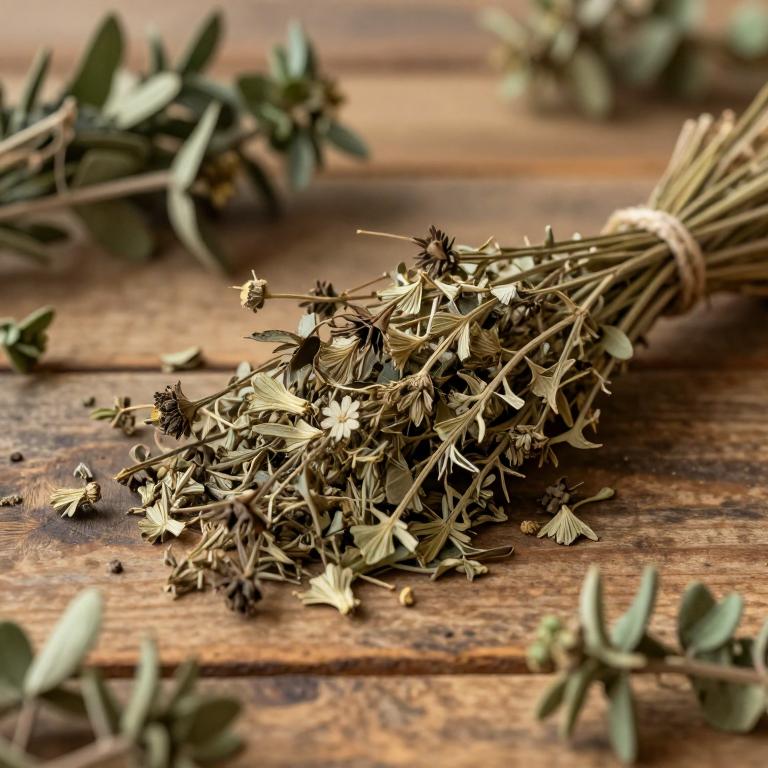
Names and Synonyms
Scientific Names
Accepted name
Zuccagnia punctataRegional and Traditional Names
Spanish:
- jarilla macho
- jarilla pispita
- lata
- pus-pus
- Falsa jarilla
Sources: Wikidata, Catalogue of Life
Taxonomical Classification
This plant belongs to the kingdom Plantae and is classified under the phylum Streptophyta and the class Equisetopsida. Within the subclass Magnoliidae, it is categorized under the order Fabales and is a member of the Fabaceae family. Specifically, its taxonomic identity is defined by the genus Zuccaagnia.
| Rank | Classification |
|---|---|
| Kingdom | Plantae |
| Phylum | Streptophyta |
| Class | Equisetopsida |
| Subclass | Magnoliidae |
| Order | Fabales |
| Family | Fabaceae |
| Genus | Zuccagnia |
Sources: The World Checklist of Vascular Plants (WCVP)
Distribution
This plant is found within a specific region of the Southern South American continent. Its known geographical distribution is primarily concentrated in the northwestern part of Argentina. This localized presence indicates that the species thrives under the particular environmental conditions found in that area. Because it is restricted to this territory, researchers often focus their studies on these specific landscapes. Consequently, the northwestern Argentine provinces serve as the primary habitat for this medicinal species.
| Region | Area |
|---|---|
| Southern South America | Argentina Northwest |
Sources: The World Checklist of Vascular Plants (WCVP)
Botanical Identification
Ecology
The ecology of Zuccagnia punctata is defined by its presence across a diverse vertical gradient within its natural habitat, demonstrating significant adaptability to varying montane conditions. This species is primarily distributed across an elevational range that spans from a minimum of 700 m AMSL to a maximum of 2700 m AMSL. This wide altitudinal breadth suggests that the plant can thrive in a variety of microclimates, ranging from lower, potentially warmer montane forest zones to higher, more temperate or cloud forest environments found near its upper limit. Such a distribution indicates an ecological plasticity that allows it to occupy different niches within the forest structure, likely influenced by fluctuations in temperature, moisture availability, and atmospheric pressure associated with these shifting elevations.
- Elevational range max:
- 2700 m AMSL
- Elevational range min:
- 700 m AMSL
Life history
The life history of Zuccagnia punctata is characterized by a perennial lifecycle, allowing the plant to persist through multiple growing seasons. As a perennial species, it maintains a continuous presence in its ecological niche, often establishing robust root systems that facilitate long-term survival and regrowth following dormant periods. This enduring life strategy enables the plant to invest energy into structural development and reproductive stability over several years, rather than completing its cycle within a single season.
- Lifecycle :
- perennial
Morphology
The morphology of Zuccagnia punctata is characterized by a woody structure, manifesting as a shrub in its growth form. It is an independent organism that does not function as a parasite, nor does it exhibit epiphytic behavior, as it maintains a terrestrial existence. While its habitat can encompass aquatic, semiaquatic, and terrestrial environments, the plant is fundamentally terrestrial in its ecological positioning. In terms of its physical habit, it is classified as a self-supporting plant, meaning it does not function as an obligatory or facultative climber, liana, or vine, but rather relies on its own woody stems for structural support.
- Aquatic :
- terrestrial
- Climber :
- self-supporting
- Epiphyte :
- terrestrial
- Growth form :
- shrub
- Parasite :
- independent
- Woodiness :
- woody
Physiology
The physiology of Zuccagnia punctata is characterized by a primary metabolic reliance on the C3 photosynthetic pathway, which dictates its carbon fixation processes and resource utilization strategies. In this pathway, the initial fixation of atmospheric carbon dioxide is mediated by the enzyme Ribulose-1,5-bisphosphate carboxylase/oxygenase (RuBisCO), leading to the direct production of three-carbon molecules within the mesophyll cells. This C3 mechanism implies that the plant's gas exchange and energy production are highly sensitive to environmental variables such as light intensity, temperature, and water availability, as the absence of specialized CO2-concentrating mechanisms (such as those found in C4 or CAM plants) makes it more susceptible to photorespiration under high-temperature or arid conditions. Consequently, the plant's physiological efficiency is optimized for environments where moisture is sufficiently available to allow stomatal conductance without excessive transpirational water loss.
- Photosynthetic pathway :
- C3
Sources: Global Inventory of Floras and Traits (GIFT)
Chemicals
Zuccagnia punctata has 11 reported phytochemicals identified across 0 scientific publications and several other databases. The most consistently reported chemicals include 2',4'-Dihydroxychalcone, 2',4'-dihydroxy-3'-methoxychalcone, 3,7-dihydroxyflavone, 7-Hydroxyflavanone, Anthocyanins.
| Chemical | Supporting sources | Consensus |
|---|---|---|
| 2',4'-Dihydroxychalcone | 3 supporting sources | ★★☆☆☆ |
| 2',4'-dihydroxy-3'-methoxychalcone | 2 supporting sources | ★☆☆☆☆ |
| 3,7-dihydroxyflavone | 2 supporting sources | ★☆☆☆☆ |
| 7-Hydroxyflavanone | 2 supporting sources | ★☆☆☆☆ |
| Anthocyanins | 1 supporting sources | ★☆☆☆☆ |
| Flavonoid | 1 supporting sources | ★☆☆☆☆ |
| Galangin | 1 supporting sources | ★☆☆☆☆ |
| NORDIHYDROGUAIARETIC ACID | 1 supporting sources | ★☆☆☆☆ |
| chrysin | 1 supporting sources | ★☆☆☆☆ |
| naringenin | 1 supporting sources | ★☆☆☆☆ |
2',4'-Dihydroxychalcone
- Natural product communications
- Journal of ethnopharmacology
- Saudi journal of biological sciences
2',4'-dihydroxy-3'-methoxychalcone
- Natural product communications
- Saudi journal of biological sciences
3,7-dihydroxyflavone
- Natural product communications
- Saudi journal of biological sciences
7-Hydroxyflavanone
- Natural product communications
- Saudi journal of biological sciences
Anthocyanins
- Plants (Basel, Switzerland)
Flavonoid
- Plants (Basel, Switzerland)
Galangin
- Natural product communications
NORDIHYDROGUAIARETIC ACID
- Journal of ethnopharmacology
chrysin
- Natural product communications
naringenin
- Natural product communications
Activities
Zuccagnia punctata has 8 reported activities identified across 0 scientific publications and several other databases. The most consistently reported activities include Antibacterial, Antimicrobial, Antioxidant, Antibiotic, Antifungal.
| Activity | Supporting sources | Consensus |
|---|---|---|
| Antibacterial | 2 supporting sources | ★☆☆☆☆ |
| Antimicrobial | 2 supporting sources | ★☆☆☆☆ |
| Antioxidant | 2 supporting sources | ★☆☆☆☆ |
| Antibiotic | 1 supporting sources | ★☆☆☆☆ |
| Antifungal | 1 supporting sources | ★☆☆☆☆ |
| Antigenotoxic | 1 supporting sources | ★☆☆☆☆ |
| Antitumor | 1 supporting sources | ★☆☆☆☆ |
| Antiulcer | 1 supporting sources | ★☆☆☆☆ |
Antibacterial
- Natural product communications
- Plants (Basel, Switzerland)
Antimicrobial
- Natural product communications
- Plants (Basel, Switzerland)
Antioxidant
- Natural product communications
- Plants (Basel, Switzerland)
Antibiotic
- Saudi journal of biological sciences
Antifungal
- Natural product communications
Antigenotoxic
- Natural product communications
Antitumor
- Natural product communications
Antiulcer
- Natural product communications
Conditions
Zuccagnia punctata has 7 reported investigations on conditions identified across 0 scientific publications and several other databases. The most consistently reported conditions include yeasts, Enterococcus faecalis, Schizosaccharomyces pombe, antioxidant, gastrointestinal disorders.
| Condition | Supporting sources | Consensus |
|---|---|---|
| Yeasts | 2 supporting sources | ★☆☆☆☆ |
| Enterococcus faecalis | 1 supporting sources | ★☆☆☆☆ |
| Schizosaccharomyces pombe | 1 supporting sources | ★☆☆☆☆ |
| Antioxidant | 1 supporting sources | ★☆☆☆☆ |
| Gastrointestinal disorders | 1 supporting sources | ★☆☆☆☆ |
| Methicillin-resistant staphylococcus aureus | 1 supporting sources | ★☆☆☆☆ |
| Oxidative stress | 1 supporting sources | ★☆☆☆☆ |
Yeasts
- Journal of ethnopharmacology
- Plants (Basel, Switzerland)
Enterococcus faecalis
- Natural product communications
Schizosaccharomyces pombe
- Phytomedicine : international journal of phytotherapy and phytopharmacology
Antioxidant
- Natural product communications
Gastrointestinal disorders
- Journal of ethnopharmacology
Methicillin-resistant staphylococcus aureus
- Natural product communications
Oxidative stress
- Natural product communications
Preparations
Zuccagnia punctata has 4 reported preparations identified across 0 scientific publications and several other databases. The most consistently reported preparations include Z. punctata resin, ZpE, dry extracts, ethanolic extracts.
| Preparation | Supporting sources | Consensus |
|---|---|---|
| Z. punctata resin | 1 supporting sources | ★☆☆☆☆ |
| Zpe | 1 supporting sources | ★☆☆☆☆ |
| Dry extracts | 1 supporting sources | ★☆☆☆☆ |
| Ethanolic extracts | 1 supporting sources | ★☆☆☆☆ |
Z. punctata resin
- Natural product communications
Zpe
- Phytomedicine : international journal of phytotherapy and phytopharmacology
Dry extracts
- Carbohydrate polymers
Ethanolic extracts
- Journal of ethnopharmacology