Ziziphus nummularia
Ziziphus nummularia · Accepted scientific name
Scientific literature: Sparse (61 studies) · ★★☆☆☆
Ziziphus nummularia, scientifically known as Ziziphus nummularia, is a resilient shrub native to arid African landscapes. Renowned for its medicinal properties, this plant is traditionally utilized to treat various ailments, including digestive issues and skin inflammations. Its ability to thrive in harsh environments makes it a vital botanical resource.
- Family
- Rhamnaceae
- Native range
- Asia-Temperate
- Parts used
- Leaf · Fruit
- Common names
- Not available
- Scientific synonyms
- Ziziphus Nummularia Var. Glabrescens · Ziziphus Rotundifolia · 2 more
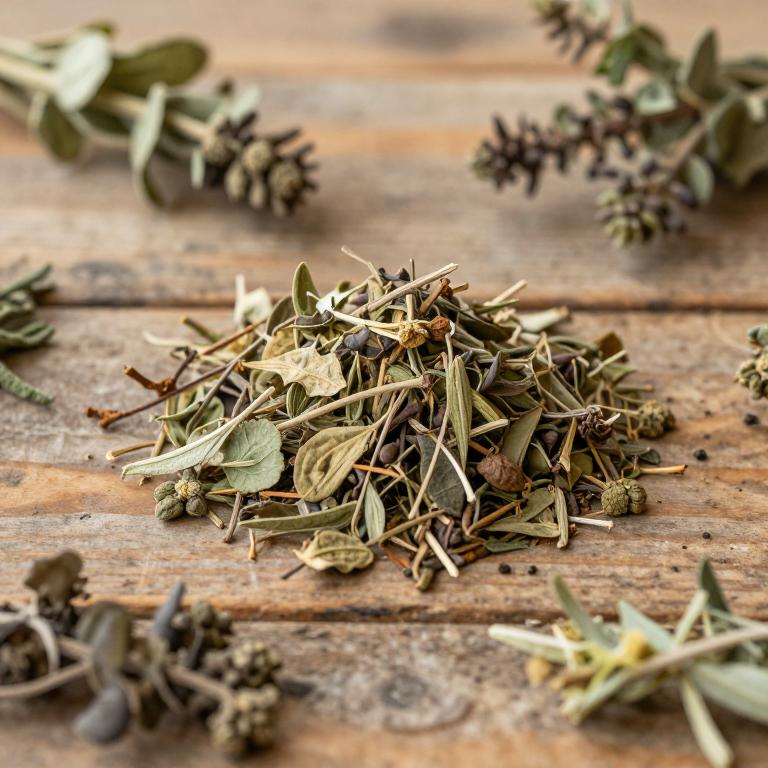
Names and Synonyms
Scientific Names
Accepted name
Ziziphus nummulariaSynonyms
- Ziziphus nummularia var. glabrescens
- Ziziphus rotundifolia
- Ziziphus microphylla
- Rhamnus nummularia
Sources: Wikidata
Taxonomical Classification
This plant belongs to the kingdom Plantae and the phylum Streptophyta, falling under the class Equisetopsida and subclass Magnoliidae. Within the order Rosales, it is classified under the family Rhamnaceae. Finally, it is identified by its specific genus, Ziziphus.
| Rank | Classification |
|---|---|
| Kingdom | Plantae |
| Phylum | Streptophyta |
| Class | Equisetopsida |
| Subclass | Magnoliidae |
| Order | Rosales |
| Family | Rhamnaceae |
| Genus | Ziziphus |
Sources: The World Checklist of Vascular Plants (WCVP)
Distribution
This plant is primarily distributed across several key regions within Western Asia. Specifically, its presence can be documented throughout the country of Afghanistan. It also grows extensively across the landscapes of Iran and Iraq. Furthermore, its geographical range extends into the territory of Palestine. Finally, the distribution of this species includes the Sinai Peninsula.
| Region | Area |
|---|---|
| Western Asia | Afghanistan |
| Western Asia | Iran |
| Western Asia | Iraq |
| Western Asia | Palestine |
| Western Asia | Sinai |
| Arabian Peninsula | Gulf States |
| Arabian Peninsula | Saudi Arabia |
| Indian Subcontinent | India |
| Indian Subcontinent | Nepal |
| Indian Subcontinent | Pakistan |
Sources: The World Checklist of Vascular Plants (WCVP)
Botanical Identification
Ecology
The ecology of Ziziphus nummularia is characterized by its preference for specific altitudinal gradients within its native habitats. This species thrives within a defined elevational range, typically establishing itself at altitudes starting from a minimum of 600 m AMSL and extending up to a maximum of 1300 m AMSL. Within this vertical niche, the plant adapts to the varying climatic conditions and soil compositions found across these mid-elevation zones, playing a functional role in its local ecosystem.
- Elevational range max:
- 1300 m AMSL
- Elevational range min:
- 600 m AMSL
Life history
The life history of Ziziphus nummularia is characterized by its status as a perennial species, allowing it to maintain its presence in its habitat over many growing seasons. In terms of its structural growth and survival strategy, the plant exhibits life forms categorized as both phanerophyte and nanophanerophyte, indicating its ability to maintain its buds and reproductive structures above the ground level through varying environmental conditions.
- Life form :
- nanophanerophyte
- Life form :
- phanerophyte
- Lifecycle :
- perennial
Morphology
The morphology of Ziziphus nummularia is characterized by its growth form as a woody shrub, exhibiting a robust and self-supporting structure. It is categorized as a terrestrial plant, functioning as an independent organism without any parasitic or epiphytic tendencies. As a non-climbing, self-supporting shrub, it maintains a stable, woody architecture that distinguishes it from herbaceous or climbing species.
- Aquatic :
- terrestrial
- Climber :
- self-supporting
- Epiphyte :
- terrestrial
- Growth form :
- shrub
- Parasite :
- independent
- Woodiness :
- woody
Physiology
The physiology of Ziziphus nummularia is characterized by a specialized metabolic framework adapted to its environmental niche, most notably through its utilization of the C3 photosynthetic pathway. As a C3 plant, its carbon fixation process relies on the direct carboxylation of ribulose-1,5-bisphosphate (RuBP) by the enzyme RuBisCO, leading to the initial formation of a three-carbon compound, 3-phosphoglycerate. This metabolic strategy dictates its gas exchange patterns and water-use efficiency, as the plant must balance the intake of carbon dioxide with the potential for photorespiration, especially under thermal stress. Beyond its photosynthetic mechanism, the plant's physiological functions include robust secondary metabolism, which facilitates the synthesis of bioactive compounds, and specialized anatomical adaptations that support transpiration and nutrient transport within its woody structure.
- Photosynthetic pathway :
- C3
Reproduction
The reproduction of Ziziphus nummularia is characterized by a highly flexible and variable flowering phenology. The plant exhibits a broad flowering window that can span across various months of the year, including January, February, March, April, May, June, July, August, September, October, November, and December, depending on environmental conditions. Specifically, the flowering period can begin as early as March, though the timing is considered variable. The conclusion of the flowering phase is equally adaptable, with the flowering end potentially occurring in April or shifting throughout the calendar year. This wide range of temporal availability for flowering suggests an adaptive reproductive strategy that allows the species to respond to fluctuating seasonal patterns.
- Flowering time :
- Mar
- Flowering time :
- Apr
Sources: Global Inventory of Floras and Traits (GIFT)
Plant Parts
Ziziphus nummularia has 2 reported plant parts identified across 5 scientific publications and several other databases that are studied for medicinal purposes. The most consistently reported plant part include leaf, fruit.
| Plant part | Supporting sources | Consensus |
|---|---|---|
| Leaf | 4 supporting sources | ★★☆☆☆ |
| Fruit | 1 supporting sources | ★☆☆☆☆ |
Leaf
- Inflammopharmacology
- Molecules (Basel, Switzerland)
- Artificial cells, nanomedicine, and biotechnology
- Pakistan journal of pharmaceutical sciences
Fruit
- Molecules (Basel, Switzerland)
Chemicals
Ziziphus nummularia has 17 reported phytochemicals identified across 5 scientific publications and several other databases. The most consistently reported chemicals include Flavonoids, Saponins, Apigenin 7-O-glucoside, CATECHIN, Glycosides.
| Chemical | Supporting sources | Consensus |
|---|---|---|
| Flavonoids | 3 supporting sources | ★★☆☆☆ |
| Saponins | 2 supporting sources | ★☆☆☆☆ |
| Apigenin 7-O-glucoside | 1 supporting sources | ★☆☆☆☆ |
| CATECHIN | 1 supporting sources | ★☆☆☆☆ |
| Glycosides | 1 supporting sources | ★☆☆☆☆ |
| Jujuboside A | 1 supporting sources | ★☆☆☆☆ |
| Jujuboside B | 1 supporting sources | ★☆☆☆☆ |
| Phenols | 1 supporting sources | ★☆☆☆☆ |
| RUTIN | 1 supporting sources | ★☆☆☆☆ |
| Silver nanoparticles | 1 supporting sources | ★☆☆☆☆ |
Flavonoids
- Plants (Basel, Switzerland)
- Molecules (Basel, Switzerland)
- Pakistan journal of pharmaceutical sciences
Saponins
- Molecules (Basel, Switzerland)
- Pakistan journal of pharmaceutical sciences
Apigenin 7-O-glucoside
- Journal of pharmaceutical and biomedical analysis
CATECHIN
- Journal of pharmaceutical and biomedical analysis
Glycosides
- Molecules (Basel, Switzerland)
Jujuboside A
- Journal of pharmaceutical and biomedical analysis
Jujuboside B
- Journal of pharmaceutical and biomedical analysis
Phenols
- Plants (Basel, Switzerland)
RUTIN
- Molecules (Basel, Switzerland)
Silver nanoparticles
- Artificial cells, nanomedicine, and biotechnology
Activities
Ziziphus nummularia has 11 reported activities identified across 5 scientific publications and several other databases. The most consistently reported activities include Antioxidant, Antimicrobial, Analgesic, Anthelmintic, Antibacterial.
| Activity | Supporting sources | Consensus |
|---|---|---|
| Antioxidant | 4 supporting sources | ★★☆☆☆ |
| Antimicrobial | 3 supporting sources | ★★☆☆☆ |
| Analgesic | 1 supporting sources | ★☆☆☆☆ |
| Anthelmintic | 1 supporting sources | ★☆☆☆☆ |
| Antibacterial | 1 supporting sources | ★☆☆☆☆ |
| Anticancer | 1 supporting sources | ★☆☆☆☆ |
| Antidiabetic | 1 supporting sources | ★☆☆☆☆ |
| Cardioprotective | 1 supporting sources | ★☆☆☆☆ |
| Cytotoxic | 1 supporting sources | ★☆☆☆☆ |
| Genotoxic | 1 supporting sources | ★☆☆☆☆ |
Antioxidant
- Molecules (Basel, Switzerland)
- Inflammopharmacology
- Journal of pharmaceutical and biomedical analysis
- Artificial cells, nanomedicine, and biotechnology
Antimicrobial
- Molecules (Basel, Switzerland)
- Artificial cells, nanomedicine, and biotechnology
- Pakistan journal of pharmaceutical sciences
Analgesic
- Molecules (Basel, Switzerland)
Anthelmintic
- Molecules (Basel, Switzerland)
Antibacterial
- Pakistan journal of pharmaceutical sciences
Anticancer
- Molecules (Basel, Switzerland)
Antidiabetic
- Molecules (Basel, Switzerland)
Cardioprotective
- Molecules (Basel, Switzerland)
Cytotoxic
- Artificial cells, nanomedicine, and biotechnology
Genotoxic
- Artificial cells, nanomedicine, and biotechnology
Conditions
Ziziphus nummularia has 12 reported investigations on conditions identified across 5 scientific publications and several other databases. The most consistently reported conditions include E. coli, Rheumatoid arthritis, anemia, antioxidant, arthritis.
| Condition | Supporting sources | Consensus |
|---|---|---|
| E. coli | 1 supporting sources | ★☆☆☆☆ |
| Rheumatoid arthritis | 1 supporting sources | ★☆☆☆☆ |
| Anemia | 1 supporting sources | ★☆☆☆☆ |
| Antioxidant | 1 supporting sources | ★☆☆☆☆ |
| Arthritis | 1 supporting sources | ★☆☆☆☆ |
| Cancer | 1 supporting sources | ★☆☆☆☆ |
| Cardiovascular diseases | 1 supporting sources | ★☆☆☆☆ |
| Diarrhea | 1 supporting sources | ★☆☆☆☆ |
| Edema | 1 supporting sources | ★☆☆☆☆ |
| Necrosis | 1 supporting sources | ★☆☆☆☆ |
E. coli
- Pakistan journal of pharmaceutical sciences
Rheumatoid arthritis
- Inflammopharmacology
Anemia
- Inflammopharmacology
Antioxidant
- Journal of pharmaceutical and biomedical analysis
Arthritis
- Inflammopharmacology
Cancer
- Molecules (Basel, Switzerland)
Cardiovascular diseases
- Molecules (Basel, Switzerland)
Diarrhea
- Journal of ethnopharmacology
Edema
- Inflammopharmacology
Necrosis
- Inflammopharmacology
Preparations
Ziziphus nummularia has 16 reported preparations identified across 5 scientific publications and several other databases. The most consistently reported preparations include leaf extract, CME, aqueous extracts, bark, chloroform.
| Preparation | Supporting sources | Consensus |
|---|---|---|
| Leaf extract | 2 supporting sources | ★☆☆☆☆ |
| Cme | 1 supporting sources | ★☆☆☆☆ |
| Aqueous extracts | 1 supporting sources | ★☆☆☆☆ |
| Bark | 1 supporting sources | ★☆☆☆☆ |
| Chloroform | 1 supporting sources | ★☆☆☆☆ |
| Crude methanolic extract (cme) | 1 supporting sources | ★☆☆☆☆ |
| Crude powder (cp) | 1 supporting sources | ★☆☆☆☆ |
| Ethanolic extract | 1 supporting sources | ★☆☆☆☆ |
| Ethyl acetate | 1 supporting sources | ★☆☆☆☆ |
| Ethyl acetate fraction | 1 supporting sources | ★☆☆☆☆ |
Leaf extract
- Artificial cells, nanomedicine, and biotechnology
- Pakistan journal of pharmaceutical sciences
Cme
- Journal of ethnopharmacology
Aqueous extracts
- Pakistan journal of pharmaceutical sciences
Bark
- Journal of ethnopharmacology
Chloroform
- Pakistan journal of pharmaceutical sciences
Crude methanolic extract (cme)
- Journal of ethnopharmacology
Crude powder (cp)
- Journal of ethnopharmacology
Ethanolic extract
- Molecules (Basel, Switzerland)
Ethyl acetate
- Pakistan journal of pharmaceutical sciences
Ethyl acetate fraction
- Pakistan journal of pharmaceutical sciences