Ziziphora
Ziziphora · Accepted scientific name
Scientific literature: Very Sparse (11 studies) · ★☆☆☆☆
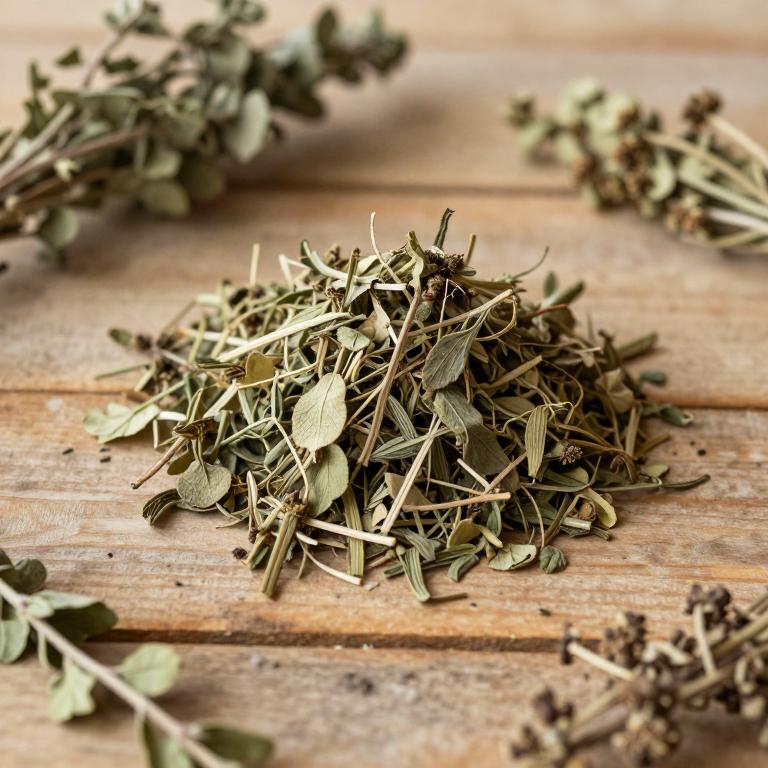
Ziziphora, scientifically known as Ziziphora, is a versatile aromatic herb belonging to the Lamiaceae family. Renowned for its potent essential oils, this plant features tiny, fragrant flowers and serrated leaves. Widely utilized in traditional medicine, it offers remarkable antimicrobial, antioxidant, and soothing properties for various therapeutic applications.
- Family
- Lamiaceae
- Native range
- Europe
- Parts used
- Leaf
- Common names
- Not available
- Scientific synonyms
- Zwingeria · Faldermannia
Names and Synonyms
Scientific Names
Accepted name
ZiziphoraSynonyms
- Zwingeria
- Faldermannia
Regional and Traditional Names
Spanish:
- Zwingeria
- Faldermannia
Sources: Wikidata, Catalogue of Life
Taxonomical Classification
This plant belongs to the kingdom Plantae and the phylum Streptophyta, falling under the class Equisetopsida. Within the subclass Magnoliidae, it is categorized under the order Lamiales and the family Lamiaceae. Ultimately, the medicinal species is classified under the genus Ziziphora.
| Rank | Classification |
|---|---|
| Kingdom | Plantae |
| Phylum | Streptophyta |
| Class | Equisetopsida |
| Subclass | Magnoliidae |
| Order | Lamiales |
| Family | Lamiaceae |
| Genus | Ziziphora |
Sources: The World Checklist of Vascular Plants (WCVP)
Distribution
This plant exhibits a diverse geographical distribution across several European regions. In Middle Europe, its presence can be documented within the borders of Germany. Moving toward the Mediterranean, it is found in Southwestern Europe, specifically in Spain. The species also extends into Southeastern Europe, where it inhabits the landscapes of Albania and Bulgaria. Finally, its range continues through the Balkan Peninsula to include Greece.
| Region | Area |
|---|---|
| Middle Europe | Germany |
| Southwestern Europe | Spain |
| Southeastern Europe | Albania |
| Southeastern Europe | Bulgaria |
| Southeastern Europe | Greece |
| Southeastern Europe | Italy |
| Southeastern Europe | Romania |
| Southeastern Europe | Türkiye-in-Europe |
| Southeastern Europe | NW. Balkan Pen. |
| Eastern Europe | Krym |
Sources: The World Checklist of Vascular Plants (WCVP)
Plant Parts
Ziziphora has 1 reported plant parts identified across 1 scientific publications and several other databases that are studied for medicinal purposes. The most consistently reported plant part include leaf.
| Plant part | Supporting sources | Consensus |
|---|---|---|
| Leaf | 1 supporting sources | ★☆☆☆☆ |
Leaf
- BioMed research international
Chemicals
Ziziphora has 3 reported phytochemicals identified across 1 scientific publications and several other databases. The most consistently reported chemicals include OLEANOLIC ACID, Pulegone, naringenin.
| Chemical | Supporting sources | Consensus |
|---|---|---|
| OLEANOLIC ACID | 1 supporting sources | ★☆☆☆☆ |
| Pulegone | 1 supporting sources | ★☆☆☆☆ |
| naringenin | 1 supporting sources | ★☆☆☆☆ |
OLEANOLIC ACID
- Natural product research
Pulegone
- Microscopy research and technique
naringenin
- Natural product research
Conditions
Ziziphora has 6 reported investigations on conditions identified across 1 scientific publications and several other databases. The most consistently reported conditions include bronchitis, dermatitis, gastritis, infections, inflammation.
| Condition | Supporting sources | Consensus |
|---|---|---|
| Bronchitis | 1 supporting sources | ★☆☆☆☆ |
| Dermatitis | 1 supporting sources | ★☆☆☆☆ |
| Gastritis | 1 supporting sources | ★☆☆☆☆ |
| Infections | 1 supporting sources | ★☆☆☆☆ |
| Inflammation | 1 supporting sources | ★☆☆☆☆ |
| Wounds | 1 supporting sources | ★☆☆☆☆ |
Bronchitis
- Medicines (Basel, Switzerland)
Dermatitis
- Medicines (Basel, Switzerland)
Gastritis
- Medicines (Basel, Switzerland)
Infections
- Medicines (Basel, Switzerland)
Inflammation
- Medicines (Basel, Switzerland)
Wounds
- Medicines (Basel, Switzerland)