Ziziphora tenuior
Ziziphora tenuior · Accepted scientific name
Scientific literature: Very Sparse (41 studies) · ★☆☆☆☆
Ziziphora tenuior, scientifically known as Ziziphora tenuior, is a fragrant perennial herb belonging to the Lamiaceae family. Renowned for its aromatic properties, this medicinal plant is widely used in traditional medicine to treat respiratory ailments, skin irritations, and digestive issues, offering significant therapeutic potential through its bioactive compounds.
- Family
- Lamiaceae
- Native range
- Europe
- Parts used
- Leaf · Root
- Common names
- Not available
- Scientific synonyms
- Faldermannia Tenuior · Faldermannia Parviflora · 2 more
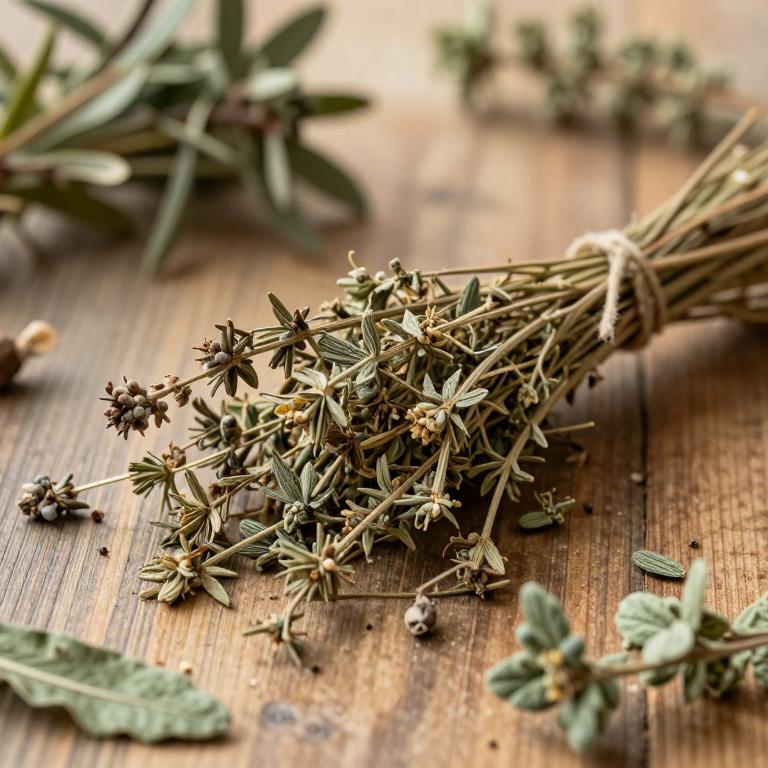
Names and Synonyms
Scientific Names
Accepted name
Ziziphora tenuiorSynonyms
- Faldermannia tenuior
- Faldermannia parviflora
- Ziziphora acutifolia
- Ziziphora parviflora
Sources: Wikidata, Catalogue of Life
Taxonomical Classification
This plant belongs to the kingdom Plantae and is classified under the phylum Streptophyta within the class Equisetopsida. It further falls into the subclass Magnoliidae, the order Lamiales, and the family Lamiaceae. Specifically, Ziziphora tenuior is a member of the genus Ziziphora.
| Rank | Classification |
|---|---|
| Kingdom | Plantae |
| Phylum | Streptophyta |
| Class | Equisetopsida |
| Subclass | Magnoliidae |
| Order | Lamiales |
| Family | Lamiaceae |
| Genus | Ziziphora |
Sources: The World Checklist of Vascular Plants (WCVP)
Distribution
This plant exhibits a diverse range of habitats spanning across multiple continents and regions. In Eastern Europe, its presence is documented in Ukraine, South European Russia, and the Krym peninsula. Moving toward the north, it can also be found growing in the West Siberia region. Its distribution extends southward into Northern Africa, specifically within the borders of Algeria. Ultimately, these locations demonstrate the broad geographical footprint of Ziziphora tenuior.
| Region | Area |
|---|---|
| Eastern Europe | Krym |
| Eastern Europe | South European Russia |
| Eastern Europe | Ukraine |
| Northern Africa | Algeria |
| Siberia | West Siberia |
| Central Asia | Kazakhstan |
| Central Asia | Kirgizstan |
| Central Asia | Turkmenistan |
| Central Asia | Tadzhikistan |
| Central Asia | Uzbekistan |
Sources: The World Checklist of Vascular Plants (WCVP)
Botanical Identification
Ecology
The ecology of Ziziphora tenuior is characterized by its ability to thrive in diverse and often challenging landscapes, ranging from coastal environments to arid inland regions. This species is frequently found in habitats such as rivers, sandy terrains, sea shores, and semi-desert regions, demonstrating a high tolerance for both moisture-adjacent zones and xeric conditions. It is also commonly observed in steppe ecosystems and stony places, where it can establish itself among rocky substrates. In terms of vertical distribution, the plant occupies a broad altitudinal gradient, with an elevational range spanning from a minimum of 900 m AMSL to a maximum of 2400 m AMSL.
- Elevational range max:
- 2400 m AMSL
- Elevational range min:
- 900 m AMSL
- Habitat :
- rivers, sand, sea, semidesert, shores, steppe, stony places
Life history
The life history of Ziziphora tenuior is characterized by its classification as an annual plant, meaning it completes its entire developmental cycle from germination to seed production within a single growing season. In terms of its morphological life form, the species functions as a therophyte, completing its life cycle via seeds and dying off after the reproductive phase, which allows it to persist in its environment through dormant seed banks. This therophytic nature is consistent across its biological categorization, defining its survival strategy as one that relies on rapid growth and ephemeral existence to exploit seasonal resources.
- Life form :
- therophyte
- Lifecycle :
- annual
Morphology
The morphology of Ziziphora tenuior is characterized by a low-growing, herbaceous growth form, categorized as both a herb and a forb. This non-woody plant typically reaches a height ranging from a minimum of 0.05 m to a maximum of 0.25 m. As a self-supporting species, it does not exhibit climbing behavior and functions as an independent organism rather than a parasite. While its habitat can span various moisture levels, it is primarily characterized as terrestrial, though it may exist within aquactic or semiaquatic environments. It is not an epiphyte, maintaining a strictly terrestrial life habit.
- Aquatic :
- terrestrial
- Climber :
- self-supporting
- Epiphyte :
- terrestrial
- Growth form :
- herb
- Parasite :
- independent
- Plant height max:
- 0.25 m
- Plant height min:
- 0.05 m
- Woodiness :
- non-woody
Reproduction
The reproduction of Ziziphora tenuior is characterized by a specific flowering phenology and the production of minute seeds. The flowering period typically commences in May and continues through until August, though the timing can be variable within the seasonal cycle. Following fertilization, the plant produces seeds that are notably lightweight; the seed mass is highly consistent, with a mean mass of 0.00036 g. This measurement falls within a very narrow range, as the individual seed mass fluctuates minimally between a minimum of 0.00032 g and a maximum of 0.0004 g (4e-04 g).
- Flowering time :
- May
- Flowering time :
- Aug
- Seed mass max:
- 4e-04 g
- Seed mass mean:
- 0.00036 g
- Seed mass min:
- 0.00032 g
Sources: Global Inventory of Floras and Traits (GIFT)
Plant Parts
Ziziphora tenuior has 2 reported plant parts identified across 2 scientific publications and several other databases that are studied for medicinal purposes. The most consistently reported plant part include leaf, root.
| Plant part | Supporting sources | Consensus |
|---|---|---|
| Leaf | 1 supporting sources | ★☆☆☆☆ |
| Root | 1 supporting sources | ★☆☆☆☆ |
Leaf
- Natural product research
Root
- 3 Biotech
Chemicals
Ziziphora tenuior has 8 reported phytochemicals identified across 2 scientific publications and several other databases. The most consistently reported chemicals include Pulegone, 1-methyl-4-phenyl-5-thioxo-1,2,4-triazolidin-3-one, 8-hydroxymenthone, Isomenthone, MENTHOL.
| Chemical | Supporting sources | Consensus |
|---|---|---|
| Pulegone | 2 supporting sources | ★☆☆☆☆ |
| 1-methyl-4-phenyl-5-thioxo-1,2,4-triazolidin-3-one | 1 supporting sources | ★☆☆☆☆ |
| 8-hydroxymenthone | 1 supporting sources | ★☆☆☆☆ |
| Isomenthone | 1 supporting sources | ★☆☆☆☆ |
| MENTHOL | 1 supporting sources | ★☆☆☆☆ |
| MENTHONE | 1 supporting sources | ★☆☆☆☆ |
| THYMOL | 1 supporting sources | ★☆☆☆☆ |
| p-menth-3-en-8-ol | 1 supporting sources | ★☆☆☆☆ |
Pulegone
- BioMed research international
- Journal of ethnopharmacology
1-methyl-4-phenyl-5-thioxo-1,2,4-triazolidin-3-one
- 3 Biotech
8-hydroxymenthone
- Journal of ethnopharmacology
Isomenthone
- Journal of ethnopharmacology
MENTHOL
- BioMed research international
MENTHONE
- BioMed research international
THYMOL
- BioMed research international
p-menth-3-en-8-ol
- Journal of ethnopharmacology
Activities
Ziziphora tenuior has 8 reported activities identified across 2 scientific publications and several other databases. The most consistently reported activities include Analgesic, Antibacterial, Anticancer, Antifungal, Antimicrobial.
| Activity | Supporting sources | Consensus |
|---|---|---|
| Analgesic | 1 supporting sources | ★☆☆☆☆ |
| Antibacterial | 1 supporting sources | ★☆☆☆☆ |
| Anticancer | 1 supporting sources | ★☆☆☆☆ |
| Antifungal | 1 supporting sources | ★☆☆☆☆ |
| Antimicrobial | 1 supporting sources | ★☆☆☆☆ |
| Antioxidant | 1 supporting sources | ★☆☆☆☆ |
| Antiseptic | 1 supporting sources | ★☆☆☆☆ |
| Expectorant | 1 supporting sources | ★☆☆☆☆ |
Analgesic
- BioMed research international
Antibacterial
- Natural product research
Anticancer
- BioMed research international
Antifungal
- Journal of ethnopharmacology
Antimicrobial
- Journal of ethnopharmacology
Antioxidant
- Natural product research
Antiseptic
- Journal of ethnopharmacology
Expectorant
- Journal of ethnopharmacology
Conditions
Ziziphora tenuior has 17 reported investigations on conditions identified across 2 scientific publications and several other databases. The most consistently reported conditions include E. coli, dysentery, fever, Enterococcus faecalis, Hydatidosis.
| Condition | Supporting sources | Consensus |
|---|---|---|
| E. coli | 2 supporting sources | ★☆☆☆☆ |
| Dysentery | 2 supporting sources | ★☆☆☆☆ |
| Fever | 2 supporting sources | ★☆☆☆☆ |
| Enterococcus faecalis | 1 supporting sources | ★☆☆☆☆ |
| Hydatidosis | 1 supporting sources | ★☆☆☆☆ |
| Antioxidant | 1 supporting sources | ★☆☆☆☆ |
| Bacteria | 1 supporting sources | ★☆☆☆☆ |
| Colorectal cancer | 1 supporting sources | ★☆☆☆☆ |
| Cough | 1 supporting sources | ★☆☆☆☆ |
| Diarrhea | 1 supporting sources | ★☆☆☆☆ |
E. coli
- 3 Biotech
- Natural product research
Dysentery
- Journal of ethnopharmacology
- Jundishapur journal of natural pharmaceutical products
Fever
- Jundishapur journal of natural pharmaceutical products
- Journal of ethnopharmacology
Enterococcus faecalis
- Dental research journal
Hydatidosis
- Avicenna journal of phytomedicine
Antioxidant
- Scientific reports
Bacteria
- Saudi journal of biological sciences
Colorectal cancer
- BioMed research international
Cough
- Journal of ethnopharmacology
Diarrhea
- Jundishapur journal of natural pharmaceutical products
Preparations
Ziziphora tenuior has 3 reported preparations identified across 2 scientific publications and several other databases. The most consistently reported preparations include essential oil, essential oils, herbaceous distillates.
| Preparation | Supporting sources | Consensus |
|---|---|---|
| Essential oil | 1 supporting sources | ★☆☆☆☆ |
| Essential oils | 1 supporting sources | ★☆☆☆☆ |
| Herbaceous distillates | 1 supporting sources | ★☆☆☆☆ |
Essential oil
- Dental research journal
Essential oils
- Journal of fungi (Basel, Switzerland)
Herbaceous distillates
- Communications in agricultural and applied biological sciences