Peruvian zinnia
Zinnia peruviana · Accepted scientific name
Scientific literature: Very Sparse (2 studies) · ★☆☆☆☆
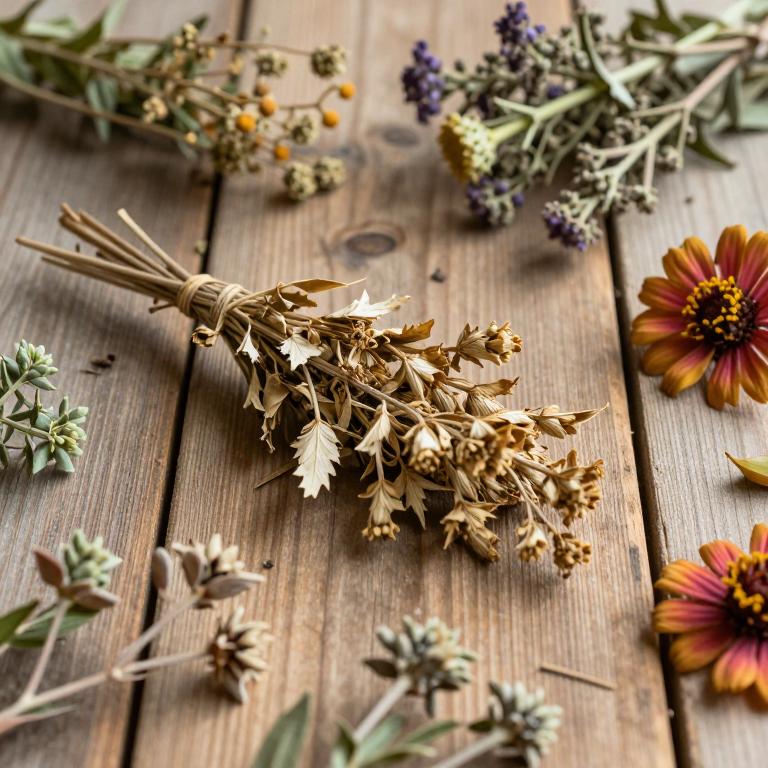
Peruvian zinnia, scientifically known as Zinnia peruviana, is a remarkable medicinal plant native to the Andean regions. Renowned for its vibrant blooms and therapeutic potential, it is traditionally used to treat various ailments. Exploring its phytochemical properties offers fascinating insights into the profound healing power of South American biodiversity.
Names and Synonyms
Common Names
- Peruvian zinnia
- field zinnia
- Cedstar Zinnia
- Redstar Zinnia
Scientific Names
Accepted name
Zinnia peruvianaSynonyms
- Chrysogonum peruvianum
- Zinnia multiflora var. rubra
- Crassina intermedia
- Crassina multiflora
- Crassina peruviana
- Lepia multiflora
- Lepia pauciflora
- Rudbeckia pauciflora
- Zinnia florida
- Zinnia fulva
- Zinnia linearifolia
- Zinnia lutea
- Zinnia mendocina
- Zinnia multiflora
- Zinnia revoluta
- Zinnia tenuiflora
- Zinnia verticillata
- Zinnia verticillata
- Zinnia hybrida
- Zinnia hybrida
- Crassina verticillata
- Crassina tenuiflora
- Crassina leptopoda
- Zinnia floridana
- Crassina peruviana var. flava
- Zinnia multiflora var. flava
- Zinnia intermedia
- Zinnia leptopoda
Regional and Traditional Names
Spanish:
- Colegiala
- Gallito de monte
- Muchachito
French:
- Zinnia du Pérou
- Zinnia péruvienne
Sources: Wikidata, Catalogue of Life
Taxonomical Classification
This plant belongs to the kingdom Plantae and the phylum Streptophyta. Within the class Equisetopsida and subclass Magnoliidae, it is categorized under the order Asterales and the family Asteraceae. Finally, it is classified under the genus Zinnia.
| Rank | Classification |
|---|---|
| Kingdom | Plantae |
| Phylum | Streptophyta |
| Class | Equisetopsida |
| Subclass | Magnoliidae |
| Order | Asterales |
| Family | Asteraceae |
| Genus | Zinnia |
Sources: The World Checklist of Vascular Plants (WCVP)
Distribution
This plant exhibits a diverse geographical distribution spanning several distinct regions across the African continent and its surrounding islands. In the Macaronesian region, it can be found specifically within the Cape Verde archipelago. Its range extends to West-Central Tropical Africa, where it inhabits the Gulf of Guinea Islands. Moving toward the northeast, the species is documented in the tropical territories of both Eritrea and Ethiopia. Finally, its presence reaches as far south as Zimbabwe in South Tropical Africa.
| Region | Area |
|---|---|
| Macaronesia | Cape Verde |
| West-Central Tropical Africa | Gulf of Guinea Is. |
| Northeast Tropical Africa | Eritrea |
| Northeast Tropical Africa | Ethiopia |
| South Tropical Africa | Zimbabwe |
| Southern Africa | Botswana |
| Southern Africa | Cape Provinces |
| Southern Africa | Lesotho |
| Southern Africa | Namibia |
| Southern Africa | KwaZulu-Natal |
Sources: The World Checklist of Vascular Plants (WCVP)
Botanical Identification
Ecology
The ecology of Zinnia peruvians is characterized by its ability to thrive in diverse altitudinal gradients and disturbed environments. This species exhibits a broad elevational range, beginning at sea level (0 m AMSL) and ascending to a maximum of 3000 m AMSL, with a mean elevational distribution centered around 1250 m AMSL. In terms of habitat preference, the plant is commonly found in open environments, frequently colonizing disturbed areas such as roadsides where sunlight availability is high.
- Elevational range max:
- 3000 m AMSL
- Elevational range mean:
- 1250 m AMSL
- Elevational range min:
- 0 m AMSL
- Habitat :
- roadsides, open
Genetics
The genetics of Zinnia peruvians, characterized by a specific chromosomal configuration, are defined by a diploid chromosome number of 2n = 24. This genetic blueprint serves as the fundamental basis for the plant's reproductive stability and cellular division processes. The consistent presence of 24 chromosomes influences the inheritance patterns of various morphological and physiological traits, providing the genomic framework necessary for its biological development and adaptation within its ecological niche.
- Chromosome number :
- 24
Life history
The life history of Zinnia peruvians is characterized by its status as an annual species, meaning it completes its entire biological cycle—from germination to seed production—within a single growing season. As a therophyte, the plant avoids the stresses of unfavorable environmental conditions by surviving primarily in the form of seeds, which remain dormant until conditions are optimal for growth. This life form strategy allows it to rapidly exploit available resources during its short life cycle, ensuring that it reaches reproductive maturity and disperses its progeny before the onset of seasonal changes.
- Life form :
- therophyte
- Lifecycle :
- annual
Morphology
The morphology of Zinnia peruvians is characterized by its growth form as a non-woody herb and specifically a forb. This plant is a terrestrial species, functioning as an independent organism rather than a parasite or an epiphyte, and it is neither aquatic nor semiaquatic in its natural habitat. It exhibits a self-supporting habit, meaning it does not function as a climber, liana, or vine. In terms of stature, it is a relatively low-growing plant with a height ranging from a minimum of 0.2 m to a maximum of 1 m.
- Aquatic :
- terrestrial
- Climber :
- self-supporting
- Epiphyte :
- terrestrial
- Growth form :
- herb
- Growth form :
- forb
- Parasite :
- independent
- Plant height max:
- 1 m
- Plant height min:
- 0.2 m
- Woodiness :
- non-woody
Physiology
The physiology of Zinnia peruviana is characterized by a C3 photosynthetic pathway, which dictates its carbon fixation processes and metabolic efficiency within its ecological niche. The leaf morphology plays a critical role in its gas exchange and light interception capabilities, with leaf dimensions exhibiting significant variability. Specifically, the leaves possess a length that ranges from a minimum of 1.5 cm to a maximum of 7 cm, while the width varies from a minimum of 0.5 cm to a maximum of 3 cm. This range in leaf size and shape influences the plant's transpiration rates and its ability to manage water use efficiency during its growth cycles.
- Leaf length max:
- 7 cm
- Leaf length min:
- 1.5 cm
- Leaf width max:
- 3 cm
- Leaf width min:
- 0.5 cm
- Photosynthetic pathway :
- C3
Reproduction
The reproduction of Zinnia peruviana is characterized by the production of dry, indehiscent fruits classified as achenes. These fruits exhibit a length ranging from a minimum of 0.9 cm to a maximum of 1 cm. Within these fruits, the seeds are remarkably consistent in size, maintaining a uniform seed volume of 3.9 mm³, which serves as both the minimum, mean, and maximum recorded value. The seed mass shows slight variability, with a minimum weight of 0.00384 g, a mean of 0.00408 g, and a maximum of 0.00435 g, reflecting the fine-scale morphological precision of its reproductive output.
- Dehiscence :
- indehiscent
- Fruit dryness :
- dry
- Fruit length max:
- 1 cm
- Fruit length min:
- 0.9 cm
- Fruit type :
- achene
- Seed mass max:
- 0.00435 g
- Seed mass mean:
- 0.00408 g
- Seed mass min:
- 0.00384 g
- Seed volume max:
- 3.9 mm³
Sources: Global Inventory of Floras and Traits (GIFT)
Chemicals
Zinnia peruviana has 1 reported phytochemicals identified across 0 scientific publications and several other databases. The most consistently reported chemicals include Onopordin.
| Chemical | Supporting sources | Consensus |
|---|---|---|
| Onopordin | 1 supporting sources | ★☆☆☆☆ |
Onopordin
- Natural product research
Activities
Zinnia peruviana has 1 reported activities identified across 0 scientific publications and several other databases. The most consistently reported activities include Antibacterial.
| Activity | Supporting sources | Consensus |
|---|---|---|
| Antibacterial | 1 supporting sources | ★☆☆☆☆ |
Antibacterial
- Natural product research