youth-and-age
Zinnia elegans · Accepted scientific name
Scientific literature: Very Sparse (8 studies) · ★☆☆☆☆
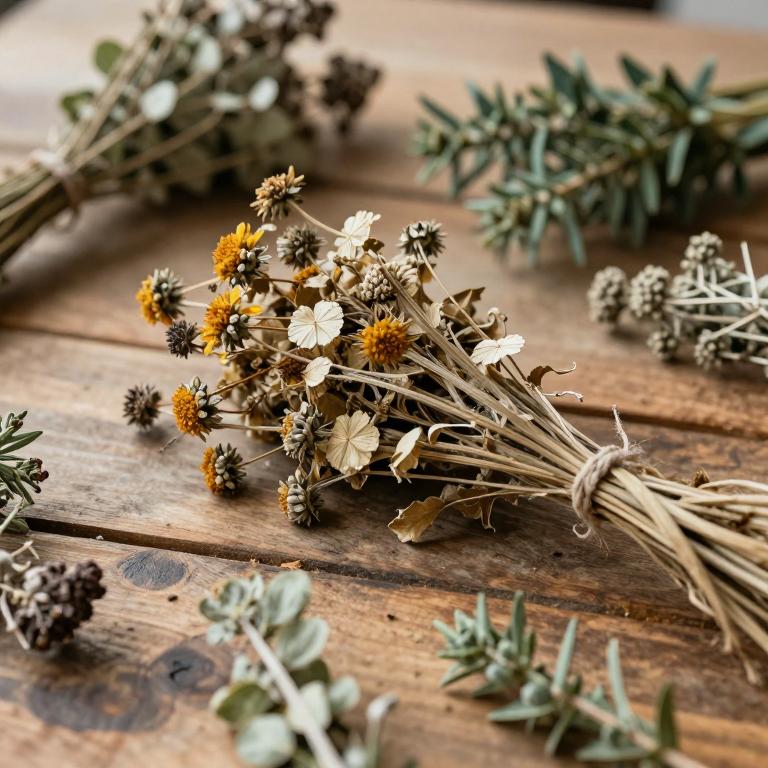
youth-and-age, scientifically known as Zinnia elegans, is a vibrant annual celebrated for its brilliant blooms and therapeutic potential. Beyond its ornamental beauty, this plant is traditionally valued in folk medicine for its anti-inflammatory and antimicrobial properties, offering a natural approach to skin health and various restorative wellness practices.
Names and Synonyms
Common Names
- Young's helleborine
- Youth-and-age
- common zinnia
- elegant zinnia
- garden zinnia
- youth-and-old-age
Scientific Names
Accepted name
Zinnia elegansSynonyms
- Crassina elegans
- Crassina linearis
- Zinnia australis
- Zinnia linearis var. latifolia
- Zinnia linearis
- Zinnia violacea var. coccinea
- Zinnia violacea
- Zinnia elegans var. violacea
- Zinnia elegans var. coccinea
- Zinnia elegans var. alba
- Zinnia elegans var. purpurascens
Regional and Traditional Names
Spanish:
- Carolina amarilla
- Celia
- Mal de ojo
- San Rafael
German:
- Garten-Zinnie
- Pracht-Zinnie
- Zinnie
French:
- zinnia élégant
Sources: Wikidata, Catalogue of Life
Taxonomical Classification
This plant belongs to the kingdom Plantae and the phylum Streptophyta, placing it within the class Equisetopsida and subclass Magnoliidae. It is classified under the order Asterales and the family Asteraceae. Finally, its specific taxonomic identity is defined by the genus Zinnia.
| Rank | Classification |
|---|---|
| Kingdom | Plantae |
| Phylum | Streptophyta |
| Class | Equisetopsida |
| Subclass | Magnoliidae |
| Order | Asterales |
| Family | Asteraceae |
| Genus | Zinnia |
Sources: The World Checklist of Vascular Plants (WCVP)
Distribution
This plant exhibits a specific geographical distribution across several nations in Middle Europe. Within this region, it can be found growing in the country of Austria. Its presence extends into the territories of Czechia and Slovakia as well. Furthermore, the species is documented throughout Germany and Hungary. Finally, the distribution of this medicinal plant reaches into Poland.
| Region | Area |
|---|---|
| Middle Europe | Austria |
| Middle Europe | Czechia-Slovakia |
| Middle Europe | Germany |
| Middle Europe | Hungary |
| Middle Europe | Poland |
| Southwestern Europe | Baleares |
| Southwestern Europe | France |
| Southwestern Europe | Portugal |
| Southwestern Europe | Sardegna |
| Southwestern Europe | Spain |
Sources: The World Checklist of Vascular Plants (WCVP)
Botanical Identification
Ecology
The ecology of Zinnia elegans is characterized by its adaptability to diverse environments, ranging from disturbed human-altered landscapes to specific natural biomes. It is commonly found in anthropogenic areas (Área Antrópica), as well as within the Caatinga (strictu sensu) and Cerrado (lato sensu) ecosystems. This species demonstrates a broad altitudinal distribution, thriving at elevations starting from sea level (0 m AMSL) up to a maximum height of 1000 m AMSL.
- Elevational range max:
- 1000 m AMSL
- Elevational range min:
- 0 m AMSL
- Habitat :
- Área Antrópica, Caatinga (stricto sensu), Cerrado (lato sensu)
Life history
The life history of Zinnia elegans is characterized by its classification as an annual plant, meaning it completes its entire developmental cycle—from germination to seed production and death—within a single growing season. Functioning as a therophyte, the plant survives the unfavorable seasons in the form of seeds, which remain dormant until environmental conditions become suitable for the next generation. This lifecycle ensures rapid colonization and reproduction, as the plant focuses its energy on quick growth, prolific flowering, and efficient seed dispersal to secure its presence in subsequent years.
- Life form :
- therophyte
- Lifecycle :
- annual
Morphology
The morphology of Zinnia elegans is characterized by its growth form as a non-woody herb and forb, typically manifesting as a self-supporting, independent organism that does not function as a climber, liana, or vine. As a terrestrial species, it is neither aquatic nor an epiphyte, growing directly in soil. The plant exhibits an erect shoot orientation, maintaining an upright structure throughout its development. In terms of stature, it is a relatively low-growing species, with a plant height ranging from a minimum of 0.2 m to a maximum of 1 m.
- Aquatic :
- terrestrial
- Climber :
- self-supporting
- Epiphyte :
- terrestrial
- Growth form :
- herb
- Growth form :
- forb
- Parasite :
- independent
- Plant height max:
- 1 m
- Plant height min:
- 0.2 m
- Shoot orientation :
- erect
- Woodiness :
- non-woody
Physiology
The physiology of Zinnia elegans is characterized by a C3 photosynthetic pathway, which involves the direct fixation of carbon dioxide through the Calvin cycle using the enzyme RuBisCO. As a non-succulent species, it lacks specialized water-storage tissues, meaning its physiological processes are highly dependent on consistent soil moisture and regular transpiration cycles to maintain turgor pressure and nutrient transport. Because it does not employ CAM or C4 mechanisms, its metabolic efficiency is most optimal in environments where light intensity and temperature are moderate, allowing for efficient gas exchange through its stomata without the extreme water-conserving adaptations found in succulent or C4 plants.
- Photosynthetic pathway :
- C3
- Succulence :
- no
Reproduction
The reproduction of Zinnia elegans is characterized by a seasonal flowering cycle and specific seed production metrics. The plant typically enters its flowering phase starting in June, maintaining blooms through until October, though the timing can remain variable depending on environmental conditions. Its reproductive output is manifested through seeds that exhibit a notable range in weight; the seed mass varies from a minimum of 0.0025 g to a maximum of 0.01133 g, with an overall mean seed mass calculated at 0.0058325 g. Furthermore, the dispersal of these seeds is facilitated by an anemochorous syndrome, meaning they are primarily dispersed by the wind.
- Dispersal syndrome :
- anemochorous
- Flowering time :
- Jun
- Flowering time :
- Oct
- Seed mass max:
- 0.01133 g
- Seed mass mean:
- 0.0058325 g
- Seed mass min:
- 0.0025 g
Sources: Global Inventory of Floras and Traits (GIFT)
Chemicals
Zinnia elegans has 6 reported phytochemicals identified across 0 scientific publications and several other databases. The most consistently reported chemicals include Abscisic acid (ABA), H2O2, Malondialdehyde, Potassium (K+), proline.
| Chemical | Supporting sources | Consensus |
|---|---|---|
| Abscisic acid (ABA) | 1 supporting sources | ★☆☆☆☆ |
| H2O2 | 1 supporting sources | ★☆☆☆☆ |
| Malondialdehyde | 1 supporting sources | ★☆☆☆☆ |
| Potassium (K+) | 1 supporting sources | ★☆☆☆☆ |
| proline | 1 supporting sources | ★☆☆☆☆ |
| putrescine | 1 supporting sources | ★☆☆☆☆ |
Abscisic acid (ABA)
- BMC plant biology
H2O2
- BMC plant biology
Malondialdehyde
- BMC plant biology
Potassium (K+)
- BMC plant biology
proline
- BMC plant biology
putrescine
- BMC plant biology
Conditions
Zinnia elegans has 2 reported investigations on conditions identified across 0 scientific publications and several other databases. The most consistently reported conditions include salinity stress, salt stress.
| Condition | Supporting sources | Consensus |
|---|---|---|
| Salinity stress | 1 supporting sources | ★☆☆☆☆ |
| Salt stress | 1 supporting sources | ★☆☆☆☆ |
Salinity stress
- BMC plant biology
Salt stress
- BMC plant biology