ginger
Zingiber · Accepted scientific name
Scientific literature: Very Sparse (8 studies) · ★☆☆☆☆
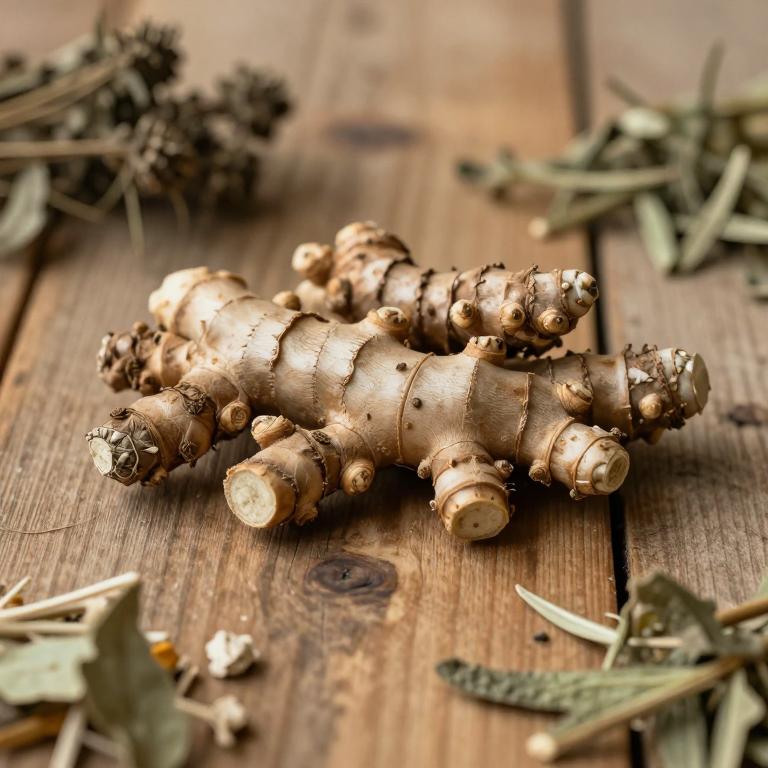
Ginger, scientifically known as Zingiber, is a versatile rhizomatous herb celebrated for its potent medicinal properties. Renowned for its warming effects, it effectively alleviates nausea, aids digestion, and reduces inflammation. Beyond its culinary use, this aromatic plant serves as a powerful natural remedy in traditional and modern medicine.
Names and Synonyms
Common Names
- ginger
- true gingers
- Gingers
- Ginger (not culinary)
Scientific Names
Accepted name
ZingiberSynonyms
- Jaegera
- Amomum
- Dymczewiczia
- Dieterichia
- Cassumunar
- Thumung
Regional and Traditional Names
Spanish:
- Gengibres asiáticos
German:
- Ingwer
French:
- Gingembres vrais
Sources: Wikidata, Catalogue of Life
Taxonomical Classification
This plant belongs to the kingdom Plantae and is classified under the phylum Streptophyta and class Equisetopsida. Within the subclass Magnoliidae, it falls under the order Zingiberales and the family Zingiberaceae. Finally, it is categorized under the genus Zingiber.
| Rank | Classification |
|---|---|
| Kingdom | Plantae |
| Phylum | Streptophyta |
| Class | Equisetopsida |
| Subclass | Magnoliidae |
| Order | Zingiberales |
| Family | Zingiberaceae |
| Genus | Zingiber |
Sources: The World Checklist of Vascular Plants (WCVP)
Distribution
This plant exhibits a broad geographical distribution across several tropical regions. In West-Central Tropical Africa, it can be found around the Gulf of Guinea Islands. Its presence extends significantly into the Western Indian Ocean, where it inhabits the Comoros and Madagascar. Additionally, the species is located within the Chagos Archipelago. Finally, its range includes the island of Mauritius.
| Region | Area |
|---|---|
| West-Central Tropical Africa | Gulf of Guinea Is. |
| Western Indian Ocean | Chagos Archipelago |
| Western Indian Ocean | Comoros |
| Western Indian Ocean | Mauritius |
| Western Indian Ocean | Madagascar |
| Western Indian Ocean | Réunion |
| Western Indian Ocean | Rodrigues |
| China | China South-Central |
| China | Hainan |
| China | China Southeast |
Sources: The World Checklist of Vascular Plants (WCVP)
Plant Parts
Zingiber has 2 reported plant parts identified across 3 scientific publications and several other databases that are studied for medicinal purposes. The most consistently reported plant part include seed, fruit.
| Plant part | Supporting sources | Consensus |
|---|---|---|
| Seed | 2 supporting sources | ★☆☆☆☆ |
| Fruit | 1 supporting sources | ★☆☆☆☆ |
Seed
- Journal of ethnopharmacology
- Biomolecules
Fruit
- Journal of ethnopharmacology
Chemicals
Zingiber has 2 reported phytochemicals identified across 3 scientific publications and several other databases. The most consistently reported chemicals include AFB1, AFB2.
| Chemical | Supporting sources | Consensus |
|---|---|---|
| AFB1 | 1 supporting sources | ★☆☆☆☆ |
| AFB2 | 1 supporting sources | ★☆☆☆☆ |
AFB1
- Toxins
AFB2
- Toxins
Activities
Zingiber has 2 reported activities identified across 3 scientific publications and several other databases. The most consistently reported activities include Antioxidant, Antimicrobial.
| Activity | Supporting sources | Consensus |
|---|---|---|
| Antioxidant | 2 supporting sources | ★☆☆☆☆ |
| Antimicrobial | 1 supporting sources | ★☆☆☆☆ |
Antioxidant
- Journal of ethnopharmacology
- Biomolecules
Antimicrobial
- Biomolecules