Zataria
Zataria · Accepted scientific name
Scientific literature: Very Sparse (3 studies) · ★☆☆☆☆
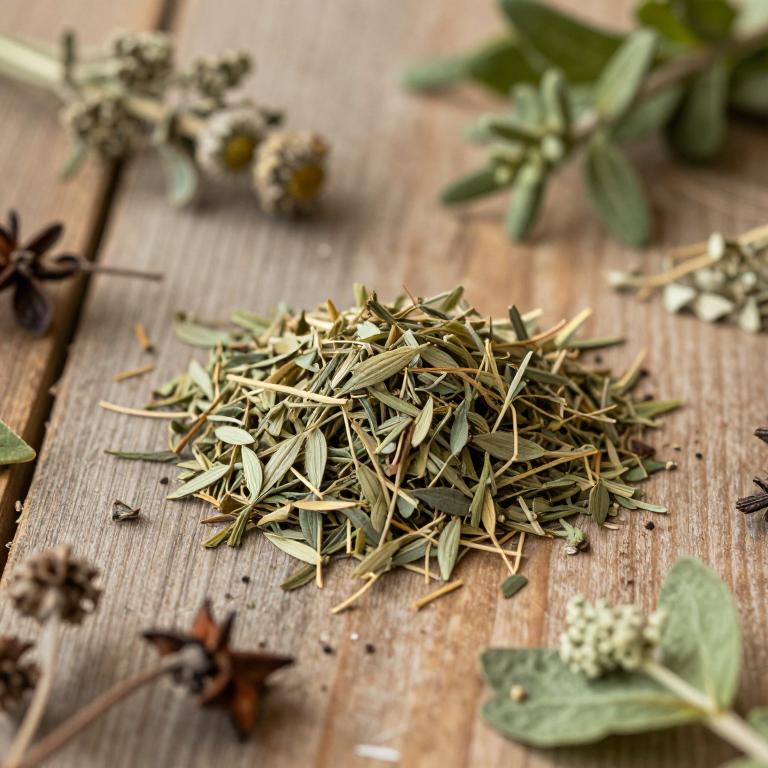
Scientifically known as Zataria, is a versatile aromatic herb belonging to the Lamiaceae family. Renowned for its potent essential oils, this plant offers significant therapeutic benefits, including antimicrobial and digestive support. Widely used in traditional medicine and culinary arts, it remains a vital botanical resource for holistic wellness.
- Family
- Lamiaceae
- Native range
- Asia-Temperate
- Parts used
- Not available
- Common names
- Not available
- Scientific synonyms
- Not available
Names and Synonyms
Scientific Names
Accepted name
ZatariaSources: Wikidata
Taxonomical Classification
This plant belongs to the kingdom Plantae within the phylum Streptophyta and the class Equisetopsida. It is further classified under the subclass Magnoliidae and the order Lamiales, falling into the family Lamiaceae. Finally, the medicinal plant is categorized under the genus Zataria.
| Rank | Classification |
|---|---|
| Kingdom | Plantae |
| Phylum | Streptophyta |
| Class | Equisetopsida |
| Subclass | Magnoliidae |
| Order | Lamiales |
| Family | Lamiaceae |
| Genus | Zataria |
Sources: The World Checklist of Vascular Plants (WCVP)
Distribution
This plant exhibits a broad geographical distribution across several key regions in Asia. In Western Asia, it is commonly found growing within the territories of Afghanistan and Iran. Its presence extends into the Arabian Peninsula, specifically inhabiting parts of Oman. Within the Indian Subcontinent, the species can be identified in Pakistan. Finally, it also thrives in the mountainous landscapes of the West Himalaya.
| Region | Area |
|---|---|
| Western Asia | Afghanistan |
| Western Asia | Iran |
| Arabian Peninsula | Oman |
| Indian Subcontinent | Pakistan |
| Indian Subcontinent | West Himalaya |
Sources: The World Checklist of Vascular Plants (WCVP)
Chemicals
Zataria has 2 reported phytochemicals identified across 0 scientific publications and several other databases. The most consistently reported chemicals include diazinon, malathion.
| Chemical | Supporting sources | Consensus |
|---|---|---|
| diazinon | 1 supporting sources | ★☆☆☆☆ |
| malathion | 1 supporting sources | ★☆☆☆☆ |
diazinon
- Daru : journal of Faculty of Pharmacy, Tehran University of Medical Sciences
malathion
- Daru : journal of Faculty of Pharmacy, Tehran University of Medical Sciences
Preparations
Zataria has 2 reported preparations identified across 0 scientific publications and several other databases. The most consistently reported preparations include essential oils, samples.
| Preparation | Supporting sources | Consensus |
|---|---|---|
| Essential oils | 1 supporting sources | ★☆☆☆☆ |
| Samples | 1 supporting sources | ★☆☆☆☆ |
Essential oils
- Iranian journal of parasitology
Samples
- Daru : journal of Faculty of Pharmacy, Tehran University of Medical Sciences