prickly-ash
Zanthoxylum · Accepted scientific name
Scientific literature: Very Sparse (41 studies) · ★☆☆☆☆
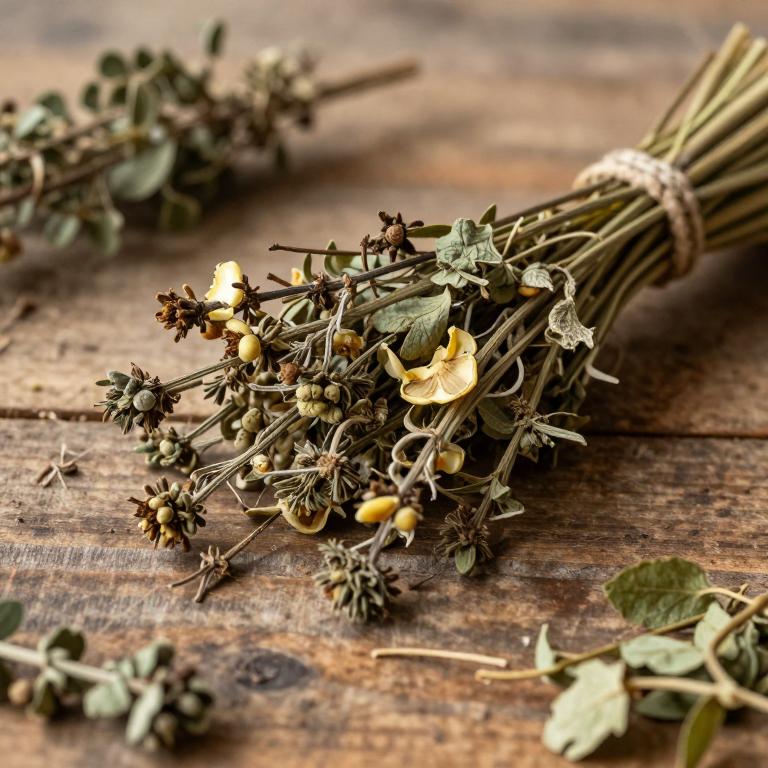
Prickly-ash, scientifically known as Zanthoxylum, is a versatile medicinal shrub renowned for its potent therapeutic properties. Rich in essential oils and bioactive alkaloids, it is traditionally utilized in herbal medicine to treat digestive issues, respiratory ailments, and inflammatory conditions. This resilient plant offers a unique blend of healing potential.
Names and Synonyms
Common Names
- prickly-ash
- Knobwoods
- prickly-ashes
- pricklyash
Scientific Names
Accepted name
ZanthoxylumSynonyms
- Fagara
- Xanthophyllon
- Lacaris
- Fagara
- Doratium
- Fagaras
- Curtisia
- Tenorea
- Ochroxylum
- Tipalia
- Pterota
- Tobinia
- Pseudopetalon
- Toddalia
- Pohlana
- Cranzia
- Perijea
- Duncania
- Kampmannia
- Dipetalum
- Mioptrila
- Aubertia
- Blackburnia
Sources: Wikidata, Catalogue of Life
Taxonomical Classification
This plant belongs to the kingdom Plantae and the phylum Streptophyta, falling under the class Equisetopsida and subclass Magnoliidae. It is further classified within the order Sapindales and the family Rutaceae. Ultimately, it is identified by the genus Zanthoxylum.
| Rank | Classification |
|---|---|
| Kingdom | Plantae |
| Phylum | Streptophyta |
| Class | Equisetopsida |
| Subclass | Magnoliidae |
| Order | Sapindales |
| Family | Rutaceae |
| Genus | Zanthoxylum |
Sources: The World Checklist of Vascular Plants (WCVP)
Distribution
This plant, Zanthoxylum, exhibits a specific geographical distribution across the West Tropical Africa region. It is documented to grow within the borders of Benin, where it thrives in local ecosystems. The species is also found in Burkina, contributing to the regional biodiversity of the area. Furthermore, its presence extends to the coastal and inland territories of Gambia. Finally, the plant's range reaches into Guinea-Bissau, completing its distribution across these West African nations.
| Region | Area |
|---|---|
| West Tropical Africa | Benin |
| West Tropical Africa | Burkina |
| West Tropical Africa | Gambia |
| West Tropical Africa | Ghana |
| West Tropical Africa | Guinea-Bissau |
| West Tropical Africa | Guinea |
| West Tropical Africa | Ivory Coast |
| West Tropical Africa | Liberia |
| West Tropical Africa | Mali |
| West Tropical Africa | Nigeria |
Sources: The World Checklist of Vascular Plants (WCVP)
Plant Parts
Zanthoxylum has 3 reported plant parts identified across 6 scientific publications and several other databases that are studied for medicinal purposes. The most consistently reported plant part include seed, fruit, leaf.
| Plant part | Supporting sources | Consensus |
|---|---|---|
| Seed | 3 supporting sources | ★★☆☆☆ |
| Fruit | 2 supporting sources | ★☆☆☆☆ |
| Leaf | 1 supporting sources | ★☆☆☆☆ |
Seed
- Current drug targets
- Journal of the science of food and agriculture
- Plant science : an international journal of experimental plant biology
Fruit
- Current drug targets
- Surgery
Leaf
- Current drug targets
Chemicals
Zanthoxylum has 7 reported phytochemicals identified across 6 scientific publications and several other databases. The most consistently reported chemicals include Coumarins, Lignans, SM, Skimmianine, l-asarinin.
| Chemical | Supporting sources | Consensus |
|---|---|---|
| Coumarins | 1 supporting sources | ★☆☆☆☆ |
| Lignans | 1 supporting sources | ★☆☆☆☆ |
| SM | 1 supporting sources | ★☆☆☆☆ |
| Skimmianine | 1 supporting sources | ★☆☆☆☆ |
| l-asarinin | 1 supporting sources | ★☆☆☆☆ |
| l-sesamin | 1 supporting sources | ★☆☆☆☆ |
| sucrose | 1 supporting sources | ★☆☆☆☆ |
Coumarins
- Heliyon
Lignans
- Heliyon
SM
- Medicinal chemistry (Shariqah (United Arab Emirates))
Skimmianine
- Medicinal chemistry (Shariqah (United Arab Emirates))
l-asarinin
- Di 1 jun yi da xue xue bao = Academic journal of the first medical college of PLA
l-sesamin
- Di 1 jun yi da xue xue bao = Academic journal of the first medical college of PLA
sucrose
- Plant science : an international journal of experimental plant biology
Activities
Zanthoxylum has 5 reported activities identified across 6 scientific publications and several other databases. The most consistently reported activities include Analgesic, Antibacterial, Antimalarial, Antioxidant, Antitussive.
| Activity | Supporting sources | Consensus |
|---|---|---|
| Analgesic | 1 supporting sources | ★☆☆☆☆ |
| Antibacterial | 1 supporting sources | ★☆☆☆☆ |
| Antimalarial | 1 supporting sources | ★☆☆☆☆ |
| Antioxidant | 1 supporting sources | ★☆☆☆☆ |
| Antitussive | 1 supporting sources | ★☆☆☆☆ |
Analgesic
- Current drug discovery technologies
Antibacterial
- Current drug discovery technologies
Antimalarial
- Current drug discovery technologies
Antioxidant
- Current drug discovery technologies
Antitussive
- Current drug discovery technologies
Conditions
Zanthoxylum has 19 reported investigations on conditions identified across 6 scientific publications and several other databases. The most consistently reported conditions include inflammation, pain, antihypertensive, bacterial diseases, brain diseases.
| Condition | Supporting sources | Consensus |
|---|---|---|
| Inflammation | 2 supporting sources | ★☆☆☆☆ |
| Pain | 2 supporting sources | ★☆☆☆☆ |
| Antihypertensive | 1 supporting sources | ★☆☆☆☆ |
| Bacterial diseases | 1 supporting sources | ★☆☆☆☆ |
| Brain diseases | 1 supporting sources | ★☆☆☆☆ |
| Gastrointestinal disorders | 1 supporting sources | ★☆☆☆☆ |
| Hyperlipidemia | 1 supporting sources | ★☆☆☆☆ |
| Hypertension | 1 supporting sources | ★☆☆☆☆ |
| Hypoglycemia | 1 supporting sources | ★☆☆☆☆ |
| Infection | 1 supporting sources | ★☆☆☆☆ |
Inflammation
- Molecules (Basel, Switzerland)
- Heliyon
Pain
- Molecules (Basel, Switzerland)
- Heliyon
Antihypertensive
- Journal of the science of food and agriculture
Bacterial diseases
- Journal of ethnopharmacology
Brain diseases
- Molecules (Basel, Switzerland)
Gastrointestinal disorders
- Journal of ethnopharmacology
Hyperlipidemia
- Heliyon
Hypertension
- Molecules (Basel, Switzerland)
Hypoglycemia
- Heliyon
Infection
- Heliyon