Zanthoxylum limoncello
Zanthoxylum limoncello · Accepted scientific name
Scientific literature: Very Sparse (7 studies) · ★☆☆☆☆
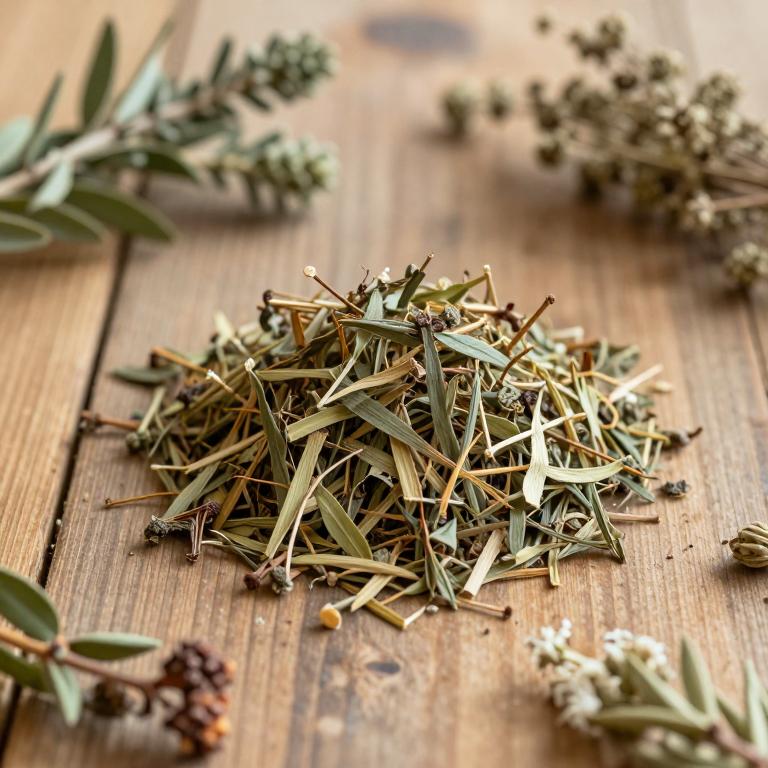
Scientifically known as Zanthoxylum limoncello, is a versatile medicinal plant prized for its potent therapeutic properties. Renowned for its aromatic leaves and citrus-like essence, it serves as a natural remedy for digestive ailments and inflammation. This botanical treasure offers significant antioxidant benefits, making it essential in traditional herbal medicine.
- Family
- Rutaceae
- Native range
- Northern America
- Parts used
- Leaf
- Common names
- Not available
- Scientific synonyms
- Fagara Costaricensis · Zanthoxylum Liebmannianum · 7 more
Names and Synonyms
Scientific Names
Accepted name
Zanthoxylum limoncelloSynonyms
- Fagara costaricensis
- Zanthoxylum liebmannianum
- Fagara liebmanniana
- Fagara limoncello
- Zanthoxylum longipes
- Fagara foetida
- Zanthoxylum costaricense
- Fagara uhdei
- Zanthoxylum foetidum
Regional and Traditional Names
Spanish:
- Hierba de chivo
Sources: Wikidata, Catalogue of Life
Taxonomical Classification
This plant belongs to the kingdom Plantae and is classified under the phylum Streptophyta and class Equisetopsida. Within the subclass Magnoliidae, it falls under the order Sapindales and the family Rutaceae. Finally, its taxonomic identity is defined by the genus Zanthoxylum, specifically the species Zanthoxylum limonella.
| Rank | Classification |
|---|---|
| Kingdom | Plantae |
| Phylum | Streptophyta |
| Class | Equisetopsida |
| Subclass | Magnoliidae |
| Order | Sapindales |
| Family | Rutaceae |
| Genus | Zanthoxylum |
Sources: The World Checklist of Vascular Plants (WCVP)
Distribution
This plant exhibits a widespread distribution across several key regions of Mexico. It can be found throughout Mexico Central and stretching across the Mexico Gulf coast. Additionally, its presence extends into the Mexico Southwest and Mexico Southeast territories. Moving further south, the species is also documented within the borders of Central America. Specifically, it has been identified growing in the country of Costa Rica.
| Region | Area |
|---|---|
| Mexico | Mexico Central |
| Mexico | Mexico Gulf |
| Mexico | Mexico Southwest |
| Mexico | Mexico Southeast |
| Central America | Costa Rica |
| Central America | El Salvador |
| Central America | Guatemala |
| Central America | Honduras |
| Central America | Panamá |
| Western South America | Colombia |
Sources: The World Checklist of Vascular Plants (WCVP)
Botanical Identification
Ecology
The ecology of Zanthoxylum limonella is characterized by its specific niche within montane forest ecosystems, where it thrives across a distinct altitudinal gradient. This species is primarily distributed within an elevational range that begins at 1000 m AMSL and extends up to a maximum of 2000 m AMSL. Within this vertical span, the plant adapts to varying microclimates, typically favoring the moisture-retentive soils and filtered sunlight found in mid-to-high altitude subtropical or tropical montane environments. Its presence within these specific elevational boundaries suggests a specialized adaptation to the temperature regimes and atmospheric pressures unique to these mid-elevation zones.
- Elevational range max:
- 2000 m AMSL
- Elevational range min:
- 1000 m AMSL
Morphology
The morphology of Xanthoxylum limonella is characterized by a robust growth form, specifically classified as a tree. It is a woody plant that maintains a self-supporting structure, distinguishing it from climbing forms such as lianas or vines. As a terrestrial species, it does not exhibit aquatic or semiaquatic tendencies, nor does it function as an epiphyte, whether in holoepiphytic or hemiepiphytic forms. Furthermore, the plant is an independent organism, lacking any parasitic tendencies, and establishes its presence firmly within terrestrial ecosystems.
- Aquatic :
- terrestrial
- Climber :
- self-supporting
- Epiphyte :
- terrestrial
- Growth form :
- tree
- Parasite :
- independent
- Woodiness :
- woody
Reproduction
The reproduction of Xanthoxylum limonella is characterized by the production of specialized seeds that exhibit a highly consistent and uniform physical profile. Quantitative analysis of the seed characteristics reveals a very narrow range of variation, indicating a stable reproductive output. The mean seed mass is recorded at 0.010805 g, with the individual seed weights fluctuating only minimally between a minimum value of 0.01077 g and a maximum value of 0.01084 g. This extreme precision in seed mass suggests a highly regulated developmental process during the maturation phase of the plant's reproductive cycle.
- Seed mass max:
- 0.01084 g
- Seed mass mean:
- 0.010805 g
- Seed mass min:
- 0.01077 g
Sources: Global Inventory of Floras and Traits (GIFT)
Plant Parts
Zanthoxylum limoncello has 1 reported plant parts identified across 1 scientific publications and several other databases that are studied for medicinal purposes. The most consistently reported plant part include leaf.
| Plant part | Supporting sources | Consensus |
|---|---|---|
| Leaf | 1 supporting sources | ★☆☆☆☆ |
Leaf
- Fitoterapia
Chemicals
Zanthoxylum limoncello has 5 reported phytochemicals identified across 1 scientific publications and several other databases. The most consistently reported chemicals include Asarinin, BETA-SITOSTEROL, Hyperin, alpha-Sanshool, beta-Sitosterol glucoside.
| Chemical | Supporting sources | Consensus |
|---|---|---|
| Asarinin | 1 supporting sources | ★☆☆☆☆ |
| BETA-SITOSTEROL | 1 supporting sources | ★☆☆☆☆ |
| Hyperin | 1 supporting sources | ★☆☆☆☆ |
| alpha-Sanshool | 1 supporting sources | ★☆☆☆☆ |
| beta-Sitosterol glucoside | 1 supporting sources | ★☆☆☆☆ |
Asarinin
- Fitoterapia
BETA-SITOSTEROL
- Fitoterapia
Hyperin
- Fitoterapia
alpha-Sanshool
- Planta medica
beta-Sitosterol glucoside
- Fitoterapia
Activities
Zanthoxylum limoncello has 1 reported activities identified across 1 scientific publications and several other databases. The most consistently reported activities include Anthelmintic.
| Activity | Supporting sources | Consensus |
|---|---|---|
| Anthelmintic | 1 supporting sources | ★☆☆☆☆ |
Anthelmintic
- Planta medica
Preparations
Zanthoxylum limoncello has 1 reported preparations identified across 1 scientific publications and several other databases. The most consistently reported preparations include crude ethanol extract.
| Preparation | Supporting sources | Consensus |
|---|---|---|
| Crude ethanol extract | 1 supporting sources | ★☆☆☆☆ |
Crude ethanol extract
- Fitoterapia