Yucca brevifolia
Yucca brevifolia · Accepted scientific name
Scientific literature: Very Sparse (14 studies) · ★☆☆☆☆
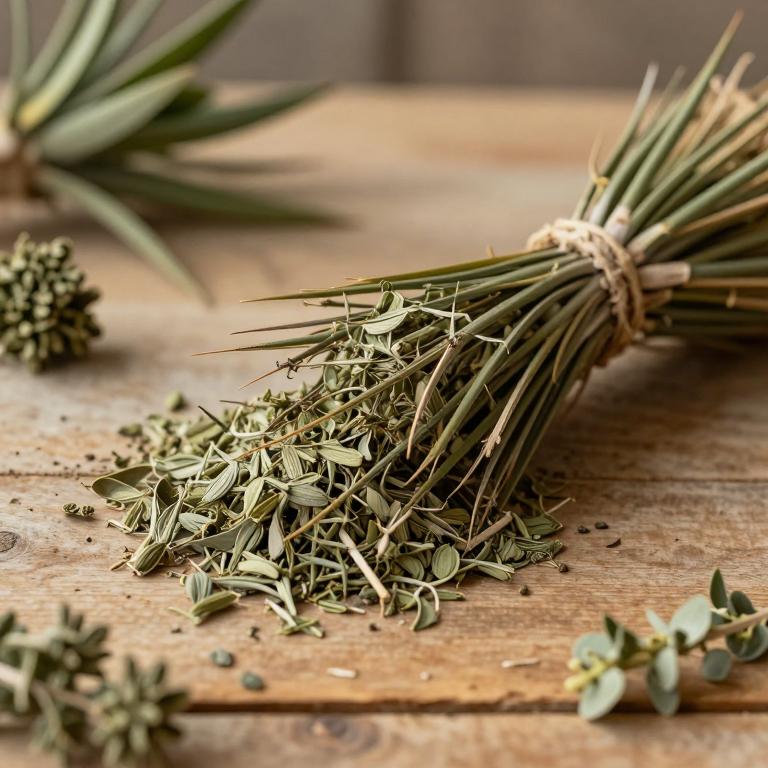
, scientifically known as Yucca brevifolia, is a resilient desert shrub native to the Mojave Desert. Commonly called Mojave Yucca, this striking plant is prized for its architectural rosette of stiff, sword-like leaves. Beyond its ornamental beauty, it holds significant ecological value and traditional importance in arid landscapes.
- Family
- Not available
- Native range
- Northern America
- Parts used
- Not available
- Common names
- Not available
- Scientific synonyms
- Not available
Names and Synonyms
Scientific Names
Accepted name
Yucca brevifoliaDistribution
This plant is primarily located within the arid regions of the Southwestern United States. Specifically, its range extends across the state of California. It can also be found growing throughout the landscapes of Nevada. Moving south across the border, the species is distributed within Mexico. Its presence is noted specifically in the Northwest portion of the Mexican territory.
| Region | Area |
|---|---|
| Southwestern U.S.A. | California |
| Southwestern U.S.A. | Nevada |
| Mexico | Mexico Northwest |
Sources: The World Checklist of Vascular Plants (WCVP)
Botanical Identification
Life history
The life history of Yucca brevifolia is characterized by its status as a perennial organism, allowing it to persist in its environment through multiple growing seasons. As a phanerophyte, its reproductive buds are elevated above the ground level, typically supported by a woody structure or a robust stem architecture that defines its life form. This phanerophyte classification, observed in both its life form categories, indicates a growth strategy where the plant maintains its vital organs above the soil surface, facilitating long-term survival and structural stability within its native habitat.
- Life form :
- phanerophyte
- Lifecycle :
- perennial
Morphology
The morphology of Yucca brevifolia is characterized by a woody structure that allows it to function as both a tree and a shrub. It is a self-supporting plant that does not rely on climbing mechanisms, maintaining an independent existence as a non-parasitic species. As a terrestrial organism, it grows directly in the soil rather than as an epiphyte. The plant exhibits a significant stature, reaching a mean height of approximately 12.17 m.
- Climber :
- self-supporting
- Epiphyte :
- terrestrial
- Growth form :
- tree
- Growth form :
- shrub
- Parasite :
- independent
- Plant height mean:
- 12.17 m
- Woodiness :
- woody
Physiology
The physiology of Yucca brevifolia is characterized by a robust metabolic framework adapted to arid environments, most notably through its utilization of the C3 photosynthetic pathway. Despite inhabiting regions prone to water scarcity, this plant relies on the standard C3 mechanism for carbon fixation, where CO2 is incorporated into a five-carbon sugar via the enzyme RuBisCO during the day. To mitigate the inherent water loss associated with this pathway in dry climates, the plant employs physiological strategies such as regulated stomatal conductance and succulent tissues that assist in moisture retention. Its metabolic processes are tightly integrated with its structural adaptations, allowing it to manage gas exchange and energy production while navigating the physiological stresses of its native habitat.
- Photosynthetic pathway :
- C3
Reproduction
The reproduction of Yucca brevifolia is characterized by specific seed morphologies and diverse dispersal strategies. The seeds produced by this species exhibit a notable range in weight, with a recorded minimum mass of approximately 0.071526 g and a maximum mass reaching 0.11621 g, resulting in a calculated mean seed mass of 0.0712575556666667 g. In terms of movement and propagation, the plant employs a multi-faceted dispersal syndrome; while it is primarily identified as zoochorous (dispersed by animals), its reproductive success is supported by a complex combination of anemochorous (wind), autochorous (self-dispersal), hydrochorous (water), and unspecialized dispersal mechanisms.
- Dispersal syndrome :
- zoochorous
- Seed mass max:
- 0.11621 g
- Seed mass mean:
- 0.0712575556666667 g
- Seed mass min:
- 0.071526 g
Sources: Global Inventory of Floras and Traits (GIFT)
Chemicals
Yucca brevifolia has 5 reported phytochemicals identified across 0 scientific publications and several other databases. The most consistently reported chemicals include Kammogenin, Saponins, Sarsasapogenin, Smilagenin, Tigogenin.
| Chemical | Supporting sources | Consensus |
|---|---|---|
| Kammogenin | 1 supporting sources | ★☆☆☆☆ |
| Saponins | 1 supporting sources | ★☆☆☆☆ |
| Sarsasapogenin | 1 supporting sources | ★☆☆☆☆ |
| Smilagenin | 1 supporting sources | ★☆☆☆☆ |
| Tigogenin | 1 supporting sources | ★☆☆☆☆ |
Kammogenin
- Dr. Duke
Saponins
- Dr. Duke
Sarsasapogenin
- Dr. Duke
Smilagenin
- Dr. Duke
Tigogenin
- Dr. Duke
Activities
Yucca brevifolia has 9 reported activities identified across 0 scientific publications and several other databases. The most consistently reported activities include Antialzheimeran, Antidementia, Antihepatomic, Antimutagenic, Antitumor.
| Activity | Supporting sources | Consensus |
|---|---|---|
| Antialzheimeran | 1 supporting sources | ★☆☆☆☆ |
| Antidementia | 1 supporting sources | ★☆☆☆☆ |
| Antihepatomic | 1 supporting sources | ★☆☆☆☆ |
| Antimutagenic | 1 supporting sources | ★☆☆☆☆ |
| Antitumor | 1 supporting sources | ★☆☆☆☆ |
| Antitumor (Lung) | 1 supporting sources | ★☆☆☆☆ |
| Antitumor (Ovary) | 1 supporting sources | ★☆☆☆☆ |
| Cerebrotonic | 1 supporting sources | ★☆☆☆☆ |
| Immunomodulator | 1 supporting sources | ★☆☆☆☆ |
Antialzheimeran
- Dr. Duke
Antidementia
- Dr. Duke
Antihepatomic
- Dr. Duke
Antimutagenic
- Dr. Duke
Antitumor
- Dr. Duke
Antitumor (Lung)
- Dr. Duke
Antitumor (Ovary)
- Dr. Duke
Cerebrotonic
- Dr. Duke
Immunomodulator
- Dr. Duke