Xylopia sericea
Xylopia sericea · Accepted scientific name
Scientific literature: Very Sparse (11 studies) · ★☆☆☆☆
, scientifically known as Xylopia sericea, is a significant medicinal plant native to various tropical regions. Renowned for its diverse therapeutic properties, this species is frequently utilized in traditional medicine to treat ailments ranging from digestive issues to skin infections, offering valuable phytochemical compounds for modern pharmacological research and development.
- Family
- Annonaceae
- Native range
- Southern America
- Parts used
- Not available
- Common names
- Not available
- Scientific synonyms
- Xylopia Intermedia · Xylopia Carminativa · 5 more
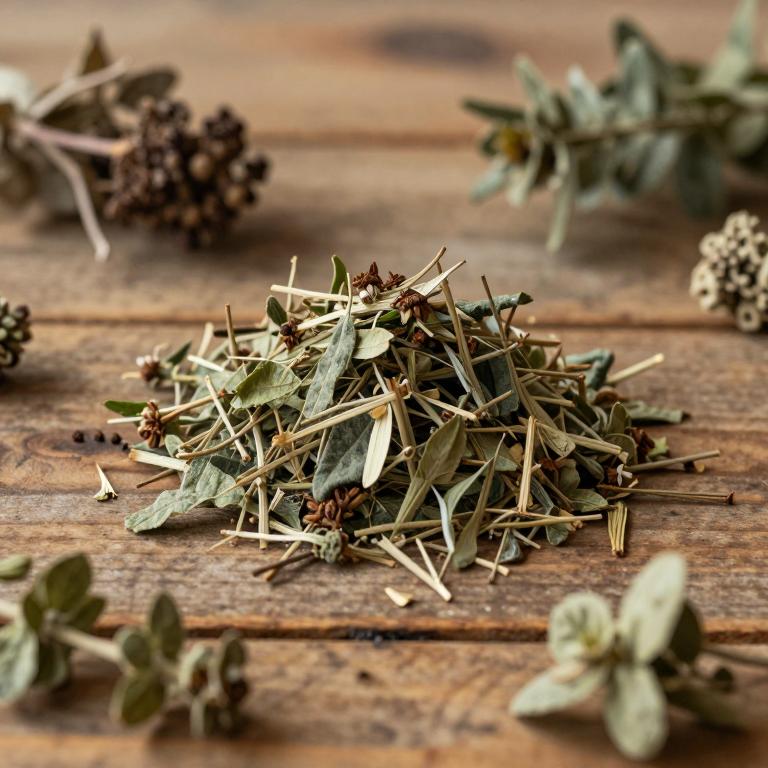
Names and Synonyms
Scientific Names
Accepted name
Xylopia sericeaSynonyms
- Xylopia intermedia
- Xylopia carminativa
- Mayna sericea
- Xylopicrum carminativum
- Uvaria fluminensis
- Unona carminativa
- Unona fluminensis
Sources: Wikidata, Catalogue of Life
Taxonomical Classification
This plant, known as Xylopia sericea, belongs to the kingdom Plantae and the phylum Streptophyta. It is classified under the class Equisetopsida and the subclass Magnoliidae within the order Magnoliales. Finally, it is a member of the family Annonaceae and falls under the genus Xylopia.
| Rank | Classification |
|---|---|
| Kingdom | Plantae |
| Phylum | Streptophyta |
| Class | Equisetopsida |
| Subclass | Magnoliidae |
| Order | Magnoliales |
| Family | Annonaceae |
| Genus | Xylopia |
Sources: The World Checklist of Vascular Plants (WCVP)
Distribution
This plant exhibits a diverse geographical range spanning across both Central and Northern South America. In the Central American region, its presence is documented in Costa Rica, Nicaragua, and Panamá. Moving into Northern South America, the species can also be found growing in the tropical landscapes of Guyana. Furthermore, its distribution extends eastward into the territory of Suriname. Collectively, these locations highlight the plant's preference for specific neotropical environments.
| Region | Area |
|---|---|
| Central America | Costa Rica |
| Central America | Nicaragua |
| Central America | Panamá |
| Northern South America | Guyana |
| Northern South America | Suriname |
| Northern South America | Venezuela |
| Western South America | Bolivia |
| Western South America | Colombia |
| Western South America | Ecuador |
| Western South America | Peru |
Sources: The World Checklist of Vascular Plants (WCVP)
Botanical Identification
Ecology
The ecology of Xylopia sericea is characterized by its presence across diverse Brazilian biomes and specific altitudinal constraints. This species thrives in a variety of habitats, including Cerrado (lato sensu), Ciliar Forest or Gallery Forest, Terra Firme Forest, Semi-deciduous Seasonal Forest, and Ombrophilous (Pluvial) Forest. Its distribution is found within a specific elevational range, occurring from a minimum altitude of 50 m AMSL to a maximum elevation of 500 m AMSL.
- Elevational range max:
- 500 m AMSL
- Elevational range min:
- 50 m AMSL
- Habitat :
- Cerrado (lato sensu), Floresta Ciliar ou Galeria, Floresta de Terra Firme, Floresta Estacional Semidecidual, Floresta Ombrófila (= Floresta Pluvial)
Life history
The life history of Xylopia seriacea is characterized by its status as a perennial organism, allowing it to persist in its ecosystem over many years rather than completing its cycle in a single season. Throughout its long-term existence, the plant maintains a constant presence in its habitat due to its evergreen nature, retaining its foliage throughout the year without a seasonal shedding period. This combination of a long-lived life cycle and continuous vegetative activity supports its sustained growth and ability to contribute to its environment over an extended temporal scale.
- Deciduousness :
- evergreen
- Lifecycle :
- perennial
Morphology
The morphology of Xylopia sericea is characterized by its growth form as a woody tree, which functions as a self-supporting organism rather than a climber or liana. As a terrestrial species, it does not exhibit aquatic or semiaquatic tendencies, nor does it grow as an epiphyte; instead, it maintains an independent life cycle without acting as a parasite. The plant typically reaches a mean height of approximately 7 meters, though it is capable of attaining a maximum height of up to 15 meters.
- Aquatic :
- terrestrial
- Climber :
- self-supporting
- Epiphyte :
- terrestrial
- Growth form :
- tree
- Parasite :
- independent
- Plant height max:
- 15 m
- Plant height mean:
- 7 m
- Woodiness :
- woody
Physiology
The physiology of Xylopia seriacea is characterized by a standard C3 photosynthetic pathway, which involves the direct fixation of carbon dioxide through the Calvin cycle without the specialized adaptations found in C4 or CAM plants. As a non-nitrogen-fixing species, it lacks the symbiotic relationship with diazotrophic bacteria required to convert atmospheric nitrogen into usable forms, meaning it must rely on the uptake of available nitrates and ammonium from the soil to meet its metabolic nitrogen requirements.
- Nitrogen fixer :
- no
- Photosynthetic pathway :
- C3
Sources: Global Inventory of Floras and Traits (GIFT)
Chemicals
Xylopia sericea has 3 reported phytochemicals identified across 0 scientific publications and several other databases. The most consistently reported chemicals include Germacrene D, Guaiol, Spathulenol.
| Chemical | Supporting sources | Consensus |
|---|---|---|
| Germacrene D | 1 supporting sources | ★☆☆☆☆ |
| Guaiol | 1 supporting sources | ★☆☆☆☆ |
| Spathulenol | 1 supporting sources | ★☆☆☆☆ |
Germacrene D
- The Journal of pharmacy and pharmacology
Guaiol
- The Journal of pharmacy and pharmacology
Spathulenol
- The Journal of pharmacy and pharmacology
Activities
Xylopia sericea has 2 reported activities identified across 0 scientific publications and several other databases. The most consistently reported activities include Antibacterial, Antioxidant.
| Activity | Supporting sources | Consensus |
|---|---|---|
| Antibacterial | 1 supporting sources | ★☆☆☆☆ |
| Antioxidant | 1 supporting sources | ★☆☆☆☆ |
Antibacterial
- The Journal of pharmacy and pharmacology
Antioxidant
- The Journal of pharmacy and pharmacology
Conditions
Xylopia sericea has 6 reported investigations on conditions identified across 0 scientific publications and several other databases. The most consistently reported conditions include Bacillus cereus, Enterobacter cloacae, Klebsiella pneumoniae, Staphylococcus aureus, malaria.
| Condition | Supporting sources | Consensus |
|---|---|---|
| Bacillus cereus | 1 supporting sources | ★☆☆☆☆ |
| Enterobacter cloacae | 1 supporting sources | ★☆☆☆☆ |
| Klebsiella pneumoniae | 1 supporting sources | ★☆☆☆☆ |
| Staphylococcus aureus | 1 supporting sources | ★☆☆☆☆ |
| Malaria | 1 supporting sources | ★☆☆☆☆ |
| Rheumatism | 1 supporting sources | ★☆☆☆☆ |
Bacillus cereus
- The Journal of pharmacy and pharmacology
Enterobacter cloacae
- The Journal of pharmacy and pharmacology
Klebsiella pneumoniae
- The Journal of pharmacy and pharmacology
Staphylococcus aureus
- The Journal of pharmacy and pharmacology
Malaria
- International journal of molecular sciences
Rheumatism
- International journal of molecular sciences