Xylopia aromatica
Xylopia aromatica · Accepted scientific name
Scientific literature: Very Sparse (26 studies) · ★☆☆☆☆
, scientifically known as Xylopia aromatica, is a versatile medicinal plant prized for its aromatic properties. Belonging to the Annonaceae family, it features potent essential oils used in traditional medicine to treat inflammation, digestive issues, and infections. Its unique fragrance and therapeutic bioactive compounds make it invaluable in ethnobotany.
- Family
- Annonaceae
- Native range
- Southern America
- Parts used
- Not available
- Common names
- Not available
- Scientific synonyms
- Xylopia Xylopioides · Xylopicrum Grandiflorum · 12 more
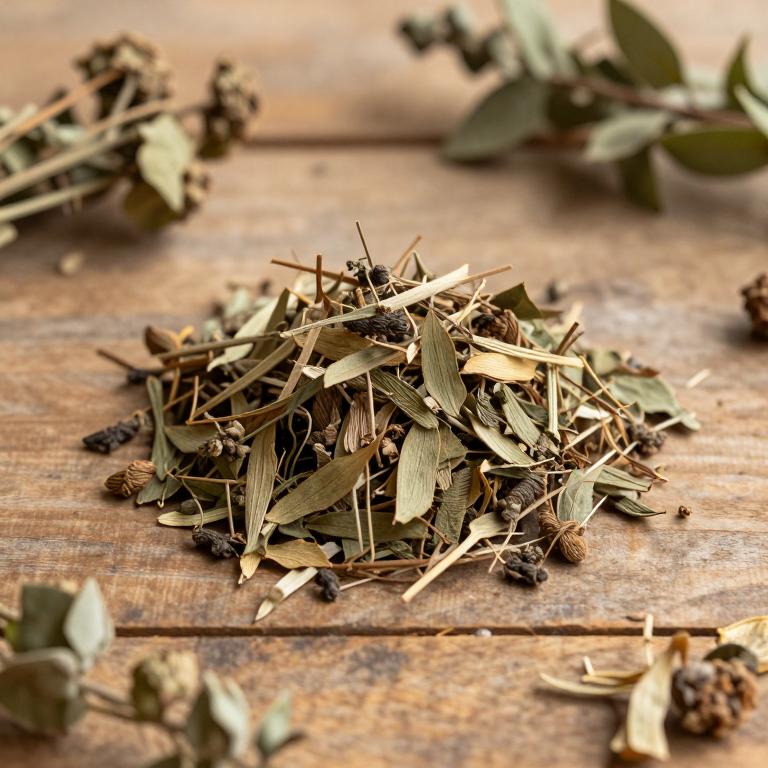
Names and Synonyms
Scientific Names
Accepted name
Xylopia aromaticaSynonyms
- Xylopia xylopioides
- Xylopicrum grandiflorum
- Waria zeylanica
- Xylopia grandiflora
- Habzelia aromatica
- Xylopia cubensis
- Xylopicrum aromaticum
- Unona aromatica
- Coelocline lucida
- Xylopia lucida
- Habzelia cubensis
- Unona cubensis
- Unona xylopioides
- Uvaria aromatica
Regional and Traditional Names
Spanish:
- fruta de burro
Sources: Wikidata, Catalogue of Life
Taxonomical Classification
This plant, Xylopia aromatica, belongs to the kingdom Plantae and the phylum Streptophyta. Within the class Equisetopsida and subclass Magnoliidae, it is classified under the order Magnoliales and the family Annonaceae. Finally, its taxonomic hierarchy concludes with the genus Xylopia.
| Rank | Classification |
|---|---|
| Kingdom | Plantae |
| Phylum | Streptophyta |
| Class | Equisetopsida |
| Subclass | Magnoliidae |
| Order | Magnoliales |
| Family | Annonaceae |
| Genus | Xylopia |
Sources: The World Checklist of Vascular Plants (WCVP)
Distribution
This plant is widely distributed across several distinct regions of the Neotropics. In Central America, it can be found growing within the borders of Costa Rica and Honduras. Its presence also extends through the territories of Nicaragua and Panamá. Furthermore, the species reaches into the Caribbean islands, specifically inhabiting Cuba. This diverse range highlights the plant's ability to thrive in various tropical environments across these locations.
| Region | Area |
|---|---|
| Central America | Costa Rica |
| Central America | Honduras |
| Central America | Nicaragua |
| Central America | Panamá |
| Caribbean | Cuba |
| Caribbean | Trinidad-Tobago |
| Northern South America | French Guiana |
| Northern South America | Guyana |
| Northern South America | Suriname |
| Northern South America | Venezuela |
Sources: The World Checklist of Vascular Plants (WCVP)
Botanical Identification
Ecology
The ecology of Xylopia aromatica is characterized by its adaptability to diverse South American ecosystems, specifically thriving within the Cerrado (latu sensu), Floresta Estacional Decidual, and the Savana Amazônica. This species exhibits a broad altitudinal distribution, occupying a wide range of topographical gradients that begin at sea level (0 m AMSL) and extend up to a maximum elevation of 1220 m AMSL. This wide elevational range and its presence across varied biomes indicate a robust ecological plasticity, allowing it to inhabit both seasonally dry forests and transitional savanna landscapes.
- Elevational range max:
- 1220 m AMSL
- Elevational range min:
- 0 m AMSL
- Habitat :
- Cerrado (lato sensu), Floresta Estacional Decidual, Savana Amazônica
Life history
The life history of Xylopia aromatica is characterized by its status as a perennial species, meaning it persists through many growing seasons and maintains its structural integrity over a long lifespan. As a long-lived woody plant, it undergoes a developmental progression from seed germination to maturity, establishing a robust root system and a permanent canopy. Throughout its extensive life cycle, the plant undergoes seasonal cycles of vegetative growth and reproductive phases, where it produces flowers and fruits to ensure the continuation of its lineage. This perennial nature allows the species to invest significant energy into secondary growth and long-term survival within its ecological niche.
- Lifecycle :
- perennial
Morphology
The morphology of Xylopia aromatica is characterized by its growth form as a woody tree, typically reaching a mean height of 10 m, though it can attain a maximum height of up to 15 m. As a terrestrial organism, it grows in non-aquatic environments and functions as an independent species rather than a parasite. The plant is self-supporting in its structure, meaning it does not exhibit climbing habits such as being a liana or a vine, nor does it function as an epiphyte.
- Aquatic :
- terrestrial
- Climber :
- self-supporting
- Epiphyte :
- terrestrial
- Growth form :
- tree
- Parasite :
- independent
- Plant height max:
- 15 m
- Plant height mean:
- 10 m
- Woodiness :
- woody
Physiology
The physiology of Xylopia aromatica is characterized by a C3 photosynthetic pathway, a common metabolic strategy among woody tropical species that utilizes the Calvin cycle to fix carbon dioxide under typical environmental conditions. In terms of nutrient acquisition, the plant does not function as a nitrogen fixer, meaning it lacks the symbiotic relationship with diazotrophic bacteria required to convert atmospheric nitrogen into bioavailable forms, instead relying on the uptake of nitrates and ammonium from the soil through its root system.
- Nitrogen fixer :
- no
- Photosynthetic pathway :
- C3
Reproduction
The reproduction of Xylopia aromatica is characterized by the production of fleshy fruits, which serve as a primary medium for seed dispersal. The seeds produced by this species exhibit highly consistent physical dimensions, with a recorded seed volume that remains constant at a mean, maximum, and minimum of 42 mm³. In terms of weight, the seeds are uniform in their mass, maintaining a consistent value across the minimum, maximum, and mean measurements of 0.04104 g. This uniformity in seed size and mass, combined with the fleshy nature of the fruit, suggests a specialized reproductive strategy likely involving specific biotic dispersal agents.
- Fruit dryness :
- fleshy
- Seed mass mean:
- 0.04104 g
- Seed volume max:
- 42 mm³
Sources: Global Inventory of Floras and Traits (GIFT)
Chemicals
Xylopia aromatica has 12 reported phytochemicals identified across 0 scientific publications and several other databases. The most consistently reported chemicals include Annomontacin, Annonaceous Acetogenins, Annonacin, Asimicin, GIGANTETROCIN A.
| Chemical | Supporting sources | Consensus |
|---|---|---|
| Annomontacin | 1 supporting sources | ★☆☆☆☆ |
| Annonaceous Acetogenins | 1 supporting sources | ★☆☆☆☆ |
| Annonacin | 1 supporting sources | ★☆☆☆☆ |
| Asimicin | 1 supporting sources | ★☆☆☆☆ |
| GIGANTETROCIN A | 1 supporting sources | ★☆☆☆☆ |
| Gigantetronenin | 1 supporting sources | ★☆☆☆☆ |
| venezenin | 1 supporting sources | ★☆☆☆☆ |
| xylomatenin | 1 supporting sources | ★☆☆☆☆ |
| xylomaticin | 1 supporting sources | ★☆☆☆☆ |
| xylopiacin | 1 supporting sources | ★☆☆☆☆ |
Annomontacin
- Journal of natural products
Annonaceous Acetogenins
- Journal of natural products
Annonacin
- Journal of natural products
Asimicin
- Journal of natural products
GIGANTETROCIN A
- Journal of natural products
Gigantetronenin
- Journal of natural products
venezenin
- Journal of natural products
xylomatenin
- Journal of natural products
xylomaticin
- Journal of natural products
xylopiacin
- Journal of natural products
Activities
Xylopia aromatica has 3 reported activities identified across 0 scientific publications and several other databases. The most consistently reported activities include Cytotoxic, Antiprotozoal, Cytostatic.
| Activity | Supporting sources | Consensus |
|---|---|---|
| Cytotoxic | 2 supporting sources | ★☆☆☆☆ |
| Antiprotozoal | 1 supporting sources | ★☆☆☆☆ |
| Cytostatic | 1 supporting sources | ★☆☆☆☆ |
Cytotoxic
- Journal of ethnopharmacology
- Journal of natural products
Antiprotozoal
- Journal of ethnopharmacology
Cytostatic
- Phytotherapy research : PTR
Conditions
Xylopia aromatica has 4 reported investigations on conditions identified across 0 scientific publications and several other databases. The most consistently reported conditions include Plasmodium falciparum, colon cancer, leukemia, tumor cell lines.
| Condition | Supporting sources | Consensus |
|---|---|---|
| Plasmodium falciparum | 1 supporting sources | ★☆☆☆☆ |
| Colon cancer | 1 supporting sources | ★☆☆☆☆ |
| Leukemia | 1 supporting sources | ★☆☆☆☆ |
| Tumor cell lines | 1 supporting sources | ★☆☆☆☆ |
Plasmodium falciparum
- Journal of ethnopharmacology
Colon cancer
- Fitoterapia
Leukemia
- Fitoterapia
Tumor cell lines
- Phytotherapy research : PTR
Preparations
Xylopia aromatica has 5 reported preparations identified across 0 scientific publications and several other databases. The most consistently reported preparations include extracts, EtOH extract of the bark, EtOH extract of the bark of Xylopia aromatica, Extracts, bark.
| Preparation | Supporting sources | Consensus |
|---|---|---|
| Extracts | 2 supporting sources | ★☆☆☆☆ |
| Etoh extract of the bark | 1 supporting sources | ★☆☆☆☆ |
| Etoh extract of the bark of xylopia aromatica | 1 supporting sources | ★☆☆☆☆ |
| Extracts | 1 supporting sources | ★☆☆☆☆ |
| Bark | 1 supporting sources | ★☆☆☆☆ |
Extracts
- Phytotherapy research : PTR
- Fitoterapia
Etoh extract of the bark
- Journal of natural products
Etoh extract of the bark of xylopia aromatica
- Journal of natural products
Extracts
- Journal of ethnopharmacology
Bark
- Journal of natural products