Xylanthemum fisherae
Xylanthemum fisherae · Accepted scientific name
Scientific literature: Very Sparse (18 studies) · ★☆☆☆☆
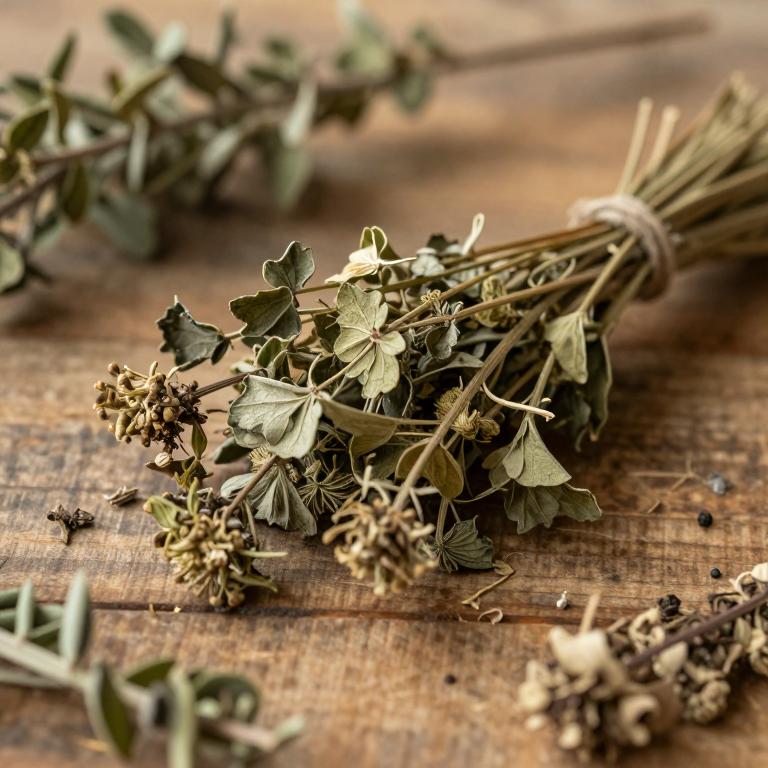
, scientifically known as Xylanthemum fisherae, is a rare medicinal plant native to specific tropical regions. Valued for its unique phytochemical properties, this botanical species holds significant potential in traditional healing practices. Researchers are increasingly exploring its bioactive compounds to uncover new therapeutic applications for modern pharmaceutical development.
- Family
- Asteraceae
- Native range
- Asia-Temperate
- Parts used
- Flower · Leaf
- Common names
- Not available
- Scientific synonyms
- Pyrethrum Fisherae · Cancrinia Rupestris · 7 more
Names and Synonyms
Scientific Names
Accepted name
Xylanthemum fisheraeSynonyms
- Pyrethrum fisherae
- Cancrinia rupestris
- Chrysanthemum fisherae
- Chrysanthemum polycladum
- Chrysanthemum popovii
- Tanacetum fisherae
- Tanacetum rupestre
- Xylanthemum polycladum
- Xylanthemum rupestre
Sources: Wikidata, Catalogue of Life
Taxonomical Classification
This plant belongs to the kingdom Plantae and the phylum Streptophyta, falling under the class Equisetopsida and subclass Magnoliidae. Within the order Asterales, it is classified under the family Asteraceae. Specifically, its taxonomic identity is defined by the genus Xylanthemum, within which the species Xylanthemum fisherae is located.
| Rank | Classification |
|---|---|
| Kingdom | Plantae |
| Phylum | Streptophyta |
| Class | Equisetopsida |
| Subclass | Magnoliidae |
| Order | Asterales |
| Family | Asteraceae |
| Genus | Xylanthemum |
Sources: The World Checklist of Vascular Plants (WCVP)
Distribution
This plant exhibits a wide geographical range spanning across several distinct regions. In Central Asia, it can be found growing within the territories of Turkmenistan, Tajikistan, and Uzbekistan. Moving toward Western Asia, the species is also documented to inhabit Afghanistan. Furthermore, its distribution extends into the Indian Subcontinent, specifically within Pakistan. Collectively, these locations highlight the diverse habitats where this medicinal plant thrives.
| Region | Area |
|---|---|
| Central Asia | Turkmenistan |
| Central Asia | Tadzhikistan |
| Central Asia | Uzbekistan |
| Western Asia | Afghanistan |
| Indian Subcontinent | Pakistan |
Sources: The World Checklist of Vascular Plants (WCVP)
Botanical Identification
Ecology
The ecology of Xylanthemum fisherae is characterized by its adaptation to high-altitude environments, specifically within mountainous terrains. This species thrives in rocky and stony places, where it occupies niches shaped by rugged topography. Its distribution is vertically constrained to a significant elevational gradient, ranging from a minimum of 1600 m AMSL to a maximum of 3800 m AMSL.
- Elevational range max:
- 3800 m AMSL
- Elevational range min:
- 1600 m AMSL
- Habitat :
- mountains, stony places
Life history
The life history of Xylanthemum fisherae is characterized by its status as a perennial organism, allowing it to persist in its habitat through multiple growing seasons. Unlike annuals that complete their life cycle in a single year or biennials that require two, this species maintains a long-term presence, which facilitates its adaptation to specific ecological niches. As a perennial, it undergoes cyclic patterns of vegetative growth and reproductive phases, often developing more robust structures over time to support its survival and seed production across successive years.
- Lifecycle :
- perennial
Morphology
The morphology of Xylanthemum fisherae is characterized by its growth form as a herb, exhibiting a non-woody structure. It is a terrestrial plant, meaning it grows on the ground rather than as an epiphyte. In terms of stature, the plant is relatively diminutive, with a height that ranges from a minimum of 0.06 m to a maximum of 0.25 m. Furthermore, it functions as an obligatory parasite.
- Epiphyte :
- terrestrial
- Growth form :
- herb
- Parasite :
- obligatory
- Plant height max:
- 0.25 m
- Plant height min:
- 0.06 m
- Woodiness :
- non-woody
Reproduction
The reproduction of Xylanthemum fisherae is characterized by a specific seasonal flowering cycle that dictates its reproductive period. The flowering process is concentrated within a distinct window, with the onset of flowering occurring in August. This reproductive phase is relatively brief or highly localized in its peak, as the flowering period concludes within the same month of August. Consequently, the plant exhibits a highly synchronized reproductive timing, where the transition from bud development to full anthesis and subsequent senescence occurs within this specific late-summer timeframe.
- Flowering time :
- Aug
Sources: Global Inventory of Floras and Traits (GIFT)
Plant Parts
Xylanthemum fisherae has 2 reported plant parts identified across 2 scientific publications and several other databases that are studied for medicinal purposes. The most consistently reported plant part include flower, leaf.
| Plant part | Supporting sources | Consensus |
|---|---|---|
| Flower | 1 supporting sources | ★☆☆☆☆ |
| Leaf | 1 supporting sources | ★☆☆☆☆ |
Flower
- Natural product communications
Leaf
- Natural product communications
Chemicals
Xylanthemum fisherae has 7 reported phytochemicals identified across 2 scientific publications and several other databases. The most consistently reported chemicals include 1,8-Cineole, Borneol, TERPINENE-4-OL, cis-Piperitol, cis-p-2-Menthen-1-ol.
| Chemical | Supporting sources | Consensus |
|---|---|---|
| 1,8-Cineole | 2 supporting sources | ★☆☆☆☆ |
| Borneol | 1 supporting sources | ★☆☆☆☆ |
| TERPINENE-4-OL | 1 supporting sources | ★☆☆☆☆ |
| cis-Piperitol | 1 supporting sources | ★☆☆☆☆ |
| cis-p-2-Menthen-1-ol | 1 supporting sources | ★☆☆☆☆ |
| trans-Piperitol | 1 supporting sources | ★☆☆☆☆ |
| trans-p-2-Menthen-1-ol | 1 supporting sources | ★☆☆☆☆ |
1,8-Cineole
- Natural product communications
- Natural product research
Borneol
- Natural product research
TERPINENE-4-OL
- Natural product research
cis-Piperitol
- Natural product research
cis-p-2-Menthen-1-ol
- Natural product research
trans-Piperitol
- Natural product research
trans-p-2-Menthen-1-ol
- Natural product research
Preparations
Xylanthemum fisherae has 1 reported preparations identified across 2 scientific publications and several other databases. The most consistently reported preparations include essential oil.
| Preparation | Supporting sources | Consensus |
|---|---|---|
| Essential oil | 1 supporting sources | ★☆☆☆☆ |
Essential oil
- Natural product communications