Immortelle
Xeranthemum annuum · Accepted scientific name
Scientific literature: Very Sparse (6 studies) · ★☆☆☆☆
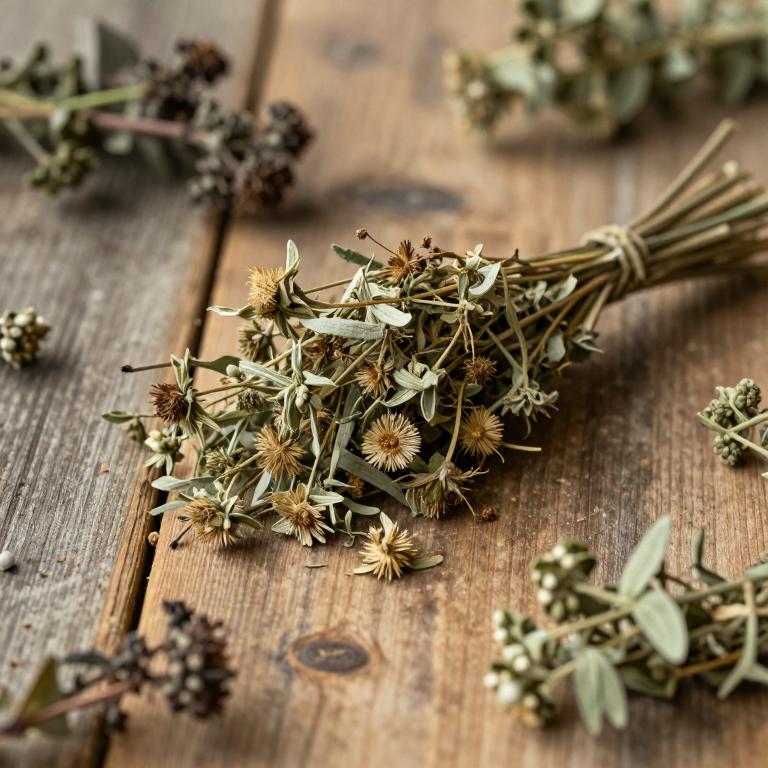
Immortelle, scientifically known as Xeranthemum annuum, is a striking annual herb celebrated for its everlasting, papery blooms. Native to various regions, this resilient plant is prized in traditional medicine for its potential therapeutic properties. Its unique, long-lasting flowers make it both a botanical wonder and a functional medicinal resource.
- Family
- Asteraceae
- Native range
- Europe
- Parts used
- Not available
- Common names
- Immortelle
- Scientific synonyms
- Xeranthemum Radiatum · Xeranthemum Inodorum · 5 more
Names and Synonyms
Common Names
- Immortelle
Scientific Names
Accepted name
Xeranthemum annuumSynonyms
- Xeranthemum radiatum
- Xeranthemum inodorum
- Xeranthemum oleifolium
- Xeranthemum radiatum var. pictum
- Xeranthemum squarrosum var. unicolor
- Xeranthemum ornatum
- Xeranthemum annettae
Regional and Traditional Names
German:
- einjährige Papierblume
- Einjährige Spreublume
- Einjaehrige Spreublume
- Einjaehrige Strohblume
French:
- xéranthème annuel
- Xerantheme annuel
Sources: Wikidata, Catalogue of Life
Taxonomical Classification
This plant belongs to the kingdom Plantae and is classified under the phylum Streptophyta and class Equisetopsida. Within the subclass Magnoliidae, it follows the order Asterales and is a member of the Asteraceae family. Specifically, it is identified by the genus Xeranthemum.
| Rank | Classification |
|---|---|
| Kingdom | Plantae |
| Phylum | Streptophyta |
| Class | Equisetopsida |
| Subclass | Magnoliidae |
| Order | Asterales |
| Family | Asteraceae |
| Genus | Xeranthemum |
Sources: The World Checklist of Vascular Plants (WCVP)
Distribution
This plant exhibits a specific distribution pattern across several regions of the European continent. In Northern Europe, its presence can be documented within the borders of Norway. Moving into Middle Europe, the species is found growing in the landscapes of Austria. It also maintains a presence across the territories of Germany and the Czechia-Slovakia region. Finally, its geographical range extends further into Middle Europe to include Hungary.
| Region | Area |
|---|---|
| Northern Europe | Norway |
| Middle Europe | Austria |
| Middle Europe | Czechia-Slovakia |
| Middle Europe | Germany |
| Middle Europe | Hungary |
| Middle Europe | Poland |
| Middle Europe | Switzerland |
| Southwestern Europe | France |
| Southwestern Europe | Spain |
| Southeastern Europe | Albania |
Sources: The World Checklist of Vascular Plants (WCVP)
Botanical Identification
Ecology
The ecology of Xeranthemum annuum is characterized by its preference for rugged and open landscapes, typically thriving in habitats such as hills, mountains, shrubberies, and stony places. This species is well-adapted to environments where rocky substrates and sparse vegetation provide minimal competition. In terms of vertical distribution, the plant occupies a broad altitudinal spectrum, reaching an upper elevation limit of 1900 m AMSL. Such an elevational range suggests a capacity to withstand the varying temperature fluctuations and specialized soil conditions found in montane and sub-montane ecosystems.
- Elevational range max:
- 1900 m AMSL
- Habitat :
- hills, mountains, shrubberies, stony places
Life history
The life history of Xeranthemum annuum is characterized by an annual lifecycle, meaning it completes its entire developmental sequence—from germination to seed production—within a single growing season. As a therophyte, its biological strategy focuses on surviving unfavorable conditions through the production of drought-resistant seeds rather than maintaining persistent vegetative structures above ground. This life form allows the plant to rapidly exploit seasonal resources, utilizing its ephemeral existence to colonize open or disturbed habitats before retreating into a dormant seed state to await the next favorable period.
- Life form :
- therophyte
- Lifecycle :
- annual
Morphology
The morphology of Xeranthemum annuum is characterized by its growth form as a non-woody herb, specifically classified as a forb. This species is a terrestrial plant, lacking aquatic or semiaquatic adaptations. In terms of stature, it is a relatively low-growing plant, with a height ranging from a minimum of 0.1 m to a maximum of 0.6 m.
- Aquatic :
- terrestrial
- Growth form :
- herb
- Plant height max:
- 0.6 m
- Plant height min:
- 0.1 m
- Woodiness :
- non-woody
Physiology
The physiology of Xeranthemum annuum is characterized by a metabolic framework that utilizes the C3 photosynthetic pathway, a trait common among many members of the Asteraceae family. In this pathway, the initial fixation of atmospheric carbon dioxide occurs through the enzyme Rubisco, which catalyzes the carboxylation of ribulose-1,5-bisphosphate to produce 3-phosphoglycerate. This process dictates the plant's water-use efficiency and gas exchange dynamics, as the reliance on C3 metabolism necessitates a balance between stomatal conductance for CO2 uptake and the prevention of excessive transpirational water loss. The physiological efficiency of its carbon assimilation is closely tied to its environmental adaptations, allowing it to manage the energetic costs of photorespiration during periods of high light intensity and temperature fluctuations typical of its native habitats.
- Photosynthetic pathway :
- C3
Reproduction
The reproduction of Xeranthemum annuum is characterized by a specific seasonal flowering window and the production of highly lightweight seeds. The flowering period typically begins in June and continues through August, although the timing can remain variable depending on environmental conditions. During this reproductive phase, the plant produces seeds with a notable range in mass; individual seeds have been recorded with a minimum mass of 0.0012 g and a maximum mass of 0.0042 g. On average, the seed mass for this species is approximately 0.0014233335 g, facilitating efficient dispersal.
- Flowering time :
- Jun
- Flowering time :
- Aug
- Seed mass max:
- 0.0042 g
- Seed mass mean:
- 0.0014233335 g
- Seed mass min:
- 0.0012 g
Sources: Global Inventory of Floras and Traits (GIFT)
Activities
Xeranthemum annuum has 3 reported activities identified across 0 scientific publications and several other databases. The most consistently reported activities include Analgesic, Anticholinesterase, Antioxidant.
| Activity | Supporting sources | Consensus |
|---|---|---|
| Analgesic | 1 supporting sources | ★☆☆☆☆ |
| Anticholinesterase | 1 supporting sources | ★☆☆☆☆ |
| Antioxidant | 1 supporting sources | ★☆☆☆☆ |
Analgesic
- Pharmaceutical biology
Anticholinesterase
- Pharmaceutical biology
Antioxidant
- Pharmaceutical biology
Conditions
Xeranthemum annuum has 3 reported investigations on conditions identified across 0 scientific publications and several other databases. The most consistently reported conditions include analgesic, anticholinesterase, antioxidant.
| Condition | Supporting sources | Consensus |
|---|---|---|
| Analgesic | 1 supporting sources | ★☆☆☆☆ |
| Anticholinesterase | 1 supporting sources | ★☆☆☆☆ |
| Antioxidant | 1 supporting sources | ★☆☆☆☆ |
Analgesic
- Pharmaceutical biology
Anticholinesterase
- Pharmaceutical biology
Antioxidant
- Pharmaceutical biology