nyala tree
Xanthocercis zambesiaca · Accepted scientific name
Scientific literature: Very Sparse (23 studies) · ★☆☆☆☆
Nyala tree, scientifically known as Xanthocercis zambesiaca, is a versatile medicinal plant native to southern Africa. Renowned for its diverse therapeutic properties, it is frequently utilized in traditional healing to treat various ailments. This hardy shrub offers significant ethnobotanical value, serving as a vital resource for local community wellness.
- Family
- Fabaceae
- Native range
- Africa
- Parts used
- Leaf · Root
- Common names
- Nyala-Tree · Mashatu Tree · 1 more
- Scientific synonyms
- Pseudocadia Zambesiaca · Sophora Zambesiaca
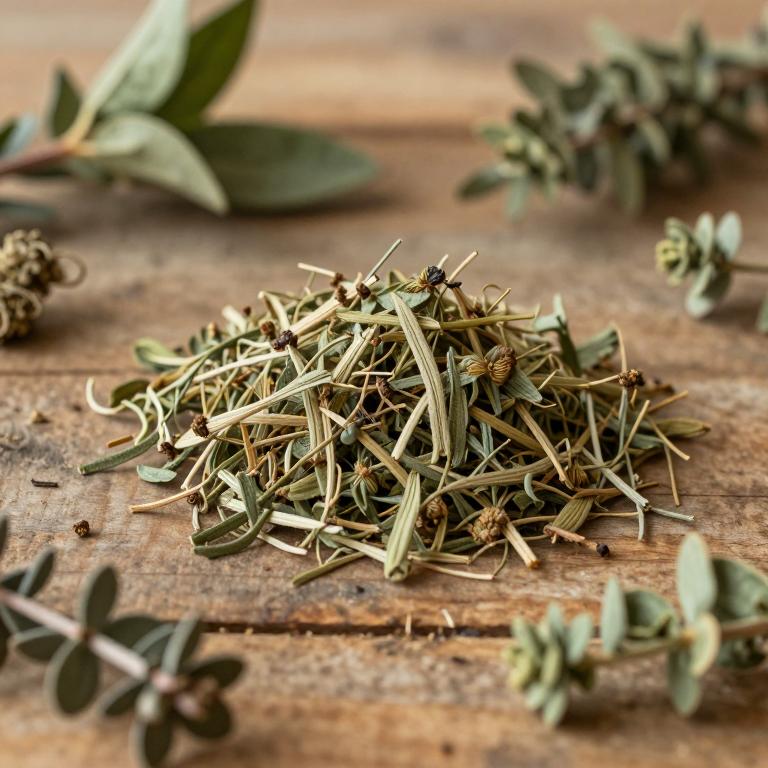
Names and Synonyms
Common Names
- nyala-tree
- Mashatu Tree
- Nyala Tree
Scientific Names
Accepted name
Xanthocercis zambesiacaSynonyms
- Pseudocadia zambesiaca
- Sophora zambesiaca
Regional and Traditional Names
Spanish:
- Xanthocercis zambesiana
- Pseudocadia zambesiaca
- Sophora zambesiaca
German:
- Nyalabaum
Sources: Wikidata, Catalogue of Life
Taxonomical Classification
This plant belongs to the kingdom Plantae and is classified under the phylum Streptophyta within the class Equisetopsida. It is further categorized under the subclass Magnoliidae and the order Fabales. Finally, it is a member of the Fabaceae family within the genus Xanthocercis.
| Rank | Classification |
|---|---|
| Kingdom | Plantae |
| Phylum | Streptophyta |
| Class | Equisetopsida |
| Subclass | Magnoliidae |
| Order | Fabales |
| Family | Fabaceae |
| Genus | Xanthocercis |
Sources: The World Checklist of Vascular Plants (WCVP)
Distribution
This plant is primarily distributed across the regions of South Tropical Africa. Specifically, it can be found growing within the borders of Malawi and Mozambique. Its presence also extends into the territories of Zambia and Zimbabwe. Additionally, the species inhabits parts of Southern Africa, particularly in Botswana. These diverse locations highlight the plant's wide range across the southern portion of the continent.
| Region | Area |
|---|---|
| South Tropical Africa | Malawi |
| South Tropical Africa | Mozambique |
| South Tropical Africa | Zambia |
| South Tropical Africa | Zimbabwe |
| Southern Africa | Botswana |
| Southern Africa | Northern Provinces |
Sources: The World Checklist of Vascular Plants (WCVP)
Botanical Identification
Ecology
The ecology of Xanthocercis zambesiaca is characterized by its adaptability to diverse landscape topographies, specifically within a defined altitudinal gradient. This species thrives across an elevational range that extends from a minimum of 200 m AMSL to a maximum of 1150 m AMSL. This vertical distribution suggests the plant is capable of colonizing both lowland environments and mid-altitude terrains, allowing it to occupy various ecological niches within its native habitat. Such a range indicates its resilience to varying temperature regimes and atmospheric pressures associated with shifting elevations.
- Elevational range max:
- 1150 m AMSL
- Elevational range min:
- 200 m AMSL
Life history
The life history of Xanthocerecis zambesiaca is characterized by its status as a perennial plant, allowing it to persist through multiple growing seasons and establish a long-term presence in its habitat. Throughout its existence, the species maintains a consistent foliage profile as an evergreen, ensuring that its leaves remain functional and present year-round rather than undergoing seasonal shedding.
- Deciduousness :
- evergreen
- Lifecycle :
- perennial
Morphology
The morphology of Xanthocerecis zambesiaca is characterized by its significant stature and robust structural development. It grows as a woody tree, exhibiting a growth form that is strictly terrestrial rather than aquatic or epiphytic. As an independent organism, it does not function as a parasite, maintaining its own nutritional processes. The plant displays considerable variation in its vertical dimension, with heights ranging from a minimum of 7 meters to a maximum of 40 meters, maintaining an average height of approximately 15 meters. Although it possesses a sturdy, woody composition, it is categorized as a self-supporting structure rather than a climber.
- Aquatic :
- terrestrial
- Climber :
- self-supporting
- Epiphyte :
- terrestrial
- Growth form :
- tree
- Parasite :
- independent
- Plant height max:
- 40 m
- Plant height mean:
- 15 m
- Plant height min:
- 7 m
- Woodiness :
- woody
Physiology
The physiology of Xanthocerecis zambesiaca is characterized by its utilization of the C3 photosynthetic pathway, a mechanism involving the direct fixation of carbon dioxide through the Calvin cycle without the intermediate spatial separation seen in other pathways. Furthermore, this species functions as a nitrogen fixer, possessing the physiological capacity to convert atmospheric nitrogen into bioavailable forms, which supports its metabolic processes and nutrient uptake within its ecological niche.
- Nitrogen fixer :
- yes
- Photosynthetic pathway :
- C3
Reproduction
The reproduction of Xanthocerecis zambesiaca is characterized by specific seed morphological traits that define its dispersal and establishment potential. The seeds produced by this species exhibit a highly consistent volume, with a measured maximum, minimum, and mean seed volume all stabilized at exactly 1500 mm³. In terms of weight, the seed mass shows slight natural variation, ranging from a minimum of 1.24948 g to a maximum of 1.28232 g, resulting in an average seed mass of 1.2659 g. These precise physical parameters indicate a standardized reproductive output essential for the plant's life cycle.
- Seed mass max:
- 1.28232 g
- Seed mass mean:
- 1.2659 g
- Seed mass min:
- 1.24948 g
- Seed volume max:
- 1500 mm³
Sources: Global Inventory of Floras and Traits (GIFT)
Plant Parts
Xanthocercis zambesiaca has 2 reported plant parts identified across 2 scientific publications and several other databases that are studied for medicinal purposes. The most consistently reported plant part include leaf, root.
| Plant part | Supporting sources | Consensus |
|---|---|---|
| Leaf | 1 supporting sources | ★☆☆☆☆ |
| Root | 1 supporting sources | ★☆☆☆☆ |
Leaf
- Journal of natural products
Root
- Journal of natural products
Chemicals
Xanthocercis zambesiaca has 8 reported phytochemicals identified across 2 scientific publications and several other databases. The most consistently reported chemicals include 1-DEOXYNOJIRIMYCIN, 2,5-Dideoxy-2,5-imino-D-mannitol, 3,4-di-epi-fagomine, 3-Epifagomine, 3-epi-fagomine.
| Chemical | Supporting sources | Consensus |
|---|---|---|
| 1-DEOXYNOJIRIMYCIN | 1 supporting sources | ★☆☆☆☆ |
| 2,5-Dideoxy-2,5-imino-D-mannitol | 1 supporting sources | ★☆☆☆☆ |
| 3,4-di-epi-fagomine | 1 supporting sources | ★☆☆☆☆ |
| 3-Epifagomine | 1 supporting sources | ★☆☆☆☆ |
| 3-epi-fagomine | 1 supporting sources | ★☆☆☆☆ |
| Fagomine | 1 supporting sources | ★☆☆☆☆ |
| alpha-Homonojirimycin | 1 supporting sources | ★☆☆☆☆ |
| castanospermine | 1 supporting sources | ★☆☆☆☆ |
1-DEOXYNOJIRIMYCIN
- Journal of natural products
2,5-Dideoxy-2,5-imino-D-mannitol
- Journal of natural products
3,4-di-epi-fagomine
- Journal of natural products
3-Epifagomine
- Journal of natural products
3-epi-fagomine
- Journal of natural products
Fagomine
- Journal of natural products
alpha-Homonojirimycin
- Journal of natural products
castanospermine
- Journal of natural products
Activities
Xanthocercis zambesiaca has 1 reported activities identified across 2 scientific publications and several other databases. The most consistently reported activities include Antihyperglycemic.
| Activity | Supporting sources | Consensus |
|---|---|---|
| Antihyperglycemic | 1 supporting sources | ★☆☆☆☆ |
Antihyperglycemic
- Journal of natural products
Preparations
Xanthocercis zambesiaca has 3 reported preparations identified across 2 scientific publications and several other databases. The most consistently reported preparations include 50% aqueous MeOH extracts from the leaves and roots, acetone extracts, aqueous MeOH extract of the leaves and root.
| Preparation | Supporting sources | Consensus |
|---|---|---|
| 50% aqueous meoh extracts from the leaves and roots | 1 supporting sources | ★☆☆☆☆ |
| Acetone extracts | 1 supporting sources | ★☆☆☆☆ |
| Aqueous meoh extract of the leaves and root | 1 supporting sources | ★☆☆☆☆ |
50% aqueous meoh extracts from the leaves and roots
- Journal of natural products
Acetone extracts
- African journal of traditional, complementary, and alternative medicines : AJTCAM
Aqueous meoh extract of the leaves and root
- Journal of natural products