spiny cocklebur
Xanthium spinosum · Accepted scientific name
Scientific literature: Very Sparse (32 studies) · ★☆☆☆☆
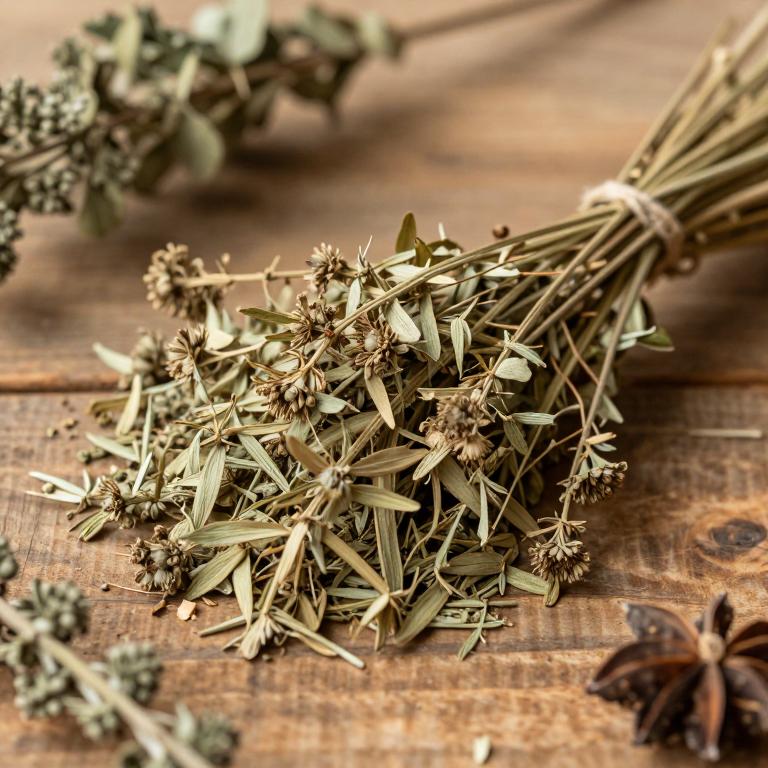
Spiny cocklebura, scientifically known as Xanthium spinosum, is a resilient, thorny annual herb native to various regions. Recognized by its distinctive prickly burs, it plays a significant role in traditional medicine. This plant is studied for its diverse bioactive compounds, offering potential therapeutic applications in various pharmacological treatments.
Names and Synonyms
Common Names
- spiny burrweed
- spiny clotbur
- spiny cocklebur
- Bathurst-bur
- clotweed
- common cocklebur
- prickly burweed
- Bathurst Burr
- Bathurst Bush
- Burrweed
- Clotbur
- Dagger Cocklebur
- Dagger-Weed
- Spiny Burweed
Scientific Names
Accepted name
Xanthium spinosumSynonyms
- Acanthoxanthium spinosum
- Xanthium spinosum f. inerme
- Xanthium multifidum
- Xanthium spinosum var. brachyacanthum
- Xanthium spinosum f. laciniatum
- Xanthium spinosum var. pseudinerme
- Xanthium medium
- Xanthium armatum
- Xanthium brachyacanthum
- Xanthium spinosum var. inerme
- Xanthium xanthocarpum
- Xanthium canescens
- Xanthium chrysacanthum
- Xanthium spinosum subsp. spinosum
Regional and Traditional Names
Spanish:
- abrojos, arrancamoños, cardillos
- cachurrera menor
- pegotes
- Amorcito
- abrojo chico
- arrancamoños
German:
- Dornige Spitzklette
- dornige Spitzklette
French:
- lampourde épineuse
- lampourde épineuse
- petite bardane
- Lampourde epineuse
Sources: Wikidata, Catalogue of Life
Taxonomical Classification
This plant belongs to the kingdom Plantae and the phylum Streptophyta, placing it within the class Equisetopsida and subclass Magnoliidae. As a member of the order Asterales and the family Asteraceae, it is further classified under the genus Xanthium.
| Rank | Classification |
|---|---|
| Kingdom | Plantae |
| Phylum | Streptophyta |
| Class | Equisetopsida |
| Subclass | Magnoliidae |
| Order | Asterales |
| Family | Asteraceae |
| Genus | Xanthium |
Sources: The World Checklist of Vascular Plants (WCVP)
Distribution
This plant exhibits a broad presence across several regions of the European continent. In Northern Europe, its distribution includes the territories of Denmark and Great Britain. Moving toward Middle Europe, the species is well-established in Austria and Belgium. It can also be found spanning the areas of Czechia and Slovakia. Consequently, the geographical range of Xanthium spinosum covers diverse parts of both Northern and Middle Europe.
| Region | Area |
|---|---|
| Northern Europe | Denmark |
| Northern Europe | Great Britain |
| Middle Europe | Austria |
| Middle Europe | Belgium |
| Middle Europe | Czechia-Slovakia |
| Middle Europe | Germany |
| Middle Europe | Hungary |
| Middle Europe | Netherlands |
| Middle Europe | Poland |
| Middle Europe | Switzerland |
Sources: The World Checklist of Vascular Plants (WCVP)
Botanical Identification
Ecology
The ecology of Xanthium spinosum is characterized by its ability to thrive across a broad altitudinal gradient, ranging from sea level (0 m AMSL) up to an elevation of 2560 m AMSL. This species is frequently found in anthropogenic habitats (Área Antrópica), indicating a strong capacity to colonize environments modified by human activity. To survive in its ecological niche, the plant employs active defense mechanisms, as indicated by the presence of defensive traits. Furthermore, its biological interactions with soil fungi are distinctive, as it does not form mycorrhizal associations (mycorrhiza: no), suggesting it relies on alternative nutrient acquisition strategies within its environment.
- Defense :
- yes
- Elevational range max:
- 2560 m AMSL
- Elevational range min:
- 0 m AMSL
- Habitat :
- Área Antrópica
- Mycorrhiza :
- no
Life history
The life history of Xanthium spinosum is characterized by its existence as a therophyte, a life form that completes its entire developmental cycle within a single growing season. Although its classification as an annual suggests a rapid reproductive strategy, certain environmental conditions or specific ecological contexts may allow for a lifespan extending up to 10 years. Throughout its developmental stages, the plant exhibits a deciduous nature, shedding its foliage as it progresses through its seasonal cycle. This lifecycle is strictly annual, ensuring the dispersal of seeds before the onset of unfavorable conditions, which is typical for a therophyte following a single-season growth pattern.
- Deciduousness :
- deciduous
- Life form :
- therophyte
- Lifecycle :
- annual
- Lifespan :
- 10
Morphology
The morphology of Xanthium spinosum is characterized by its growth form as a non-woody herb and forb. This terrestrial, independent species does not function as a parasite or an epiphyte, maintaining a self-supporting structure rather than acting as a liana or vine. In terms of stature, the plant exhibits a variable height, ranging from a minimum of 0.15 m to a maximum of 1 m, with a mean plant height of approximately 0.6 m.
- Aquatic :
- terrestrial
- Climber :
- self-supporting
- Epiphyte :
- terrestrial
- Growth form :
- herb
- Growth form :
- forb
- Parasite :
- independent
- Plant height max:
- 1 m
- Plant height mean:
- 0.6 m
- Plant height min:
- 0.15 m
- Woodiness :
- non-woody
Physiology
The physiology of Xanthium spinosum is characterized by a C3 photosynthetic pathway, utilizing standard carbon fixation processes typical of many herbaceous species. The plant is non-carnivorous and does not possess the physiological mechanisms required for nitrogen fixation, meaning it relies on soil nutrient availability rather than symbiotic nitrogen-fixing bacteria. Its vegetative morphology is defined by an alternate leaf arrangement, where the leaves exhibit an elliptic form. The dimensions of these leaves vary significantly, with lengths ranging from a minimum of 3 cm to a maximum of 8 cm, while their widths fluctuate between a minimum of 0.8 cm and a maximum of 2 cm.
- Carnivory :
- non-carnivorous
- Leaf arrangement :
- alternate
- Leaf form :
- elliptic
- Leaf length max:
- 8 cm
- Leaf length min:
- 3 cm
- Leaf width max:
- 2 cm
- Leaf width min:
- 0.8 cm
- Nitrogen fixer :
- no
- Photosynthetic pathway :
- C3
Reproduction
The reproduction of Xanthium spinosum is characterized by a sexual process involving bisexual flowers, with asexual reproduction being absent. The flowering period typically begins in August and concludes in September. Pollination is achieved through both biotic and abiotic mechanisms, specifically utilizing insect and wind syndromes. While self-fertilization is absent, the plant produces fruit in the form of an indehiscent achene. These fruits vary in size, with a mean length of 1.2 cm (ranging from 0.9 to 1.3 cm) and a mean width of 0.6 cm (ranging from 0.4 to 0.6 cm). Each fruit contains a significant number of seeds, typically ranging from 11 to 100 per achene. The seeds themselves have a consistent mean length of 10 mm and a mean mass of approximately 0.136 g, with individual seed masses ranging from 0.06897 g to 0.2 g. Dispersal is facilitated through an unspecialized and epizoochorous syndrome, allowing the plant to spread effectively.
- Dehiscence :
- indehiscent
- Dispersal syndrome :
- unspecialized
- Dispersal syndrome :
- epizoochorous
- Flowering time :
- Aug
- Flowering time :
- Sep
- Fruit length max:
- 1.3 cm
- Fruit length mean:
- 1.2 cm
- Fruit length min:
- 0.9 cm
- Fruit type :
- achene
- Fruit width max:
- 0.6 cm
- Fruit width min:
- 0.4 cm
- Pollination syndrome :
- insect
- Pollination syndrome :
- wind
- Pollination syndrome :
- abiotic
- Reproduction asexual :
- absent
- Reproduction sexual :
- bisexual
- Seed length mean:
- 10 mm
- Seed mass max:
- 0.2 g
- Seed mass mean:
- 0.136063333333333 g
- Seed mass min:
- 0.06897 g
- Seeds_per_fruit :
- 11-100
- Self fertilization :
- absent
Sources: Global Inventory of Floras and Traits (GIFT)
Plant Parts
Xanthium spinosum has 1 reported plant parts identified across 1 scientific publications and several other databases that are studied for medicinal purposes. The most consistently reported plant part include leaf.
| Plant part | Supporting sources | Consensus |
|---|---|---|
| Leaf | 1 supporting sources | ★☆☆☆☆ |
Leaf
- Revista peruana de medicina experimental y salud publica
Chemicals
Xanthium spinosum has 18 reported phytochemicals identified across 1 scientific publications and several other databases. The most consistently reported chemicals include 10-Octadecenoic acid, 11-Octadecenoic acid, 15(S)-HETE, 8-Octadecenoic acid, Bis(2-ethylhexyl) phthalate.
| Chemical | Supporting sources | Consensus |
|---|---|---|
| 10-Octadecenoic acid | 1 supporting sources | ★☆☆☆☆ |
| 11-Octadecenoic acid | 1 supporting sources | ★☆☆☆☆ |
| 15(S)-HETE | 1 supporting sources | ★☆☆☆☆ |
| 8-Octadecenoic acid | 1 supporting sources | ★☆☆☆☆ |
| Bis(2-ethylhexyl) phthalate | 1 supporting sources | ★☆☆☆☆ |
| CHLOROGENIC ACID | 1 supporting sources | ★☆☆☆☆ |
| Centaurin | 1 supporting sources | ★☆☆☆☆ |
| Patuletin | 1 supporting sources | ★☆☆☆☆ |
| Pendulin | 1 supporting sources | ★☆☆☆☆ |
| Phytosterols | 1 supporting sources | ★☆☆☆☆ |
10-Octadecenoic acid
- Biomedical chromatography : BMC
11-Octadecenoic acid
- Biomedical chromatography : BMC
15(S)-HETE
- Fitoterapia
8-Octadecenoic acid
- Biomedical chromatography : BMC
Bis(2-ethylhexyl) phthalate
- Biomedical chromatography : BMC
CHLOROGENIC ACID
- Acta pharmaceutica Hungarica
Centaurin
- Acta pharmaceutica Hungarica
Patuletin
- Acta pharmaceutica Hungarica
Pendulin
- Acta pharmaceutica Hungarica
Phytosterols
- Acta pharmaceutica Hungarica
Activities
Xanthium spinosum has 6 reported activities identified across 1 scientific publications and several other databases. The most consistently reported activities include Antibacterial, Anticancer, Antifungal, Antitumor, Diuretic.
| Activity | Supporting sources | Consensus |
|---|---|---|
| Antibacterial | 1 supporting sources | ★☆☆☆☆ |
| Anticancer | 1 supporting sources | ★☆☆☆☆ |
| Antifungal | 1 supporting sources | ★☆☆☆☆ |
| Antitumor | 1 supporting sources | ★☆☆☆☆ |
| Diuretic | 1 supporting sources | ★☆☆☆☆ |
| Sedative | 1 supporting sources | ★☆☆☆☆ |
Antibacterial
- Acta pharmaceutica Hungarica
Anticancer
- Pharmaceuticals (Basel, Switzerland)
Antifungal
- Acta pharmaceutica Hungarica
Antitumor
- Pharmaceuticals (Basel, Switzerland)
Diuretic
- Pharmaceuticals (Basel, Switzerland)
Sedative
- Pharmaceuticals (Basel, Switzerland)
Conditions
Xanthium spinosum has 6 reported investigations on conditions identified across 1 scientific publications and several other databases. The most consistently reported conditions include Breast Cancer, cancer, fever, inflammation, snake bite.
| Condition | Supporting sources | Consensus |
|---|---|---|
| Breast cancer | 1 supporting sources | ★☆☆☆☆ |
| Cancer | 1 supporting sources | ★☆☆☆☆ |
| Fever | 1 supporting sources | ★☆☆☆☆ |
| Inflammation | 1 supporting sources | ★☆☆☆☆ |
| Snake bite | 1 supporting sources | ★☆☆☆☆ |
| Tumor | 1 supporting sources | ★☆☆☆☆ |
Breast cancer
- Pharmaceuticals (Basel, Switzerland)
Cancer
- Pharmaceuticals (Basel, Switzerland)
Fever
- Fitoterapia
Inflammation
- Fitoterapia
Snake bite
- Fitoterapia
Tumor
- Pharmaceuticals (Basel, Switzerland)
Preparations
Xanthium spinosum has 5 reported preparations identified across 1 scientific publications and several other databases. The most consistently reported preparations include chloroform extract, crude methanolic extract, ethyl acetate extract, mature leaf extract, n-hexane extract.
| Preparation | Supporting sources | Consensus |
|---|---|---|
| Chloroform extract | 1 supporting sources | ★☆☆☆☆ |
| Crude methanolic extract | 1 supporting sources | ★☆☆☆☆ |
| Ethyl acetate extract | 1 supporting sources | ★☆☆☆☆ |
| Mature leaf extract | 1 supporting sources | ★☆☆☆☆ |
| N-hexane extract | 1 supporting sources | ★☆☆☆☆ |
Chloroform extract
- Biomedical chromatography : BMC
Crude methanolic extract
- Biomedical chromatography : BMC
Ethyl acetate extract
- Biomedical chromatography : BMC
Mature leaf extract
- Revista peruana de medicina experimental y salud publica
N-hexane extract
- Biomedical chromatography : BMC