Witheringia solanacea
Witheringia solanacea · Accepted scientific name
Scientific literature: Very Sparse (4 studies) · ★☆☆☆☆
Witheringia solaflava, scientifically known as Witheringia solaflava, is a fascinating medicinal plant belonging to the Solanaceae family. Often found in tropical regions, this species is valued in traditional medicine for its unique phytochemical properties. Understanding its therapeutic potential offers vital insights into natural pharmacology and holistic healing practices.
- Family
- Not available
- Native range
- Northern America
- Parts used
- Leaf
- Common names
- Not available
- Scientific synonyms
- Not available
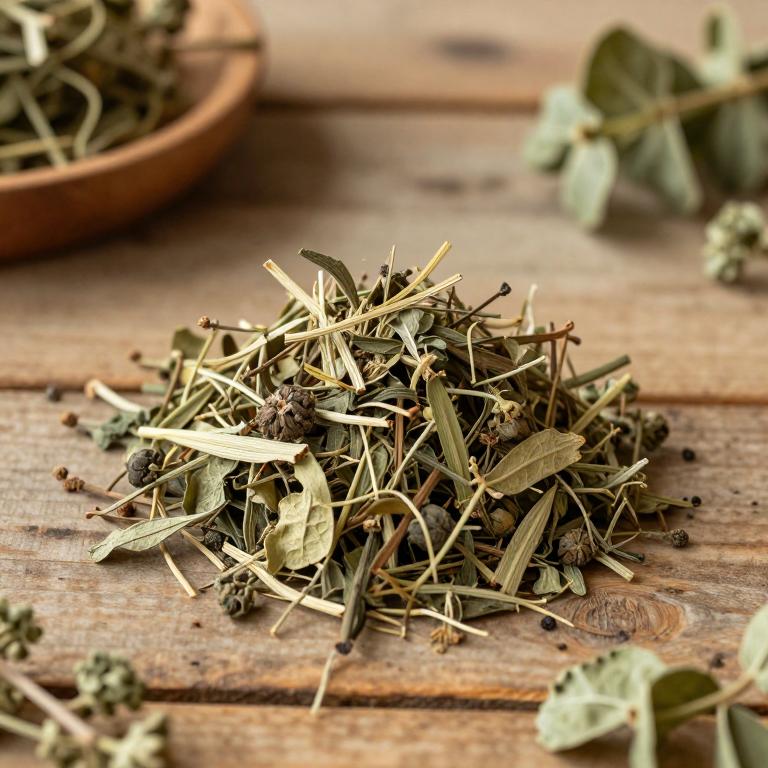
Names and Synonyms
Scientific Names
Accepted name
Witheringia solanaceaDistribution
This plant exhibits a broad presence across several distinct regions within Mexico. It is commonly documented throughout the central part of the country, specifically in Mexico Central. The species also extends its range into the northeastern territories of Mexico Northeast. Additionally, its distribution covers the coastal and inland areas of Mexico Gulf. Finally, the plant can be found reaching into both the Mexico Southwest and Mexico Southeast regions.
| Region | Area |
|---|---|
| Mexico | Mexico Central |
| Mexico | Mexico Northeast |
| Mexico | Mexico Gulf |
| Mexico | Mexico Southwest |
| Mexico | Mexico Southeast |
| Central America | Belize |
| Central America | Costa Rica |
| Central America | Guatemala |
| Central America | Honduras |
| Central America | Nicaragua |
Sources: The World Checklist of Vascular Plants (WCVP)
Botanical Identification
Ecology
The ecology of Witheringia solaunacea is characterized by its presence in diverse environmental settings, specifically occurring within Campo de Várzea and Floresta de Terra Firme habitats. This species demonstrates a broad vertical distribution across varying landscapes, occupying an elevational range that begins at sea level (0 m AMSL) and extends up to a maximum altitude of 3000 m AMSL.
- Elevational range max:
- 3000 m AMSL
- Elevational range min:
- 0 m AMSL
- Habitat :
- Campo de Várzea, Floresta de Terra Firme
Morphology
The morphology of Witheringia solanacea is characterized by a woody structure that manifests in various growth forms, ranging from a shrub to a tree. It typically reaches a mean plant height of approximately 3.5 m. This species is a terrestrial plant, meaning it grows on land rather than in aquatic or epiphytic environments, and it functions as an independent organism without parasitic dependencies. In terms of its structural habit, the plant is self-supporting, acting neither as an obligatory nor a facultative climber, but maintaining its own upright posture.
- Aquatic :
- terrestrial
- Climber :
- self-supporting
- Epiphyte :
- terrestrial
- Growth form :
- tree
- Growth form :
- shrub
- Parasite :
- independent
- Plant height mean:
- 3.5 m
- Woodiness :
- woody
Physiology
The physiology of Witheringia solanacea is characterized by a standard C3 photosynthetic pathway, which dictates its metabolic processes and carbon fixation strategies. As a C3 plant, it utilizes the Calvin cycle to fix atmospheric carbon dioxide directly through the enzyme RuBisCO, facilitating the conversion of inorganic carbon into organic sugars within the mesophyll cells. This metabolic framework implies that the plant's efficiency is highly sensitive to ambient temperature and water availability, as the C3 pathway is prone to photorespiration when stomata close during periods of environmental stress. Consequently, its physiological performance is closely linked to its ability to maintain gas exchange and hydration, balancing the intake of CO2 for glucose production against the loss of water vapor through transpiration.
- Photosynthetic pathway :
- C3
Reproduction
The reproduction of Witheringia solanacea is characterized by specific dispersal mechanisms and highly consistent seed morphology. The plant exhibits a complex dispersal syndrome that is primarily zoochorous, although it also demonstrates characteristics of anemochorous, autochorous, hydrochorous, and unspecialized dispersal strategies, suggesting a multifaceted approach to colonizing new environments. The resulting seeds are remarkably uniform in size, possessing a constant seed volume with a minimum, maximum, and mean value all measured at exactly 1.8 mm³.
- Dispersal syndrome :
- zoochorous
- Seed volume max:
- 1.8 mm³
Sources: Global Inventory of Floras and Traits (GIFT)
Plant Parts
Witheringia solanacea has 1 reported plant parts identified across 2 scientific publications and several other databases that are studied for medicinal purposes. The most consistently reported plant part include leaf.
| Plant part | Supporting sources | Consensus |
|---|---|---|
| Leaf | 2 supporting sources | ★☆☆☆☆ |
Leaf
- Journal of natural products
- Journal of ethnopharmacology
Conditions
Witheringia solanacea has 2 reported investigations on conditions identified across 2 scientific publications and several other databases. The most consistently reported conditions include antidiabetic, apoptosis.
| Condition | Supporting sources | Consensus |
|---|---|---|
| Antidiabetic | 1 supporting sources | ★☆☆☆☆ |
| Apoptosis | 1 supporting sources | ★☆☆☆☆ |
Antidiabetic
- Journal of ethnopharmacology
Apoptosis
- Journal of natural products
Preparations
Witheringia solanacea has 1 reported preparations identified across 2 scientific publications and several other databases. The most consistently reported preparations include methanolic extracts.
| Preparation | Supporting sources | Consensus |
|---|---|---|
| Methanolic extracts | 1 supporting sources | ★☆☆☆☆ |
Methanolic extracts
- Natural product research