Withania frutescens
Withania frutescens · Accepted scientific name
Scientific literature: Very Sparse (25 studies) · ★☆☆☆☆
Withania frutescens, scientifically known as Withania frutescens, is a resilient shrub native to arid regions. Belonging to the Solanaceae family, this medicinal plant is prized for its bioactive compounds. It is traditionally utilized in various herbal remedies to support immune function, reduce inflammation, and promote overall holistic wellness.
- Family
- Solanaceae
- Native range
- Europe
- Parts used
- Leaf · Root
- Common names
- Not available
- Scientific synonyms
- Physalis Suberosa · Physalis Frutescens · 7 more
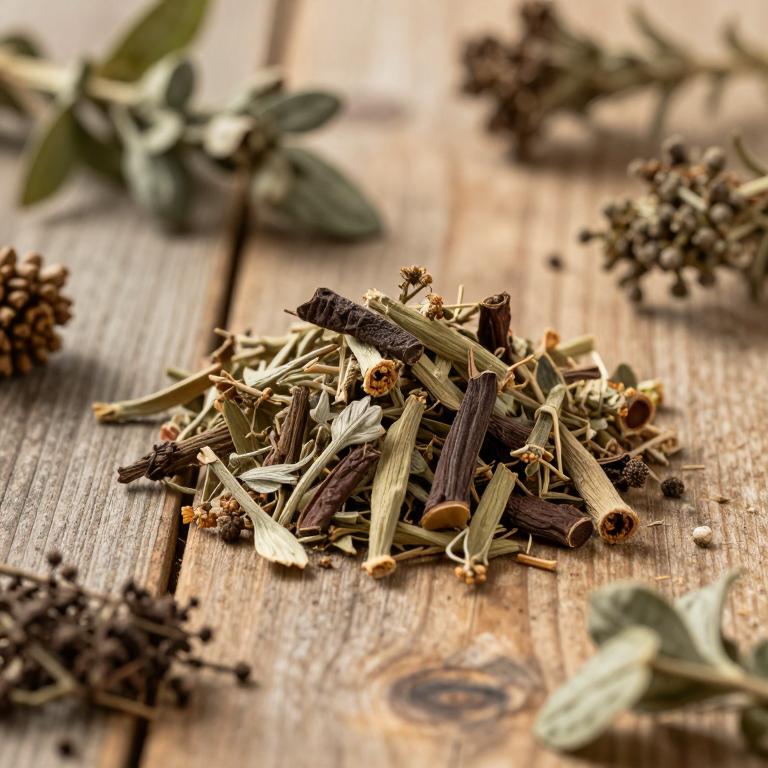
Names and Synonyms
Scientific Names
Accepted name
Withania frutescensSynonyms
- Physalis suberosa
- Physalis frutescens
- Withania villosa
- Withania suberosa
- Withania grosii
- Hypnoticum frutescens
- Opsago suberosa
- Opsago cordata
- Atropa frutescens
Regional and Traditional Names
Spanish:
- Campanillera
French:
- Withanie frutescente
Sources: Wikidata, Catalogue of Life
Taxonomical Classification
This plant belongs to the kingdom Plantae within the phylum Streptophyta and the class Equisetopsida. It is further classified under the subclass Magnoliidae, the order Solanales, and the family Solanaceae. Finally, its taxonomic identity is defined by the genus Withania.
| Rank | Classification |
|---|---|
| Kingdom | Plantae |
| Phylum | Streptophyta |
| Class | Equisetopsida |
| Subclass | Magnoliidae |
| Order | Solanales |
| Family | Solanaceae |
| Genus | Withania |
Sources: The World Checklist of Vascular Plants (WCVP)
Distribution
This plant exhibits a specific distribution concentrated primarily within the Mediterranean basin. In Southwestern Europe, its presence is documented across Spain and Portugal. It can also be found on the Balearic Islands within the same European region. Moving across the sea to Northern Africa, the species is established in Morocco. Finally, its range extends through Algeria, completing its geographical footprint in these coastal areas.
| Region | Area |
|---|---|
| Southwestern Europe | Baleares |
| Southwestern Europe | Portugal |
| Southwestern Europe | Spain |
| Northern Africa | Algeria |
| Northern Africa | Morocco |
| Northern Africa | Tunisia |
| Macaronesia | Canary Is. |
Sources: The World Checklist of Vascular Plants (WCVP)
Botanical Identification
Ecology
The ecology of Withania frutescens is characterized by its ability to thrive across a diverse topographical gradient, specifically occupying an elevational range that extends from as low as 10 m AMSL to a maximum of 700 m AMSL. This broad altitudinal distribution suggests an adaptability to varying environmental pressures, ranging from lowland coastal or alluvial conditions to slightly higher, more temperate foothills. Its presence within these specific elevations indicates a preference for habitats that can sustain its growth patterns within these vertical limits, likely interacting with specific soil compositions and moisture regimes found within this 690-meter altitudinal span.
- Elevational range max:
- 700 m AMSL
- Elevational range min:
- 10 m AMSL
Life history
The life history of Withania frutescens is characterized by its specific growth habit and structural classification within botanical life forms. This species functions primarily as a phanerophyte, possessing well-developed aerial shoots that persist above the ground level to facilitate its reproductive and vegetative cycles. Furthermore, its developmental architecture can be classified as a nanophanerophyte, indicating that while it maintains woody or semi-woody structures, its height remains relatively low compared to larger phanerophytes. This combination of life forms allows the plant to navigate its ecological niche by maintaining permanent above-ground biomass while remaining compact in stature.
- Life form :
- nanophanerophyte
- Life form :
- phanerophyte
Morphology
The morphology of Withania frutescens is characterized by a woody growth form, specifically classified as a shrub. Despite possessing some climbing tendencies, it functions as a self-supporting plant rather than an obligatory or facultative liana or vine. The plant exhibits a woody structure and can reach a maximum height of approximately 2 meters.
- Climber :
- self-supporting
- Growth form :
- shrub
- Plant height max:
- 2 m
- Woodiness :
- woody
Physiology
The physiological architecture of the foliage in Withania frutescens is characterized by a highly consistent and compact leaf morphology, reflecting a specialized structural adaptation. The leaves exhibit a distinct elliptic form, maintaining a robust and nearly symmetrical shape throughout their development. Morphologically, the leaves demonstrate a tight range of dimensions, with a minimum length of 5 cm and a maximum length of 5.5 cm, closely mirroring their width parameters. The leaf width is similarly constrained, spanning from a minimum of 5 cm to a maximum of 5.5 cm. This near-equivalence between length and width measurements indicates a dense, rounded leaf structure that optimizes surface area within a specific geometric profile, contributing to the plant's overall vegetative efficiency.
- Leaf form :
- elliptic
- Leaf length max:
- 5.5 cm
- Leaf length min:
- 5 cm
- Leaf width max:
- 5.5 cm
- Leaf width min:
- 5 cm
Reproduction
The reproduction of Withania frutescens is characterized by a dioecious sexual reproduction system. The plant's flowering cycle is extensive, beginning in January and continuing through to December, showing a highly variable seasonal presence. The flowers are distinctively green in color. Following pollination, the plant produces fleshy, indehiscent fruits categorized as berries. These berries exhibit a red coloration and vary in width from a minimum of 0.5 cm to a maximum of 0.9 cm. Within these fruits, the seeds are produced with consistent dimensions, featuring a minimum seed length of 3.4 mm and a maximum length of 4.2 mm, paired with a minimum width of 3 mm and a maximum width of 4 mm. The seed volume is highly uniform, maintaining a minimum, maximum, and mean volume of 34 mm³.
- Dehiscence :
- indehiscent
- Flower colour :
- green
- Flowering time :
- Jan
- Flowering time :
- Dec
- Fruit colour :
- red
- Fruit dryness :
- fleshy
- Fruit type :
- berry
- Fruit width max:
- 0.9 cm
- Fruit width min:
- 0.5 cm
- Reproduction sexual :
- dioecious
- Seed length max:
- 4.2 mm
- Seed length min:
- 3.4 mm
- Seed volume max:
- 34 mm³
- Seed width max:
- 4 mm
- Seed width min:
- 3 mm
Sources: Global Inventory of Floras and Traits (GIFT)
Plant Parts
Withania frutescens has 2 reported plant parts identified across 2 scientific publications and several other databases that are studied for medicinal purposes. The most consistently reported plant part include leaf, root.
| Plant part | Supporting sources | Consensus |
|---|---|---|
| Leaf | 1 supporting sources | ★☆☆☆☆ |
| Root | 1 supporting sources | ★☆☆☆☆ |
Leaf
- Pharmaceutical biology
Root
- Reproductive toxicology (Elmsford, N.Y.)
Chemicals
Withania frutescens has 5 reported phytochemicals identified across 2 scientific publications and several other databases. The most consistently reported chemicals include Withanolides, Isoleucine, Polyphenol, Withaferin A, tryptophan.
| Chemical | Supporting sources | Consensus |
|---|---|---|
| Withanolides | 3 supporting sources | ★★☆☆☆ |
| Isoleucine | 1 supporting sources | ★☆☆☆☆ |
| Polyphenol | 1 supporting sources | ★☆☆☆☆ |
| Withaferin A | 1 supporting sources | ★☆☆☆☆ |
| tryptophan | 1 supporting sources | ★☆☆☆☆ |
Withanolides
- Steroids
- Natural product communications
- Pharmaceutical biology
Isoleucine
- Saudi journal of biological sciences
Polyphenol
- Natural product communications
Withaferin A
- Steroids
tryptophan
- Saudi journal of biological sciences
Activities
Withania frutescens has 4 reported activities identified across 2 scientific publications and several other databases. The most consistently reported activities include Antioxidant, Antihyperglycemic, Antimicrobial, Antidiabetic.
| Activity | Supporting sources | Consensus |
|---|---|---|
| Antioxidant | 3 supporting sources | ★★☆☆☆ |
| Antihyperglycemic | 2 supporting sources | ★☆☆☆☆ |
| Antimicrobial | 2 supporting sources | ★☆☆☆☆ |
| Antidiabetic | 1 supporting sources | ★☆☆☆☆ |
Antioxidant
- Steroids
- Natural product communications
- Reproductive toxicology (Elmsford, N.Y.)
Antihyperglycemic
- Steroids
- Molecules (Basel, Switzerland)
Antimicrobial
- Steroids
- Natural product communications
Antidiabetic
- Molecules (Basel, Switzerland)
Conditions
Withania frutescens has 5 reported investigations on conditions identified across 2 scientific publications and several other databases. The most consistently reported conditions include dysentery, hyperglycemia, nosocomial infections, poisoning, postprandial hyperglycemia.
| Condition | Supporting sources | Consensus |
|---|---|---|
| Dysentery | 1 supporting sources | ★☆☆☆☆ |
| Hyperglycemia | 1 supporting sources | ★☆☆☆☆ |
| Nosocomial infections | 1 supporting sources | ★☆☆☆☆ |
| Poisoning | 1 supporting sources | ★☆☆☆☆ |
| Postprandial hyperglycemia | 1 supporting sources | ★☆☆☆☆ |
Dysentery
- Reproductive toxicology (Elmsford, N.Y.)
Hyperglycemia
- Molecules (Basel, Switzerland)
Nosocomial infections
- Natural product communications
Poisoning
- Reproductive toxicology (Elmsford, N.Y.)
Postprandial hyperglycemia
- Molecules (Basel, Switzerland)
Preparations
Withania frutescens has 3 reported preparations identified across 2 scientific publications and several other databases. The most consistently reported preparations include W. frutescens extract, extract, hydroethanolic extract.
| Preparation | Supporting sources | Consensus |
|---|---|---|
| W. frutescens extract | 1 supporting sources | ★☆☆☆☆ |
| Extract | 1 supporting sources | ★☆☆☆☆ |
| Hydroethanolic extract | 1 supporting sources | ★☆☆☆☆ |
W. frutescens extract
- Reproductive toxicology (Elmsford, N.Y.)
Extract
- Molecules (Basel, Switzerland)
Hydroethanolic extract
- Molecules (Basel, Switzerland)