Withania adpressa
Withania adpressa · Accepted scientific name
Scientific literature: Very Sparse (22 studies) · ★☆☆☆☆
Withania adpressa, scientifically known as Withania adpressa, is a medicinal shrub belonging to the Solanaceae family. Renowned for its therapeutic potential, this plant contains bioactive alkaloids used in traditional medicine to treat inflammation and stress. Its unique chemical profile offers significant promise for developing modern pharmacological treatments.
- Family
- Solanaceae
- Native range
- Africa
- Parts used
- Not available
- Common names
- Not available
- Scientific synonyms
- Not available
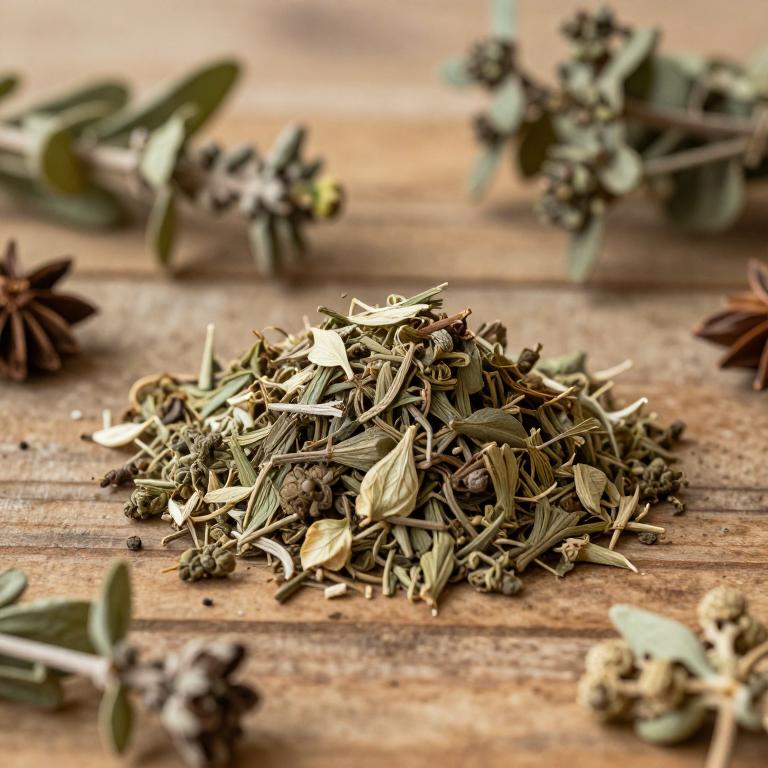
Names and Synonyms
Scientific Names
Accepted name
Withania adpressaSources: Wikidata
Taxonomical Classification
This plant belongs to the kingdom Plantae and the phylum Streptophyta, falling under the class Equisetopsida and subclass Magnoliidae. It is further classified within the order Solanales and the family Solanaceae. Finally, the species Withania adpressa is categorized under the genus Withania.
| Rank | Classification |
|---|---|
| Kingdom | Plantae |
| Phylum | Streptophyta |
| Class | Equisetopsida |
| Subclass | Magnoliidae |
| Order | Solanales |
| Family | Solanaceae |
| Genus | Withania |
Sources: The World Checklist of Vascular Plants (WCVP)
Distribution
This plant, known scientifically as Withania adpressa, possesses a specific and limited geographical range. Its natural habitat is primarily concentrated within the Northern African region. Specifically, the species can be found growing in the territories of Algeria. Additionally, it is distributed across the landscape of Morocco. These two countries represent the known areas where this medicinal plant occurs in the wild.
| Region | Area |
|---|---|
| Northern Africa | Algeria |
| Northern Africa | Morocco |
Sources: The World Checklist of Vascular Plants (WCVP)
Botanical Identification
Physiology
The physiology of Withania adpressa is characterized by its fundamental metabolic processes, most notably its carbon fixation mechanism. This plant utilizes the C3 photosynthetic pathway, a process in which the first stable product of carbon fixation is a three-carbon molecule, specifically 3-phosphoglycerate. This pathway involves the direct fixation of atmospheric carbon dioxide by the enzyme RuBisCO during the Calvin cycle within the mesophyll cells. Consequently, its physiological efficiency in terms of water usage and carbon assimilation is inherently linked to the C3 metabolic framework, distinguishing it from plants that employ C4 or CAM pathways.
- Photosynthetic pathway :
- C3
Sources: Global Inventory of Floras and Traits (GIFT)
Chemicals
Withania adpressa has 10 reported phytochemicals identified across 0 scientific publications and several other databases. The most consistently reported chemicals include Carene, Caryophyllene, Epicatechin, LONGIFOLENE, apigenin.
| Chemical | Supporting sources | Consensus |
|---|---|---|
| Carene | 1 supporting sources | ★☆☆☆☆ |
| Caryophyllene | 1 supporting sources | ★☆☆☆☆ |
| Epicatechin | 1 supporting sources | ★☆☆☆☆ |
| LONGIFOLENE | 1 supporting sources | ★☆☆☆☆ |
| apigenin | 1 supporting sources | ★☆☆☆☆ |
| caffeic acid | 1 supporting sources | ★☆☆☆☆ |
| luteolin | 1 supporting sources | ★☆☆☆☆ |
| p-coumaric acid | 1 supporting sources | ★☆☆☆☆ |
| quercetin | 1 supporting sources | ★☆☆☆☆ |
| rosmarinic acid | 1 supporting sources | ★☆☆☆☆ |
Carene
- Molecules (Basel, Switzerland)
Caryophyllene
- Molecules (Basel, Switzerland)
Epicatechin
- Life (Basel, Switzerland)
LONGIFOLENE
- Molecules (Basel, Switzerland)
apigenin
- Life (Basel, Switzerland)
caffeic acid
- Life (Basel, Switzerland)
luteolin
- Life (Basel, Switzerland)
p-coumaric acid
- Life (Basel, Switzerland)
quercetin
- Life (Basel, Switzerland)
rosmarinic acid
- Life (Basel, Switzerland)
Activities
Withania adpressa has 5 reported activities identified across 0 scientific publications and several other databases. The most consistently reported activities include Antioxidant, Analgesic, Antibacterial, Antifungal, Antimicrobial.
| Activity | Supporting sources | Consensus |
|---|---|---|
| Antioxidant | 2 supporting sources | ★☆☆☆☆ |
| Analgesic | 1 supporting sources | ★☆☆☆☆ |
| Antibacterial | 1 supporting sources | ★☆☆☆☆ |
| Antifungal | 1 supporting sources | ★☆☆☆☆ |
| Antimicrobial | 1 supporting sources | ★☆☆☆☆ |
Antioxidant
- Life (Basel, Switzerland)
- Molecules (Basel, Switzerland)
Analgesic
- Life (Basel, Switzerland)
Antibacterial
- Molecules (Basel, Switzerland)
Antifungal
- Molecules (Basel, Switzerland)
Antimicrobial
- Molecules (Basel, Switzerland)
Conditions
Withania adpressa has 5 reported investigations on conditions identified across 0 scientific publications and several other databases. The most consistently reported conditions include Aspergillus flavus, Aspergillus niger, Candida albicans, Escherichia coli, Staphylococcus aureus.
| Condition | Supporting sources | Consensus |
|---|---|---|
| Aspergillus flavus | 1 supporting sources | ★☆☆☆☆ |
| Aspergillus niger | 1 supporting sources | ★☆☆☆☆ |
| Candida albicans | 1 supporting sources | ★☆☆☆☆ |
| Escherichia coli | 1 supporting sources | ★☆☆☆☆ |
| Staphylococcus aureus | 1 supporting sources | ★☆☆☆☆ |
Aspergillus flavus
- Molecules (Basel, Switzerland)
Aspergillus niger
- Molecules (Basel, Switzerland)
Candida albicans
- Molecules (Basel, Switzerland)
Escherichia coli
- Molecules (Basel, Switzerland)
Staphylococcus aureus
- Molecules (Basel, Switzerland)