Wisteria floribunda
Wisteria floribunda · Accepted scientific name
Scientific literature: Very Sparse (27 studies) · ★☆☆☆☆
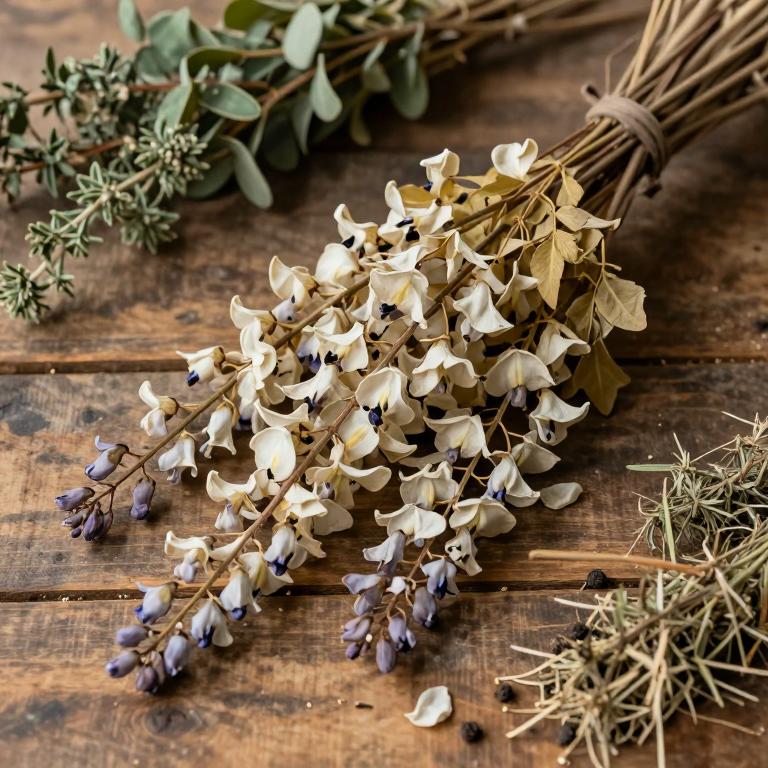
Scientifically known as Wisteria floribunda, is a stunning climbing woody vine celebrated for its cascading, fragrant blooms. Beyond its ornamental beauty, this plant holds significant roles in traditional herbal practices. Exploring its botanical properties reveals fascinating connections between its aesthetic elegance and its potential therapeutic applications in natural medicine.
- Family
- Not available
- Native range
- Asia-Temperate
- Parts used
- Not available
- Common names
- Not available
- Scientific synonyms
- Not available
Names and Synonyms
Scientific Names
Accepted name
Wisteria floribundaDistribution
This plant exhibits a wide geographical distribution that spans across both Eastern Asia and North America. In its native Eastern Asian range, it can be found growing in Japan, Korea, and the Ogasawara-shotto islands. Its presence extends across the ocean to the North-Central United States, specifically within the state of Illinois. Additionally, the species has established itself in the Southeastern United States, notably in Alabama. This broad dispersal demonstrates the plant's ability to adapt to diverse environments across different continents.
| Region | Area |
|---|---|
| Eastern Asia | Japan |
| Eastern Asia | Korea |
| Eastern Asia | Ogasawara-shoto |
| North-Central U.S.A. | Illinois |
| Southeastern U.S.A. | Alabama |
| Southeastern U.S.A. | Arkansas |
| Southeastern U.S.A. | Maryland |
| Southeastern U.S.A. | Tennessee |
Sources: The World Checklist of Vascular Plants (WCVP)
Botanical Identification
Life history
The life history of Wisteria floribunda is characterized by its status as a perennial organism, allowing it to establish long-lasting presence within its ecosystem through successive growing seasons. As a woody climber, its biological structure is classified as a phanerophyte, specifically exhibiting traits of a phanerophyte that support its climbing and sprawling growth habits. This phanerophyte life form ensures that its buds and vital regenerative tissues are elevated above the ground level, enabling it to reach significant heights and utilize structural supports to access light. Through its perennial lifecycle, the plant undergoes seasonal cycles of vegetative growth and flowering, maintaining structural integrity over many years.
- Life form :
- phanerophyte
- Lifecycle :
- perennial
Morphology
The morphology of Wisteria floribunda is characterized by its robust, woody growth form, exhibiting a complex structural nature that can transition between a shrub and a larger tree-like habit depending on environmental support. As an obligatory climber, it functions as a vigorous vine or liana, utilizing its woody stems to ascend structures. The plant typically attains a significant height, ranging from a minimum of 3 meters to a maximum of 10 meters. It is strictly a terrestrial species, maintaining an independent nutritional status as a non-parasitic organism, and does not exhibit epiphytic behavior.
- Aquatic :
- terrestrial
- Climber :
- vine
- Climber :
- obligatory
- Epiphyte :
- terrestrial
- Growth form :
- tree
- Growth form :
- shrub
- Parasite :
- independent
- Plant height max:
- 10 m
- Plant height min:
- 3 m
- Woodiness :
- woody
Physiology
The physiology of Wisteria floribunda is primarily characterized by its utilization of the C3 photosynthetic pathway, a mechanism common to most woody climbing legumes where carbon fixation occurs directly through the Calvin cycle within the mesophyll cells. This metabolic strategy involves the enzyme RuBisCO capturing atmospheric carbon dioxide to produce 3-phosphoglycerate, a process that is highly efficient in the temperate and subtropical environments where the species typically thrives, provided there is adequate moisture availability. Beyond its carbon assimilation, the plant exhibits complex physiological adaptations for its climbing habit, utilizing specialized tendrils that respond to thigmotropism, allowing the plant to navigate structural supports to optimize light interception for its canopy. The vascular physiology is optimized for long-distance transport of water and nutrients through a robust xylem and phloem system, supporting the rapid growth required to reach sunlight. Additionally, the plant manages its nitrogen economy through symbiotic relationships with rhizobia in its root nodules, facilitating biological nitrogen fixation which supplements its nutrient uptake and fuels the high metabolic demands of its seasonal flowering and extensive vegetative expansion.
- Photosynthetic pathway :
- C3
Reproduction
The reproduction of Wisteria floribunda is characterized by a specific seasonal flowering window and the production of small, uniform seeds. The flowering period typically commences in May and concludes in June, though the timing can be variable depending on environmental conditions. Following pollination, the plant produces seeds that exhibit highly consistent physical properties; the seed mass remains constant across the population, with a mean, maximum, and minimum mass all measured at 0.0378 g.
- Flowering time :
- May
- Flowering time :
- Jun
- Seed mass mean:
- 0.0378 g
Sources: Global Inventory of Floras and Traits (GIFT)
Chemicals
Wisteria floribunda has 2 reported phytochemicals identified across 0 scientific publications and several other databases. The most consistently reported chemicals include Betulin, betulinic acid.
| Chemical | Supporting sources | Consensus |
|---|---|---|
| Betulin | 1 supporting sources | ★☆☆☆☆ |
| betulinic acid | 1 supporting sources | ★☆☆☆☆ |
Betulin
- Dr. Duke
betulinic acid
- Dr. Duke
Activities
Wisteria floribunda has 23 reported activities identified across 0 scientific publications and several other databases. The most consistently reported activities include Anthelmintic, AntiHIV, Antibacterial, Anticancer, Anticarcinomic.
| Activity | Supporting sources | Consensus |
|---|---|---|
| Anthelmintic | 1 supporting sources | ★☆☆☆☆ |
| AntiHIV | 1 supporting sources | ★☆☆☆☆ |
| Antibacterial | 1 supporting sources | ★☆☆☆☆ |
| Anticancer | 1 supporting sources | ★☆☆☆☆ |
| Anticarcinomic | 1 supporting sources | ★☆☆☆☆ |
| Antiedemic | 1 supporting sources | ★☆☆☆☆ |
| Antifeedant | 1 supporting sources | ★☆☆☆☆ |
| Antiflu | 1 supporting sources | ★☆☆☆☆ |
| Antiinflammatory | 1 supporting sources | ★☆☆☆☆ |
| Antileukemic | 1 supporting sources | ★☆☆☆☆ |
Anthelmintic
- Dr. Duke
AntiHIV
- Dr. Duke
Antibacterial
- Dr. Duke
Anticancer
- Dr. Duke
Anticarcinomic
- Dr. Duke
Antiedemic
- Dr. Duke
Antifeedant
- Dr. Duke
Antiflu
- Dr. Duke
Antiinflammatory
- Dr. Duke
Antileukemic
- Dr. Duke
Preparations
Wisteria floribunda has 1 reported preparations identified across 0 scientific publications and several other databases. The most consistently reported preparations include seed extracts.
| Preparation | Supporting sources | Consensus |
|---|---|---|
| Seed extracts | 1 supporting sources | ★☆☆☆☆ |
Seed extracts
- Biological chemistry Hoppe-Seyler