Willughbeia edulis
Willughbeia edulis · Accepted scientific name
Scientific literature: Very Sparse (2 studies) · ★☆☆☆☆
scientifically known as Willughbeia edulis, is a versatile tropical climber native to West Africa. Commonly called the African velvet apple, this plant produces large, nutritious fruits. Beyond its dietary value, various parts of the plant are utilized in traditional medicine to treat ailments, showcasing its significant ethnobotanical importance.
- Family
- Apocynaceae
- Native range
- Asia-Tropical
- Parts used
- Fruit
- Common names
- Not available
- Scientific synonyms
- Willughbeia Cochinchinensis · Willughbeia Martabanica · 8 more
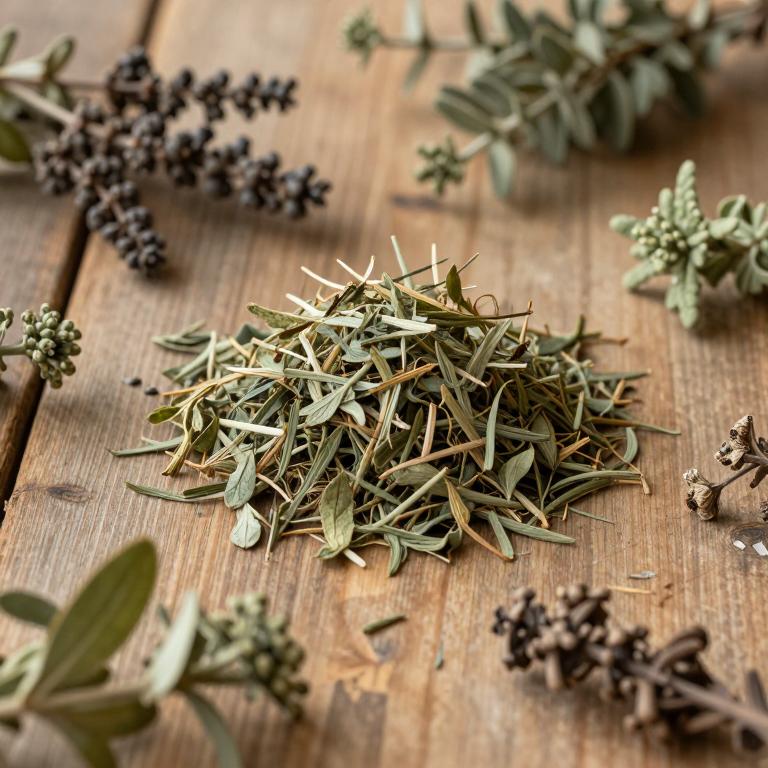
Names and Synonyms
Scientific Names
Accepted name
Willughbeia edulisSynonyms
- Willughbeia cochinchinensis
- Willughbeia martabanica
- Pacouria roxburghii
- Ambelania edulis
- Ancylocladus curtisianus
- Ancylocladus edulis
- Ancylocladus cochinchinensis
- Willughbeia curtisiana
- Willughbeia kontumensis
- Willughbeia dulcis
Sources: Wikidata, Catalogue of Life
Taxonomical Classification
This plant belongs to the kingdom Plantae and is classified under the phylum Streptophyta and class Equisetopsida. Within the subclass Magnoliidae and order Gentianales, it is a member of the family Apocynaceae. Finally, it is specifically identified under the genus Willughbeia.
| Rank | Classification |
|---|---|
| Kingdom | Plantae |
| Phylum | Streptophyta |
| Class | Equisetopsida |
| Subclass | Magnoliidae |
| Order | Gentianales |
| Family | Apocynaceae |
| Genus | Willughbeia |
Sources: The World Checklist of Vascular Plants (WCVP)
Distribution
This plant exhibits a broad geographical distribution across parts of South and Southeast Asia. Within the Indian Subcontinent, it can be found growing in the region of Assam and throughout Bangladesh. Its presence extends into the Indo-China peninsula, where it inhabits the landscapes of Cambodia. Additionally, the species is documented to grow within the borders of Laos. Finally, its natural range includes the territory of Myanmar.
| Region | Area |
|---|---|
| Indian Subcontinent | Assam |
| Indian Subcontinent | Bangladesh |
| Indo-China | Cambodia |
| Indo-China | Laos |
| Indo-China | Myanmar |
| Indo-China | Nicobar Is. |
| Indo-China | Thailand |
| Indo-China | Vietnam |
| Malesia | Malaya |
Sources: The World Checklist of Vascular Plants (WCVP)
Botanical Identification
Morphology
The morphology of Willughbeiia eduulis is characterized by its growth habit as a woody liana, functioning as an obligatory climber. It is an independent plant that maintains a terrestrial existence rather than acting as an epiphyte. This climbing species can reach significant dimensions in the forest canopy, with a mean plant height of approximately 25 m and a maximum potential height of up to 30 m.
- Climber :
- liana
- Climber :
- obligatory
- Epiphyte :
- terrestrial
- Parasite :
- independent
- Plant height max:
- 30 m
- Plant height mean:
- 25 m
- Woodiness :
- woody
Physiology
The physiology of Willughbeia eduulis is characterized by its metabolic processes as a woody climber, primarily driven by efficient photosynthetic mechanisms adapted to tropical forest environments. As a member of the Annonaceae family, its physiological activity focuses on the synthesis of secondary metabolites, including acetogenins, which serve as chemical defense mechanisms against herbivory. The plant exhibits a complex vascular system designed to transport nutrients and water upward through its climbing stems to support its dense canopy. Regarding its nutrient acquisition and symbiotic relationships, Willughbeia eduulis does not function as a nitrogen fixer; it lacks the physiological specialized structures, such as root nodules containing nitrogen-fixing bacteria, required to convert atmospheric nitrogen into usable forms. Instead, its nitrogen uptake is strictly dependent on the absorption of nitrates and ammonium ions from the soil through its root system.
- Nitrogen fixer :
- no
Sources: Global Inventory of Floras and Traits (GIFT)
Plant Parts
Willughbeia edulis has 1 reported plant parts identified across 1 scientific publications and several other databases that are studied for medicinal purposes. The most consistently reported plant part include fruit.
| Plant part | Supporting sources | Consensus |
|---|---|---|
| Fruit | 1 supporting sources | ★☆☆☆☆ |
Fruit
- PeerJ
Activities
Willughbeia edulis has 1 reported activities identified across 1 scientific publications and several other databases. The most consistently reported activities include Diuretic.
| Activity | Supporting sources | Consensus |
|---|---|---|
| Diuretic | 1 supporting sources | ★☆☆☆☆ |
Diuretic
- Journal of ethnopharmacology
Preparations
Willughbeia edulis has 1 reported preparations identified across 1 scientific publications and several other databases. The most consistently reported preparations include crude ethanol extracts.
| Preparation | Supporting sources | Consensus |
|---|---|---|
| Crude ethanol extracts | 1 supporting sources | ★☆☆☆☆ |
Crude ethanol extracts
- Molecular medicine reports