Wilbrandia verticillata
Wilbrandia verticillata · Accepted scientific name
Scientific literature: Very Sparse (4 studies) · ★☆☆☆☆
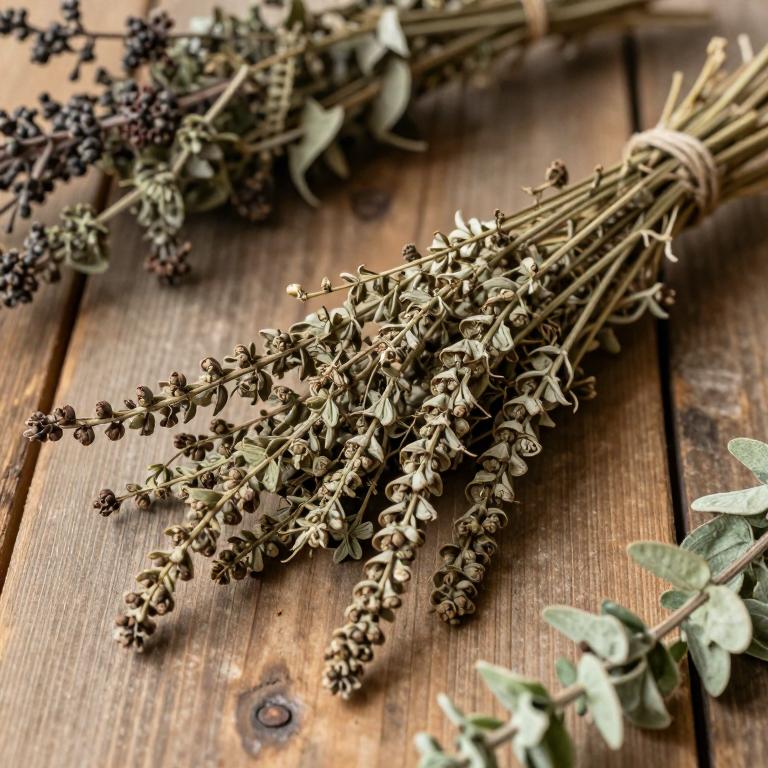
, scientifically known as Wilbrandia verticillata, is a fascinating medicinal herb native to South America. Often recognized by its unique whorled leaf arrangement, this plant is traditionally valued in folk medicine for its various therapeutic properties. Exploring its botanical characteristics and potential bioactive compounds reveals its significant ethnobotanical importance.
- Family
- Cucurbitaceae
- Native range
- Southern America
- Parts used
- Rhizome
- Common names
- Not available
- Scientific synonyms
- Wilbrandia Drastica · Wilbrandia Longibracteata · 8 more
Names and Synonyms
Scientific Names
Accepted name
Wilbrandia verticillataSynonyms
- Wilbrandia drastica
- Wilbrandia longibracteata
- Wilbrandia riedelii
- Wilbrandia fluminensis
- Wilbrandia scabra
- Anguria aculeolata
- Anguria gaudichaudiana
- Anguria meyeniana
- Rhynchocarpa glomerata
- Momordica verticillata
Regional and Traditional Names
Spanish:
- azougue-dos-pobres
Sources: Wikidata, Catalogue of Life
Taxonomical Classification
This plant belongs to the kingdom Plantae and is classified under the phylum Streptophyta and class Equisetopsida. Within the subclass Magnoliidae, it is ordered as Cucurbitales and placed in the family Cucurbitaceae. Finally, it is identified under the genus Wilbrandia.
| Rank | Classification |
|---|---|
| Kingdom | Plantae |
| Phylum | Streptophyta |
| Class | Equisetopsida |
| Subclass | Magnoliidae |
| Order | Cucurbitales |
| Family | Cucurbitaceae |
| Genus | Wilbrandia |
Sources: The World Checklist of Vascular Plants (WCVP)
Distribution
This plant exhibits a wide geographical distribution across several regions of South America. In Brazil, its presence is documented across the West-Central, Northeast, Southeast, and South regions. Beyond the borders of Brazil, it can also be found in the southern portion of the continent. Specifically, its range extends into the country of Paraguay. Together, these locations highlight the plant's ability to inhabit diverse environments throughout the southern part of the continent.
| Region | Area |
|---|---|
| Brazil | Brazil West-Central |
| Brazil | Brazil Northeast |
| Brazil | Brazil Southeast |
| Brazil | Brazil South |
| Southern South America | Paraguay |
Sources: The World Checklist of Vascular Plants (WCVP)
Botanical Identification
Ecology
The ecology of Wilbrandia verticillata is characterized by its adaptation to humid tropical environments, specifically within the Floresta Ombrófila (also known as Floresta Pluvial), where it thrives under the moisture-rich conditions of the rainforest. This species exhibits a broad altitudinal distribution, occupying various ecological niches from sea level up to a maximum elevation of 1000 m AMSL. This wide elevational range allows the plant to inhabit diverse microclimates within the lowland and montane rainforest strata, ranging from 0 to 1000 m AMSL.
- Elevational range max:
- 1000 m AMSL
- Elevational range min:
- 0 m AMSL
- Habitat :
- Floresta Ombrófila (= Floresta Pluvial)
Life history
The life history of Wilbrandia verticillata is characterized by its status as a perennial organism, allowing it to persist in its environment over multiple growing seasons. Depending on specific environmental conditions and resource availability, its life cycle can exhibit variability, sometimes displaying patterns consistent with annual or biennial growth stages. This flexibility in its developmental timeline enables the plant to adapt to fluctuating ecological stressors, ensuring long-term survival and reproductive success within its native habitat.
- Lifecycle :
- perennial
Morphology
The morphology of Wilbrandia verticillata is characterized by a non-woody structure that facilitates its growth patterns across diverse environments. As a terrestrial species, it does not exhibit aquatic or semiaquatic tendencies, nor does it function as an epiphyte in either a holoepiphytic or hemiepiphytic capacity. The plant is an independent organism, lacking any obligatory or facultative parasitic relationships with other flora. Furthermore, its growth habit is self-supporting rather than acting as a climbing vine or liana, as it does not possess the obligatory or facultative climbing mechanisms typical of vining species.
- Aquatic :
- terrestrial
- Climber :
- vine
- Climber :
- obligatory
- Epiphyte :
- terrestrial
- Parasite :
- independent
- Woodiness :
- non-woody
Sources: Global Inventory of Floras and Traits (GIFT)
Plant Parts
Wilbrandia verticillata has 1 reported plant parts identified across 1 scientific publications and several other databases that are studied for medicinal purposes. The most consistently reported plant part include rhizome.
| Plant part | Supporting sources | Consensus |
|---|---|---|
| Rhizome | 1 supporting sources | ★☆☆☆☆ |
Rhizome
- Memorias do Instituto Oswaldo Cruz
Chemicals
Wilbrandia verticillata has 2 reported phytochemicals identified across 1 scientific publications and several other databases. The most consistently reported chemicals include WV1, WV2.
| Chemical | Supporting sources | Consensus |
|---|---|---|
| WV1 | 1 supporting sources | ★☆☆☆☆ |
| WV2 | 1 supporting sources | ★☆☆☆☆ |
WV1
- Memorias do Instituto Oswaldo Cruz
WV2
- Memorias do Instituto Oswaldo Cruz
Activities
Wilbrandia verticillata has 1 reported activities identified across 1 scientific publications and several other databases. The most consistently reported activities include Cytotoxic.
| Activity | Supporting sources | Consensus |
|---|---|---|
| Cytotoxic | 1 supporting sources | ★☆☆☆☆ |
Cytotoxic
- Memorias do Instituto Oswaldo Cruz
Preparations
Wilbrandia verticillata has 1 reported preparations identified across 1 scientific publications and several other databases. The most consistently reported preparations include purified fraction obtained from the rhizome.
| Preparation | Supporting sources | Consensus |
|---|---|---|
| Purified fraction obtained from the rhizome | 1 supporting sources | ★☆☆☆☆ |
Purified fraction obtained from the rhizome
- Memorias do Instituto Oswaldo Cruz