False ohelo
Wikstroemia · Accepted scientific name
Scientific literature: Very Sparse (15 studies) · ★☆☆☆☆
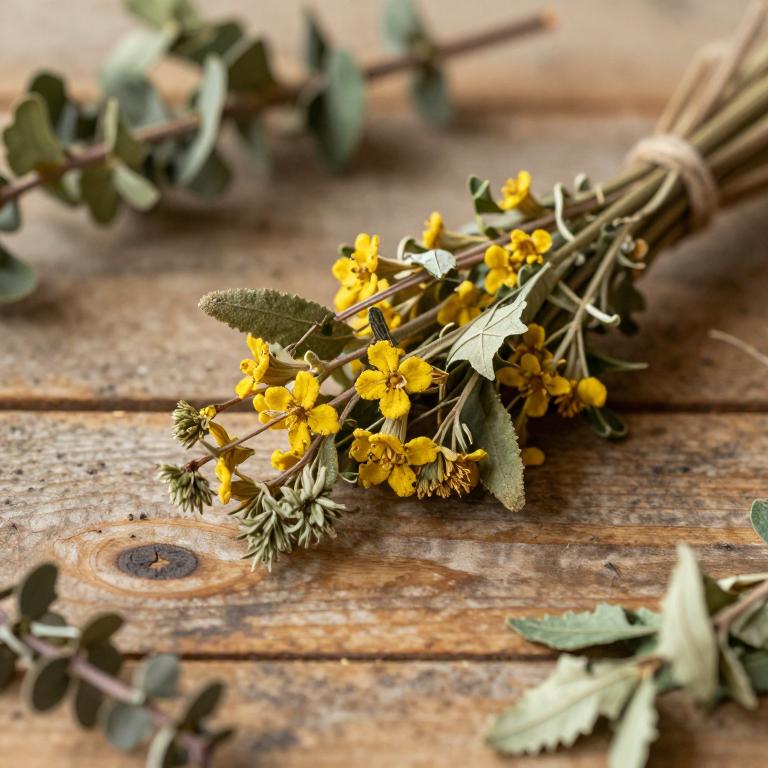
False ohelo, scientifically known as Wikstroemia, is a distinctive shrub native to the Hawaiian Islands. Renowned for its glossy, leathery leaves and delicate clusters of small white flowers, this plant holds significant ecological importance. While visually striking, certain species contain toxic compounds, requiring careful handling and respect in nature.
- Family
- Thymelaeaceae
- Native range
- Africa
- Parts used
- Not available
- Common names
- False Ohelo
- Scientific synonyms
- Diplomorpha
Names and Synonyms
Common Names
- False ohelo
Scientific Names
Accepted name
WikstroemiaSynonyms
- Diplomorpha
Regional and Traditional Names
Spanish:
- Farreria
- Capura
Sources: Wikidata, Catalogue of Life
Taxonomical Classification
This plant belongs to the kingdom Plantae and is classified under the phylum Streptophyta and class Equisetopsida. Within the subclass Magnoliidae and order Malvales, it is further categorized into the family Thymelaeaceae. Finally, the medicinal species is identified under the specific genus Wikstroemia.
| Rank | Classification |
|---|---|
| Kingdom | Plantae |
| Phylum | Streptophyta |
| Class | Equisetopsida |
| Subclass | Magnoliidae |
| Order | Malvales |
| Family | Thymelaeaceae |
| Genus | Wikstroemia |
Sources: The World Checklist of Vascular Plants (WCVP)
Distribution
This plant exhibits a diverse geographical distribution spanning several distinct regions across the globe. In Southern Africa, its presence is noted specifically within the Cape Provinces. Moving toward the Western Indian Ocean, it can be found inhabiting the islands of Mauritius and Rodrigues. Its range extends into Western Asia, where it is documented in Afghanistan. Finally, the species is also located within the South-Central regions of China.
| Region | Area |
|---|---|
| Southern Africa | Cape Provinces |
| Western Indian Ocean | Mauritius |
| Western Indian Ocean | Rodrigues |
| Western Asia | Afghanistan |
| China | China South-Central |
| China | Hainan |
| China | China North-Central |
| China | China Southeast |
| China | Tibet |
| Eastern Asia | Japan |
Sources: The World Checklist of Vascular Plants (WCVP)
Chemicals
Wikstroemia has 8 reported phytochemicals identified across 0 scientific publications and several other databases. The most consistently reported chemicals include Anthraquinones, Coumarins, Fatty acids, Flavonoids, Lignans.
| Chemical | Supporting sources | Consensus |
|---|---|---|
| Anthraquinones | 1 supporting sources | ★☆☆☆☆ |
| Coumarins | 1 supporting sources | ★☆☆☆☆ |
| Fatty acids | 1 supporting sources | ★☆☆☆☆ |
| Flavonoids | 1 supporting sources | ★☆☆☆☆ |
| Lignans | 1 supporting sources | ★☆☆☆☆ |
| Phytosterols | 1 supporting sources | ★☆☆☆☆ |
| Terpenes | 1 supporting sources | ★☆☆☆☆ |
| Terpenoids | 1 supporting sources | ★☆☆☆☆ |
Anthraquinones
- Current pharmaceutical biotechnology
Coumarins
- Current pharmaceutical biotechnology
Fatty acids
- Current pharmaceutical biotechnology
Flavonoids
- Current pharmaceutical biotechnology
Lignans
- Current pharmaceutical biotechnology
Phytosterols
- Current pharmaceutical biotechnology
Terpenes
- Journal of ethnopharmacology
Terpenoids
- Current pharmaceutical biotechnology
Activities
Wikstroemia has 5 reported activities identified across 0 scientific publications and several other databases. The most consistently reported activities include Anticancer, Antiinflammatory, Antimalarial, Hepatoprotective, Neuroprotective.
| Activity | Supporting sources | Consensus |
|---|---|---|
| Anticancer | 1 supporting sources | ★☆☆☆☆ |
| Antiinflammatory | 1 supporting sources | ★☆☆☆☆ |
| Antimalarial | 1 supporting sources | ★☆☆☆☆ |
| Hepatoprotective | 1 supporting sources | ★☆☆☆☆ |
| Neuroprotective | 1 supporting sources | ★☆☆☆☆ |
Anticancer
- Current pharmaceutical biotechnology
Antiinflammatory
- Current pharmaceutical biotechnology
Antimalarial
- Current pharmaceutical biotechnology
Hepatoprotective
- Current pharmaceutical biotechnology
Neuroprotective
- Current pharmaceutical biotechnology
Conditions
Wikstroemia has 2 reported investigations on conditions identified across 0 scientific publications and several other databases. The most consistently reported conditions include bronchitis, rheumatoid arthritis.
| Condition | Supporting sources | Consensus |
|---|---|---|
| Bronchitis | 1 supporting sources | ★☆☆☆☆ |
| Rheumatoid arthritis | 1 supporting sources | ★☆☆☆☆ |
Bronchitis
- Nutrients
Rheumatoid arthritis
- Nutrients
Preparations
Wikstroemia has 2 reported preparations identified across 0 scientific publications and several other databases. The most consistently reported preparations include crude extracts, plant extracts.
| Preparation | Supporting sources | Consensus |
|---|---|---|
| Crude extracts | 1 supporting sources | ★☆☆☆☆ |
| Plant extracts | 1 supporting sources | ★☆☆☆☆ |
Crude extracts
- Current pharmaceutical biotechnology
Plant extracts
- Current pharmaceutical biotechnology