Wikstroemia ganpi
Wikstroemia ganpi · Accepted scientific name
Scientific literature: Very Sparse (1 studies) · ★☆☆☆☆
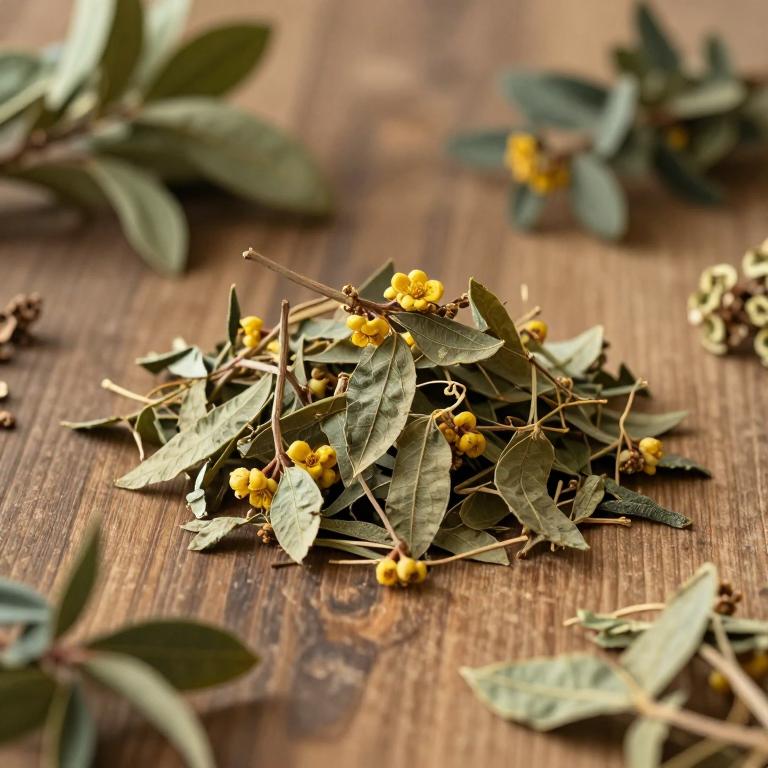
, scientifically known as Wikstroemia ganpi, is a significant medicinal shrub native to East Asia. Renowned in traditional medicine, its leaves are frequently utilized for their anti-inflammatory and antimicrobial properties. Often processed into a fine powder, it serves as a vital component in various herbal remedies and holistic treatments.
- Family
- Thymelaeaceae
- Native range
- Asia-Temperate
- Parts used
- Not available
- Common names
- Not available
- Scientific synonyms
- Diplomorpha Ganpi · Daphne Ganpi · 3 more
Names and Synonyms
Scientific Names
Accepted name
Wikstroemia ganpiSynonyms
- Diplomorpha ganpi
- Daphne ganpi
- Passerina ganpi
- Wikstroemia lasiocarpa
- Wikstroemia canescens var. ganpi
Sources: Wikidata, Catalogue of Life
Taxonomical Classification
This plant belongs to the kingdom Plantae and the phylum Streptophyta, falling under the class Equisetopsida and subclass Magnoliidae. Within the order Malvales, it is classified under the family Thymelaeaceae. Its specific taxonomic identification is completed by the genus Wikstroemia.
| Rank | Classification |
|---|---|
| Kingdom | Plantae |
| Phylum | Streptophyta |
| Class | Equisetopsida |
| Subclass | Magnoliidae |
| Order | Malvales |
| Family | Thymelaeaceae |
| Genus | Wikstroemia |
Sources: The World Checklist of Vascular Plants (WCVP)
Distribution
This plant is primarily found within the East Asian region. Its geographical range is specifically concentrated in certain parts of the continent. Within Japan, the species can be identified growing in its natural habitats. It also maintains a presence across the landscape of Korea. Consequently, its distribution is limited to these specific East Asian territories.
| Region | Area |
|---|---|
| Eastern Asia | Japan |
| Eastern Asia | Korea |
Sources: The World Checklist of Vascular Plants (WCVP)
Botanical Identification
Morphology
The morphology of Wikstroemia ganpi is characterized by its distinct growth form as a tree, exhibiting a robust and perennial structure. It possesses a woody nature, with well-developed lignified stems that support its arboreal habit.
- Growth form :
- tree
- Woodiness :
- woody
Sources: Global Inventory of Floras and Traits (GIFT)
Chemicals
Wikstroemia ganpi has 1 reported phytochemicals identified across 0 scientific publications and several other databases. The most consistently reported chemicals include Luteolin 7-O-glucoside.
| Chemical | Supporting sources | Consensus |
|---|---|---|
| Luteolin 7-O-glucoside | 1 supporting sources | ★☆☆☆☆ |
Luteolin 7-O-glucoside
- Plants (Basel, Switzerland)