Weinmannia trichosperma
Weinmannia trichosperma · Accepted scientific name
Scientific literature: Very Sparse (9 studies) · ★☆☆☆☆
, scientifically known as Weinmannia trichosperma, is a significant medicinal plant native to the Andean regions. Renowned for its diverse therapeutic properties, it is traditionally used to treat inflammatory conditions, respiratory ailments, and digestive issues. Exploring its bioactive compounds offers promising insights into natural pharmacology and holistic healing practices.
- Family
- Cunoniaceae
- Native range
- Southern America
- Parts used
- Not available
- Common names
- Not available
- Scientific synonyms
- Weinmannia Dentata · Weinmannia Sessiliflora · 2 more
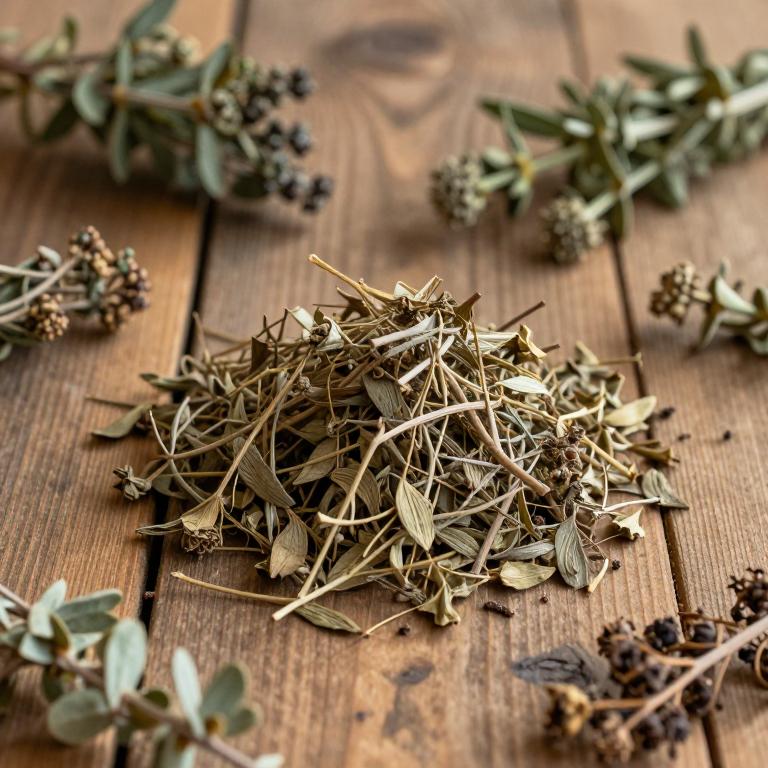
Names and Synonyms
Scientific Names
Accepted name
Weinmannia trichospermaSynonyms
- Weinmannia dentata
- Weinmannia sessiliflora
- Weinmannia producta
- Windmannia trichosperma
Sources: Wikidata, Catalogue of Life
Taxonomical Classification
This plant belongs to the kingdom Plantae and is classified under the phylum Streptophyta and the class Equisetopsida. Within the subclass Magnoliidae, it is ordered under Oxalidales and placed in the family Cunoniaceae. Finally, its specific taxonomic identification is within the genus Weinmannia.
| Rank | Classification |
|---|---|
| Kingdom | Plantae |
| Phylum | Streptophyta |
| Class | Equisetopsida |
| Subclass | Magnoliidae |
| Order | Oxalidales |
| Family | Cunoniaceae |
| Genus | Weinmannia |
Sources: The World Checklist of Vascular Plants (WCVP)
Distribution
This plant exhibits a specific geographical range located within the southern regions of South America. Its distribution begins in the southern parts of Argentina, where it can be found in various habitats. Moving westward, the species is also documented across the central regions of Chile. Furthermore, its presence extends into the southern territories of Chile. Together, these areas define the primary natural occurrence of Weinmannia trichosperma.
| Region | Area |
|---|---|
| Southern South America | Argentina South |
| Southern South America | Chile Central |
| Southern South America | Chile South |
Sources: The World Checklist of Vascular Plants (WCVP)
Botanical Identification
Ecology
The ecology of Weinmannia trichosperma is defined by its presence across a diverse altitudinal gradient, thriving in environments that span from sea level up to a maximum elevation of 1000 m AMSL. This broad elevational range suggests a high degree of adaptability to varying topographical conditions and microclimates within its native habitat. Occupying a niche that starts at 0 m AMSL, the species is capable of colonizing lowland ecosystems, while its ability to ascend to 1000 m AMSL indicates its tolerance for the cooler, more temperate conditions found in mid-elevation montane zones. This distribution pattern allows the plant to interact with a wide array of soil compositions and moisture regimes, facilitating its role within different successional stages of its respective forest ecosystems.
- Elevational range max:
- 1000 m AMSL
- Elevational range min:
- 0 m AMSL
Life history
The life history of Weinmannia trichosperma is characterized by its status as a perennial organism, allowing it to persist in its environment through multiple growing seasons. As a long-lived species, it avoids the rapid turnover seen in annuals, instead investing energy into structural development and long-term survival within its ecological niche. This perennial nature facilitates a stable presence in its habitat, where it can undergo successive reproductive cycles over many years. The plant's developmental strategy is geared toward sustained growth and persistence, ensuring that it can withstand seasonal fluctuations and maintain its role within its ecosystem across an extended lifespan.
- Lifecycle :
- perennial
Morphology
The morphology of Weinmannia trichosperma is characterized by its growth form as a woody tree, reaching a maximum plant height of approximately 8 m. It functions as an independent organism rather than a parasite and is strictly terrestrial in its habitat, lacking aquatic or semiaquatic tendencies. As a self-supporting species, it does not exhibit climbing habits such as lianas or vines, nor does it function as an epiphyte, maintaining a terrestrial life cycle.
- Aquatic :
- terrestrial
- Climber :
- self-supporting
- Epiphyte :
- terrestrial
- Growth form :
- tree
- Parasite :
- independent
- Plant height max:
- 8 m
- Woodiness :
- woody
Physiology
The physiology of Weinmannia trichospermum is characterized by a metabolic framework consistent with the C3 photosynthetic pathway, where carbon fixation occurs directly through the Calvin cycle without the specialized spatial or temporal adaptations found in C4 or CAM plants. As a C3 species, the plant utilizes the enzyme RuBisCO to fix atmospheric carbon dioxide into three-carbon compounds during the light-independent reactions. This physiological profile dictates its resource management strategies, particularly regarding water use efficiency and gas exchange, as it must balance the intake of CO2 with the prevention of photorespiration and excessive transpiration. The metabolic activity of the plant is closely tied to its environmental niche, where the C3 pathway supports steady biomass accumulation under conditions where moisture is sufficiently available to offset the stomatal conductance required for efficient carbon assimilation.
- Photosynthetic pathway :
- C3
Reproduction
The reproduction of Weinmannia trichosperma is characterized by the production of specialized seeds that facilitate its dispersal and establishment within its natural habitat. Based on botanical data, the seeds of this species are notably minute, exhibiting a highly consistent and uniform weight profile. The seed mass is documented at a constant value, with a mean mass of $1 \times 10^{-4}$ g, a maximum mass of $1 \times 10^{-4}$ g, and a minimum mass of $1 \times 10^{-4}$ g. This lack of variance in seed mass suggests a highly standardized reproductive strategy, producing lightweight propagules that are likely adapted for efficient dispersal mechanisms.
- Seed mass mean:
- 1e-04 g
Sources: Global Inventory of Floras and Traits (GIFT)
Chemicals
Weinmannia trichosperma has 3 reported phytochemicals identified across 0 scientific publications and several other databases. The most consistently reported chemicals include Isoastilbin, Neoastilbin, Neoisoastilbin.
| Chemical | Supporting sources | Consensus |
|---|---|---|
| Isoastilbin | 1 supporting sources | ★☆☆☆☆ |
| Neoastilbin | 1 supporting sources | ★☆☆☆☆ |
| Neoisoastilbin | 1 supporting sources | ★☆☆☆☆ |
Isoastilbin
- Frontiers in pharmacology
Neoastilbin
- Frontiers in pharmacology
Neoisoastilbin
- Frontiers in pharmacology
Activities
Weinmannia trichosperma has 1 reported activities identified across 0 scientific publications and several other databases. The most consistently reported activities include Antioxidant.
| Activity | Supporting sources | Consensus |
|---|---|---|
| Antioxidant | 1 supporting sources | ★☆☆☆☆ |
Antioxidant
- Frontiers in pharmacology
Conditions
Weinmannia trichosperma has 2 reported investigations on conditions identified across 0 scientific publications and several other databases. The most consistently reported conditions include inflammation, wound healing.
| Condition | Supporting sources | Consensus |
|---|---|---|
| Inflammation | 1 supporting sources | ★☆☆☆☆ |
| Wound healing | 1 supporting sources | ★☆☆☆☆ |
Inflammation
- Frontiers in pharmacology
Wound healing
- Frontiers in pharmacology