Warionia saharae
Warionia saharae · Accepted scientific name
Scientific literature: Very Sparse (11 studies) · ★☆☆☆☆
Warionia saharae, scientifically known as Warioniia saharae, is a resilient desert shrub native to the arid regions of North Africa. Valued in traditional medicine, this plant possesses unique phytochemical properties used to treat various ailments. Its ability to thrive in harsh environments makes it a fascinating subject of ethnobotanical study.
- Family
- Asteraceae
- Native range
- Africa
- Parts used
- Leaf
- Common names
- Not available
- Scientific synonyms
- Not available
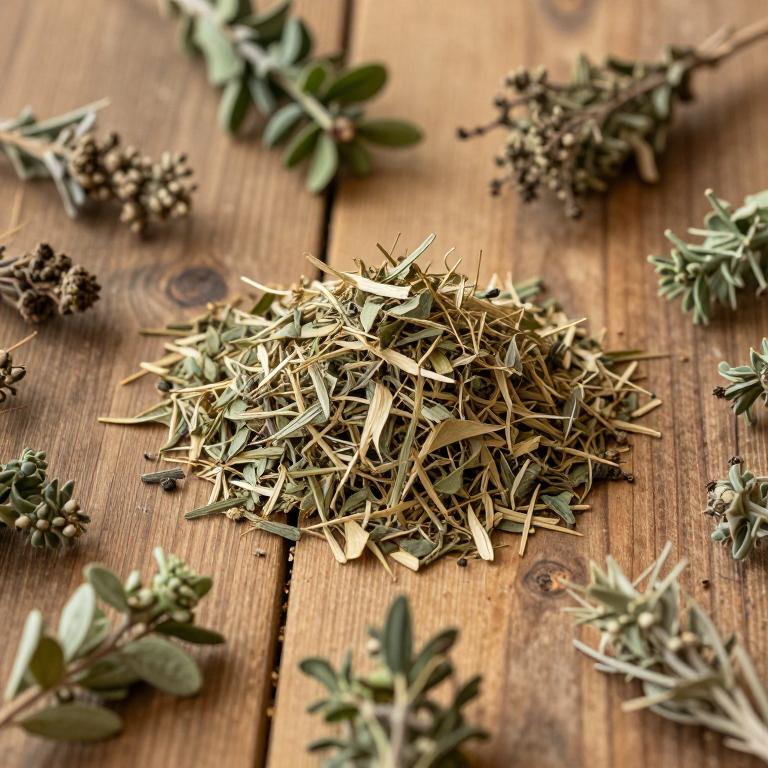
Names and Synonyms
Scientific Names
Accepted name
Warionia saharaeSources: Wikidata, Catalogue of Life
Taxonomical Classification
This plant, Warionia saharae, belongs to the kingdom Plantae and the phylum Streptophyta. Within the class Equisetopsida and subclass Magnoliidae, it is classified under the order Asterales and the family Asteraceae. Finally, it is placed within the genus Warionia.
| Rank | Classification |
|---|---|
| Kingdom | Plantae |
| Phylum | Streptophyta |
| Class | Equisetopsida |
| Subclass | Magnoliidae |
| Order | Asterales |
| Family | Asteraceae |
| Genus | Warionia |
Sources: The World Checklist of Vascular Plants (WCVP)
Distribution
This plant, known scientifically as Warronia saharae, exhibits a specific distribution within the North African region. Its natural habitat is primarily concentrated in the northernmost reaches of the continent. Specifically, documented populations can be found growing across the landscape of Algeria. Additionally, the species extends its range into the neighboring territory of Morocco. Consequently, its geographical presence is limited to these two specific North African countries.
| Region | Area |
|---|---|
| Northern Africa | Algeria |
| Northern Africa | Morocco |
Sources: The World Checklist of Vascular Plants (WCVP)
Botanical Identification
Morphology
The morphology of Waronia saharae is characterized by its distinct growth habit and structural composition, most notably defined by its woody nature. As a woody plant, it develops persistent, lignified tissues that provide a robust framework for its aerial structures, distinguishing it from herbaceous species. This woody development allows the plant to maintain a more permanent and durable architecture, which is essential for its survival in its specific environmental niche. The structural integrity provided by this woodiness supports the arrangement of its leaves and reproductive organs, contributing to its overall physical form and life cycle.
- Woodiness :
- woody
Sources: Global Inventory of Floras and Traits (GIFT)
Plant Parts
Warionia saharae has 1 reported plant parts identified across 1 scientific publications and several other databases that are studied for medicinal purposes. The most consistently reported plant part include leaf.
| Plant part | Supporting sources | Consensus |
|---|---|---|
| Leaf | 1 supporting sources | ★☆☆☆☆ |
Leaf
- Journal of natural products
Chemicals
Warionia saharae has 3 reported phytochemicals identified across 1 scientific publications and several other databases. The most consistently reported chemicals include Linalool, Nerolidyl acetate, cineole.
| Chemical | Supporting sources | Consensus |
|---|---|---|
| Linalool | 1 supporting sources | ★☆☆☆☆ |
| Nerolidyl acetate | 1 supporting sources | ★☆☆☆☆ |
| cineole | 1 supporting sources | ★☆☆☆☆ |
Linalool
- Frontiers in bioscience (Scholar edition)
Nerolidyl acetate
- Frontiers in bioscience (Scholar edition)
cineole
- Frontiers in bioscience (Scholar edition)
Activities
Warionia saharae has 4 reported activities identified across 1 scientific publications and several other databases. The most consistently reported activities include Antihypertensive, Antispasmodic, Cytotoxic, Vasorelaxant.
| Activity | Supporting sources | Consensus |
|---|---|---|
| Antihypertensive | 1 supporting sources | ★☆☆☆☆ |
| Antispasmodic | 1 supporting sources | ★☆☆☆☆ |
| Cytotoxic | 1 supporting sources | ★☆☆☆☆ |
| Vasorelaxant | 1 supporting sources | ★☆☆☆☆ |
Antihypertensive
- Journal of complementary & integrative medicine
Antispasmodic
- Frontiers in bioscience (Scholar edition)
Cytotoxic
- Journal of natural products
Vasorelaxant
- Journal of complementary & integrative medicine
Conditions
Warionia saharae has 1 reported investigations on conditions identified across 1 scientific publications and several other databases. The most consistently reported conditions include Glucose.
| Condition | Supporting sources | Consensus |
|---|---|---|
| Glucose | 1 supporting sources | ★☆☆☆☆ |
Glucose
- Cardiovascular & hematological agents in medicinal chemistry
Preparations
Warionia saharae has 4 reported preparations identified across 1 scientific publications and several other databases. The most consistently reported preparations include aqueous extract, Aerial Part Aqueous Extract (A.P.A.E), Essential oil, Flavonoid- Enriched Extract.
| Preparation | Supporting sources | Consensus |
|---|---|---|
| Aqueous extract | 2 supporting sources | ★☆☆☆☆ |
| Aerial part aqueous extract (a.p.a.e) | 1 supporting sources | ★☆☆☆☆ |
| Essential oil | 1 supporting sources | ★☆☆☆☆ |
| Flavonoid- enriched extract | 1 supporting sources | ★☆☆☆☆ |
Aqueous extract
- Cardiovascular & hematological agents in medicinal chemistry
- Journal of complementary & integrative medicine
Aerial part aqueous extract (a.p.a.e)
- Cardiovascular & hematological agents in medicinal chemistry
Essential oil
- Frontiers in bioscience (Scholar edition)
Flavonoid- enriched extract
- Cardiovascular & hematological agents in medicinal chemistry