East African greenbark
Warburgia ugandensis · Accepted scientific name
Scientific literature: Moderate (106 studies) · ★★★☆☆
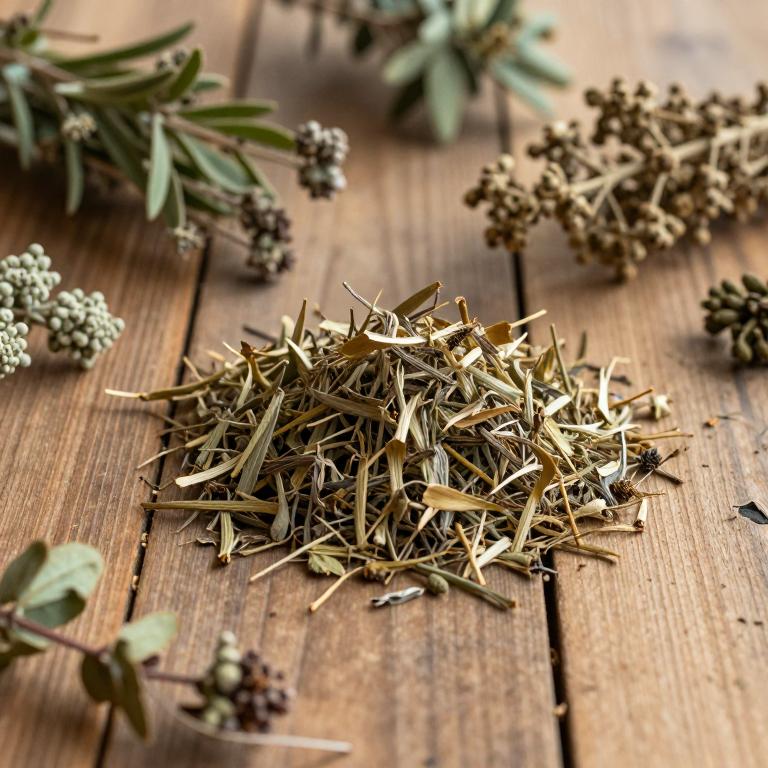
East African greenbark, scientifically known as Warburgia ugandensis, is a vital medicinal shrub native to African montane forests. Renowned for its potent antimicrobial and antifungal properties, this plant is deeply embedded in traditional medicine, frequently used to treat respiratory infections, digestive issues, and various skin ailments throughout the region.
- Family
- Canellaceae
- Native range
- Africa
- Parts used
- Stem · Leaf
- Common names
- East African Greenbark · Pepper-Bark-Tree · 3 more
- Scientific synonyms
- Not available
Names and Synonyms
Common Names
- East African greenbark
- pepper-bark-tree
- East African Greenheart
- Elephant Pepper Tree
- Uganda Greenheart
Scientific Names
Accepted name
Warburgia ugandensisSources: Wikidata, Catalogue of Life
Taxonomical Classification
This plant belongs to the kingdom Plantae and the phylum Streptophyta, falling under the class Equisetopsida and subclass Magnoliidae. Within the order Canellales, it is classified under the family Canellaceae. Finally, it is identified by its specific genus, Warburgia.
| Rank | Classification |
|---|---|
| Kingdom | Plantae |
| Phylum | Streptophyta |
| Class | Equisetopsida |
| Subclass | Magnoliidae |
| Order | Canellales |
| Family | Canellaceae |
| Genus | Warburgia |
Sources: The World Checklist of Vascular Plants (WCVP)
Distribution
This plant exhibits a wide geographical distribution across several regions of the African continent. In West-Central Tropical Africa, it can be found growing within the borders of Rwanda and the DR Congo. Moving toward the Northeast, the species is also documented in Ethiopia. Its range extends into East Tropical Africa, where it is present in Kenya. Finally, the distribution continues southward to include Tanzania.
| Region | Area |
|---|---|
| West-Central Tropical Africa | Rwanda |
| West-Central Tropical Africa | DR Congo |
| Northeast Tropical Africa | Ethiopia |
| East Tropical Africa | Kenya |
| East Tropical Africa | Tanzania |
| East Tropical Africa | Uganda |
| South Tropical Africa | Malawi |
Sources: The World Checklist of Vascular Plants (WCVP)
Botanical Identification
Life history
The life history of Warburgia ugandensis is characterized by its status as a perennial plant, allowing it to persist in its ecosystem over many years. As a phanerophyte, it maintains its buds well above the ground level, typically manifesting as a woody tree or shrub that provides structural complexity to its habitat. The plant is evergreen, meaning it retains its foliage throughout the year rather than shedding it seasonally, ensuring continuous photosynthetic activity. This combination of a long-lived perennial lifecycle and a phanerophyte life form enables it to establish a stable and enduring presence within its native environment.
- Deciduousness :
- evergreen
- Life form :
- phanerophyte
- Lifecycle :
- perennial
Morphology
The morphology of Warburgia ugandensis is characterized by its growth form as a woody tree, which typically reaches an average height of 28.5 m. This species is a self-supporting plant, meaning it does not function as a climber such as a liana or vine, nor does it exhibit parasitic behavior, instead growing as an independent organism. It is strictly a terrestrial plant, lacking any aquatic, semiaquatic, or epiphytic characteristics, and maintains a robust, woody structure throughout its development.
- Aquatic :
- terrestrial
- Climber :
- self-supporting
- Epiphyte :
- terrestrial
- Growth form :
- tree
- Parasite :
- independent
- Plant height mean:
- 28.5 m
- Woodiness :
- woody
Physiology
The physiology of Warburgia ugandenensis is characterized by a C3 photosynthetic pathway, which dictates its carbon fixation processes and metabolic efficiency in its native environmental conditions. As a plant utilizing the C3 pathway, it undergoes the Calvin cycle directly without the specialized carbon-concentrating mechanisms found in C4 or CAM species, making its metabolic activity highly dependent on ambient temperature and moisture levels. Furthermore, this species is not a nitrogen fixer, meaning it lacks the symbiotic relationship with diazotrophic bacteria required to convert atmospheric nitrogen into a usable form; instead, it relies on the uptake of inorganic nitrogen sources, such as nitrates and ammonium, from the surrounding soil through its root system to support its growth and biochemical functions.
- Nitrogen fixer :
- no
- Photosynthetic pathway :
- C3
Reproduction
The reproduction of Warburgia ugandenensis is characterized by the production of specific seed parameters that define its reproductive output. The seeds produced by this species exhibit a highly consistent profile, with a recorded seed mass mean of 5.78 g, a value that also serves as both the minimum and maximum seed mass recorded for the species. This uniformity in mass is complemented by a strictly consistent seed volume, which maintains a mean, minimum, and maximum value of 180 mm³. These precise morphological measurements indicate a stabilized reproductive strategy regarding the physical dimensions and weight of the seeds produced by the plant.
- Seed mass mean:
- 5.78 g
- Seed volume max:
- 180 mm³
Sources: Global Inventory of Floras and Traits (GIFT)
Plant Parts
Warburgia ugandensis has 2 reported plant parts identified across 3 scientific publications and several other databases that are studied for medicinal purposes. The most consistently reported plant part include stem, leaf.
| Plant part | Supporting sources | Consensus |
|---|---|---|
| Stem | 2 supporting sources | ★☆☆☆☆ |
| Leaf | 1 supporting sources | ★☆☆☆☆ |
Stem
- African health sciences
- African journal of traditional, complementary, and alternative medicines : AJTCAM
Leaf
- Phytochemistry
Chemicals
Warburgia ugandensis has 23 reported phytochemicals identified across 3 scientific publications and several other databases. The most consistently reported chemicals include Polygodial, Muzigadial, Ugandensidial, Warburganal, Epipolygodial.
| Chemical | Supporting sources | Consensus |
|---|---|---|
| Polygodial | 3 supporting sources | ★★☆☆☆ |
| Muzigadial | 2 supporting sources | ★☆☆☆☆ |
| Ugandensidial | 2 supporting sources | ★☆☆☆☆ |
| Warburganal | 2 supporting sources | ★☆☆☆☆ |
| Epipolygodial | 1 supporting sources | ★☆☆☆☆ |
| Fatty acids | 1 supporting sources | ★☆☆☆☆ |
| Kaempferol 3-arabinoside | 1 supporting sources | ★☆☆☆☆ |
| Kaempferol-3-rutinoside | 1 supporting sources | ★☆☆☆☆ |
| Muzigadiolide | 1 supporting sources | ★☆☆☆☆ |
| Polyunsaturated Fatty Acids | 1 supporting sources | ★☆☆☆☆ |
Polygodial
- Dr. Duke
- Journal of natural products
- Phytomedicine : international journal of phytotherapy and phytopharmacology
Muzigadial
- Dr. Duke
- Phytomedicine : international journal of phytotherapy and phytopharmacology
Ugandensidial
- Dr. Duke
- Phytomedicine : international journal of phytotherapy and phytopharmacology
Warburganal
- Dr. Duke
- Phytomedicine : international journal of phytotherapy and phytopharmacology
Epipolygodial
- Dr. Duke
Fatty acids
- PloS one
Kaempferol 3-arabinoside
- Phytochemistry
Kaempferol-3-rutinoside
- Phytochemistry
Muzigadiolide
- Phytomedicine : international journal of phytotherapy and phytopharmacology
Polyunsaturated Fatty Acids
- PloS one
Activities
Warburgia ugandensis has 52 reported activities identified across 3 scientific publications and several other databases. The most consistently reported activities include Allergenic, Analgesic, Anthelmintic, AntiHIV, AntiReye's.
| Activity | Supporting sources | Consensus |
|---|---|---|
| Allergenic | 1 supporting sources | ★☆☆☆☆ |
| Analgesic | 1 supporting sources | ★☆☆☆☆ |
| Anthelmintic | 1 supporting sources | ★☆☆☆☆ |
| AntiHIV | 1 supporting sources | ★☆☆☆☆ |
| AntiReye's | 1 supporting sources | ★☆☆☆☆ |
| Antibacterial | 1 supporting sources | ★☆☆☆☆ |
| Anticancer | 1 supporting sources | ★☆☆☆☆ |
| Anticariogenic | 1 supporting sources | ★☆☆☆☆ |
| Antidiarrheic | 1 supporting sources | ★☆☆☆☆ |
| Antidysenteric | 1 supporting sources | ★☆☆☆☆ |
Allergenic
- Dr. Duke
Analgesic
- Dr. Duke
Anthelmintic
- Dr. Duke
AntiHIV
- Dr. Duke
AntiReye's
- Dr. Duke
Antibacterial
- Dr. Duke
Anticancer
- Dr. Duke
Anticariogenic
- Dr. Duke
Antidiarrheic
- Dr. Duke
Antidysenteric
- Dr. Duke
Conditions
Warburgia ugandensis has 15 reported investigations on conditions identified across 3 scientific publications and several other databases. The most consistently reported conditions include cancer, colorectal cancer, malaria, Candida albicans, Candida utilis.
| Condition | Supporting sources | Consensus |
|---|---|---|
| Cancer | 3 supporting sources | ★★☆☆☆ |
| Colorectal cancer | 2 supporting sources | ★☆☆☆☆ |
| Malaria | 2 supporting sources | ★☆☆☆☆ |
| Candida albicans | 1 supporting sources | ★☆☆☆☆ |
| Candida utilis | 1 supporting sources | ★☆☆☆☆ |
| Plasmodium falciparum | 1 supporting sources | ★☆☆☆☆ |
| Saccharomyces cerevisiae | 1 supporting sources | ★☆☆☆☆ |
| Staphylococcus aureus | 1 supporting sources | ★☆☆☆☆ |
| Cervical cancer | 1 supporting sources | ★☆☆☆☆ |
| Fever | 1 supporting sources | ★☆☆☆☆ |
Cancer
- Antioxidants (Basel, Switzerland)
- Oxidative medicine and cellular longevity
- Pharmaceuticals (Basel, Switzerland)
Colorectal cancer
- Antioxidants (Basel, Switzerland)
- Oxidative medicine and cellular longevity
Malaria
- Frontiers in pharmacology
- Tropical medicine and health
Candida albicans
- African health sciences
Candida utilis
- Journal of natural products
Plasmodium falciparum
- Phytotherapy research : PTR
Saccharomyces cerevisiae
- Journal of natural products
Staphylococcus aureus
- African health sciences
Cervical cancer
- Antioxidants (Basel, Switzerland)
Fever
- Frontiers in pharmacology
Preparations
Warburgia ugandensis has 12 reported preparations identified across 3 scientific publications and several other databases. The most consistently reported preparations include extracts, bark, complex extracts, crude extract, dimethyl carbonate extract of WU.
| Preparation | Supporting sources | Consensus |
|---|---|---|
| Extracts | 3 supporting sources | ★★☆☆☆ |
| Bark | 1 supporting sources | ★☆☆☆☆ |
| Complex extracts | 1 supporting sources | ★☆☆☆☆ |
| Crude extract | 1 supporting sources | ★☆☆☆☆ |
| Dimethyl carbonate extract of wu | 1 supporting sources | ★☆☆☆☆ |
| Ethanolic extracts | 1 supporting sources | ★☆☆☆☆ |
| Extracts of warburgia ugandensis stem bark | 1 supporting sources | ★☆☆☆☆ |
| Fraction 27-163 d | 1 supporting sources | ★☆☆☆☆ |
| Petroleum ether extracts | 1 supporting sources | ★☆☆☆☆ |
| Stem bark water extract | 1 supporting sources | ★☆☆☆☆ |
Extracts
- Plants (Basel, Switzerland)
- Frontiers in toxicology
- Journal of ethnopharmacology
Bark
- PloS one
Complex extracts
- Pharmaceuticals (Basel, Switzerland)
Crude extract
- Oxidative medicine and cellular longevity
Dimethyl carbonate extract of wu
- Antioxidants (Basel, Switzerland)
Ethanolic extracts
- African health sciences
Extracts of warburgia ugandensis stem bark
- African health sciences
Fraction 27-163 d
- African health sciences
Petroleum ether extracts
- African health sciences
Stem bark water extract
- African journal of traditional, complementary, and alternative medicines : AJTCAM