Warburgia stuhlmannii
Warburgia stuhlmannii · Accepted scientific name
Scientific literature: Very Sparse (20 studies) · ★☆☆☆☆
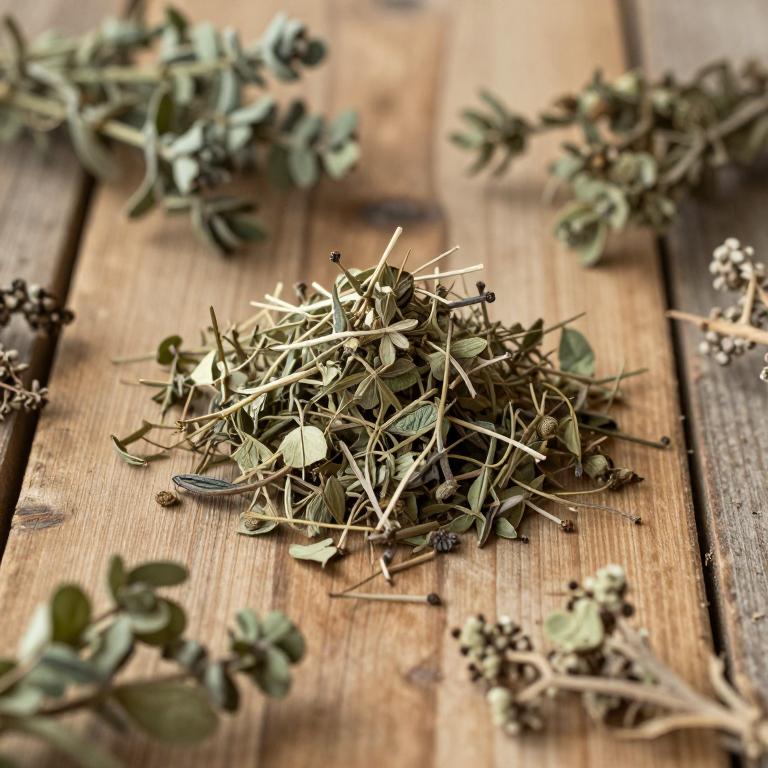
Warburgia stuhlmannii, scientifically known as Warburgia stuhlmannii, is a significant medicinal tree native to African rainforests. Renowned for its potent antimicrobial and antifungal properties, it is widely used in traditional medicine to treat respiratory ailments, infections, and digestive issues, making it a vital resource in ethnobotany.
- Family
- Canellaceae
- Native range
- Africa
- Parts used
- Leaf
- Common names
- Not available
- Scientific synonyms
- Not available
Names and Synonyms
Scientific Names
Accepted name
Warburgia stuhlmanniiSources: Wikidata
Taxonomical Classification
This plant belongs to the kingdom Plantae and the phylum Streptophyta, falling under the class Equisetopsida and subclass Magnoliidae. Within the order Canellales, it is classified under the family Canellaceae. Finally, it is categorized under the genus Warburgia.
| Rank | Classification |
|---|---|
| Kingdom | Plantae |
| Phylum | Streptophyta |
| Class | Equisetopsida |
| Subclass | Magnoliidae |
| Order | Canellales |
| Family | Canellaceae |
| Genus | Warburgia |
Sources: The World Checklist of Vascular Plants (WCVP)
Distribution
This plant is primarily found within the diverse landscapes of East Tropical Africa. Specifically, its natural habitat includes the lush regions of Kenya. It also maintains a significant presence across the terrain of Tanzania. These two countries represent the core areas where the species is geographically distributed. Consequently, its occurrence is closely tied to the ecological conditions found in this specific part of the continent.
| Region | Area |
|---|---|
| East Tropical Africa | Kenya |
| East Tropical Africa | Tanzania |
Sources: The World Checklist of Vascular Plants (WCVP)
Botanical Identification
Ecology
The ecology of Warburgia stuhlmannii is characterized by its preference for specific forest structures and vegetation types, primarily thriving within the coastal forest of the Albizia-Ostryoderris type. In addition to these dense coastal environments, the species demonstrates ecological flexibility by occurring in open woodland settings. This distribution pattern suggests that the plant is adapted to varying levels of canopy cover, ranging from the shaded, humid microclimates of maritime-influenced forests to the more exposed, light-rich environments of deciduous or semi-deciduous woodlands. Its presence in these distinct habitats indicates a capacity to navigate different moisture gradients and soil compositions typical of East African coastal ecosystems.
- Habitat :
- coastal forest of the Albizia-Ostryoderris type, and in open woodland
Life history
The life history of Warburgia stuhlmannii is characterized by its status as a perennial plant, allowing it to maintain its presence in its natural habitat over many years. As a phanerophyte, its reproductive shoots are elevated well above the ground, contributing to its structural role within its ecosystem. The plant maintains an evergreen deciduousness, ensuring that its foliage remains present throughout the year rather than shedding leaves seasonally. This combination of a long-lived lifecycle and a persistent canopy structure defines its biological strategy and environmental integration.
- Deciduousness :
- evergreen
- Life form :
- phanerophyte
- Lifecycle :
- perennial
Morphology
The morphology of Warburgia stuhlmannii is characterized by its stature as a woody tree, typically reaching a mean plant height of approximately 20 m. It functions as an independent organism, meaning it is not a parasite, and it maintains a terrestrial life habit rather than being an epiphyte. As a self-supporting species, it possesses a robust, woody structure that allows it to stand upright without the need for climbing or external support.
- Climber :
- self-supporting
- Epiphyte :
- terrestrial
- Growth form :
- tree
- Parasite :
- independent
- Plant height mean:
- 20 m
- Woodiness :
- woody
Physiology
The physiology of Warburgia stuhlmannii is characterized by its specialized metabolic pathways designed for survival in montane and afro-temperate forest ecosystems. As a woody perennial, its physiological processes are heavily geared toward the synthesis and storage of secondary metabolites, most notably various pungent iridoid compounds and essential oils, which serve as chemical defenses against herbivory and microbial pathogens. Its carbon assimilation follows typical C3 photosynthetic pathways, optimized for the shaded, moist environments of its natural habitat. Regarding its nutrient cycling capabilities, the plant is not a nitrogen fixer; it does not possess the symbiotic relationship with diazotrophic bacteria required to convert atmospheric nitrogen into bioavailable forms, meaning it relies entirely on the uptake of nitrates and ammonium from the soil through its root system. Its water regulation and transpiration rates are adapted to maintain turgor pressure in high-humidity environments, while its resource allocation prioritizes structural integrity and the continuous production of bioactive alkaloids to ensure long-term ecological resilience.
- Nitrogen fixer :
- no
Reproduction
The reproduction of Warburgia stuhlmannii is driven by biotic mechanisms, specifically utilizing a biotic pollination syndrome to ensure successful fertilization. The plant relies primarily on insects for the transfer of pollen, a process facilitated by various insect species that interact with its floral structures. Following successful pollination, the plant employs a zoochorous dispersal syndrome, meaning its seeds or fruits are distributed by animals, which plays a critical role in the spatial spreading and establishment of new individuals within its habitat.
- Dispersal syndrome :
- zoochorous
- Pollination syndrome :
- insect
- Pollination syndrome :
- biotic
Sources: Global Inventory of Floras and Traits (GIFT)
Plant Parts
Warburgia stuhlmannii has 1 reported plant parts identified across 1 scientific publications and several other databases that are studied for medicinal purposes. The most consistently reported plant part include leaf.
| Plant part | Supporting sources | Consensus |
|---|---|---|
| Leaf | 1 supporting sources | ★☆☆☆☆ |
Leaf
- Phytochemistry
Chemicals
Warburgia stuhlmannii has 14 reported phytochemicals identified across 1 scientific publications and several other databases. The most consistently reported chemicals include Deacetylugandensolide, Kaempferol-7-o-beta-D-glucopyranoside, Mukaadial, Mukaadial 6-O-alpha-L-rhamnopyranoside, Mukaadial 6-O-beta-D-glucopyranoside.
| Chemical | Supporting sources | Consensus |
|---|---|---|
| Deacetylugandensolide | 1 supporting sources | ★☆☆☆☆ |
| Kaempferol-7-o-beta-D-glucopyranoside | 1 supporting sources | ★☆☆☆☆ |
| Mukaadial | 1 supporting sources | ★☆☆☆☆ |
| Mukaadial 6-O-alpha-L-rhamnopyranoside | 1 supporting sources | ★☆☆☆☆ |
| Mukaadial 6-O-beta-D-glucopyranoside | 1 supporting sources | ★☆☆☆☆ |
| Myricetin 3-O-alpha-L-rhamnopyranoside | 1 supporting sources | ★☆☆☆☆ |
| Polygodial | 1 supporting sources | ★☆☆☆☆ |
| Quercetin 3-O-alpha-L-rhamnopyranoside | 1 supporting sources | ★☆☆☆☆ |
| Quercetin 3-O-sophoroside | 1 supporting sources | ★☆☆☆☆ |
| isorhamnetin 3-O-beta-D-glucopyranoside | 1 supporting sources | ★☆☆☆☆ |
Deacetylugandensolide
- Phytochemistry
Kaempferol-7-o-beta-D-glucopyranoside
- Phytochemistry
Mukaadial
- Phytochemistry
Mukaadial 6-O-alpha-L-rhamnopyranoside
- Phytochemistry
Mukaadial 6-O-beta-D-glucopyranoside
- Phytochemistry
Myricetin 3-O-alpha-L-rhamnopyranoside
- Phytochemistry
Polygodial
- Journal of natural products
Quercetin 3-O-alpha-L-rhamnopyranoside
- Phytochemistry
Quercetin 3-O-sophoroside
- Phytochemistry
isorhamnetin 3-O-beta-D-glucopyranoside
- Phytochemistry
Conditions
Warburgia stuhlmannii has 3 reported investigations on conditions identified across 1 scientific publications and several other databases. The most consistently reported conditions include Candida utilis, Saccharomyces cerevisiae, malaria.
| Condition | Supporting sources | Consensus |
|---|---|---|
| Candida utilis | 1 supporting sources | ★☆☆☆☆ |
| Saccharomyces cerevisiae | 1 supporting sources | ★☆☆☆☆ |
| Malaria | 1 supporting sources | ★☆☆☆☆ |
Candida utilis
- Journal of natural products
Saccharomyces cerevisiae
- Journal of natural products
Malaria
- Journal of ethnopharmacology