Pepper bark tree
Warburgia salutaris · Accepted scientific name
Scientific literature: Sparse (62 studies) · ★★☆☆☆
Pepper bark tree, scientifically known as Warburgia salutaris, is a medicinal evergreen tree native to Southern and Eastern Africa. Renowned for its potent antimicrobial and antifungal properties, its bark is traditionally utilized to treat respiratory ailments, digestive issues, and skin infections, making it a cornerstone of indigenous pharmacology.
- Family
- Canellaceae
- Native range
- Africa
- Parts used
- Leaf · Stem
- Common names
- Pepper Bark Tree · East African Green Wood · 11 more
- Scientific synonyms
- Chibaca Salutaris · Warburgia Breyeri
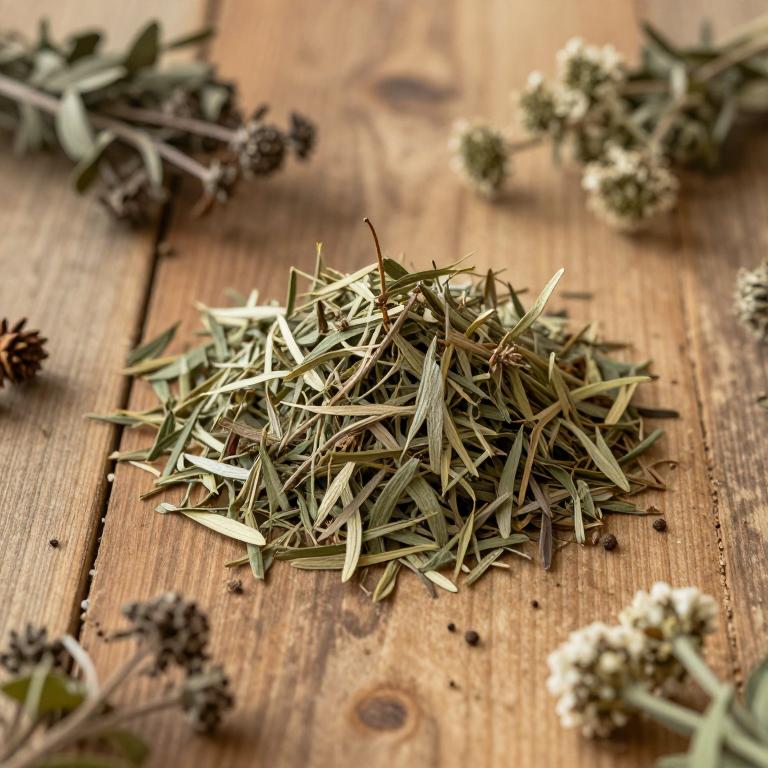
Names and Synonyms
Common Names
- Pepper Bark Tree
- East African Green Wood
- Kenya Greenheart
- Muziga bark
- Pepper Root Tree
- Pepper-Bark
- Pepper-Leaf
- Pepper-Root
- Pepper-Root Tree
- Pepperbark
- Pepperbark-Tree
- Pepperleaf-Tree
- Pepperroot-Tree
Scientific Names
Accepted name
Warburgia salutarisSynonyms
- Chibaca salutaris
- Warburgia breyeri
Regional and Traditional Names
German:
- Pfefferborkenbaum
- Pfefferborkenbaum
Sources: Wikidata, Catalogue of Life
Taxonomical Classification
This plant belongs to the kingdom Plantae within the phylum Streptophyta and the class Equisetopsida. It is further classified under the subclass Magnoliidae, the order Canellales, and the family Canellaceae. Finally, its specific taxonomic designation falls under the genus Warburgia.
| Rank | Classification |
|---|---|
| Kingdom | Plantae |
| Phylum | Streptophyta |
| Class | Equisetopsida |
| Subclass | Magnoliidae |
| Order | Canellales |
| Family | Canellaceae |
| Genus | Warburgia |
Sources: The World Checklist of Vascular Plants (WCVP)
Distribution
This plant is found across several distinct regions within the African continent. In South Tropical Africa, its range extends through the country of Mozambique. It is also distributed throughout Zimbabwe, which falls under the South Tropical Africa classification. Moving into Southern Africa, the species can be located in the KwaZulu-Natal province. Finally, it is documented within the Northern Provinces of Southern Africa.
| Region | Area |
|---|---|
| South Tropical Africa | Mozambique |
| South Tropical Africa | Zimbabwe |
| Southern Africa | KwaZulu-Natal |
| Southern Africa | Northern Provinces |
Sources: The World Checklist of Vascular Plants (WCVP)
Botanical Identification
Ecology
The ecology of Warburgia salutaris is characterized by its ability to inhabit diverse topographical gradients, occupying a broad altitudinal spectrum within its native habitats. This species thrives across a significant elevational range, establishing itself in environments starting from as low as 5 m AMSL and extending up to a maximum altitude of 1757 m AMSL. This wide vertical distribution allows the plant to persist in various microclimates, ranging from lowland coastal or riverine settings to more temperate montane forest ecosystems. Such ecological flexibility suggests an adaptation to varying temperature regimes and moisture availability found throughout these different elevations.
- Elevational range max:
- 1757 m AMSL
- Elevational range min:
- 5 m AMSL
Life history
The life history of Warburgia salutaris is characterized by its status as a perennial plant, allowing it to persist in its ecosystem over many years. As a phanerophyte, it maintains its stem tissue well above the ground, facilitating its growth into a significant woody structure. Despite its robust development, it can also be classified under the life form of nanophanerophyte depending on its specific growth stage and environmental context. Furthermore, the plant maintains an evergreen deciduousness, ensuring that its foliage remains functional throughout the year without the need for seasonal shedding.
- Deciduousness :
- evergreen
- Life form :
- nanophanerophyte
- Life form :
- phanerophyte
- Lifecycle :
- perennial
Morphology
The morphology of Warburgia salutaris is characterized by its growth form, which primarily manifests as a woody tree or shrub. As a terrestrial plant, it is entirely independent, functioning as a non-parasitic and non-epiphytic organism. The species is self-supporting rather than a climber, maintaining a sturdy, upright structure. In terms of stature, its height varies significantly depending on environmental conditions, with minimum heights recorded at 2.5 m, an average height of approximately 8 m, and a maximum potential height reaching up to 10 m.
- Aquatic :
- terrestrial
- Climber :
- self-supporting
- Epiphyte :
- terrestrial
- Growth form :
- tree
- Growth form :
- shrub
- Parasite :
- independent
- Plant height max:
- 10 m
- Plant height mean:
- 8 m
- Plant height min:
- 2.5 m
- Woodiness :
- woody
Physiology
The physiology of Warburgia salutaris is characterized by a C3 photosynthetic pathway, a common mechanism in many woody forest species where carbon fixation occurs directly through the Calvin cycle without the specialized adaptations found in C4 or CAM plants. In terms of nutrient acquisition, the plant is not a nitrogen fixer, meaning it relies on the uptake of nitrates and ammonium from the soil through its root system rather than establishing symbiotic relationships with nitrogen-fixing bacteria to convert atmospheric nitrogen.
- Nitrogen fixer :
- yes
- Photosynthetic pathway :
- C3
Reproduction
Reproduction in Warburgia salutaris is characterized by specific seed morphological properties that play a critical role in its dispersal and establishment. The seeds produced by this species exhibit a notable range of variability in weight, which is a key factor in their reproductive success. The average seed mass is approximately 0.171333333 g, serving as a central metric for the species' seed production. However, individual seeds can vary significantly in size, with the smallest recorded seed mass being as low as 0.042 g, while the largest seeds can reach a maximum mass of 0.252 g. This variation in seed mass suggests a diverse reproductive strategy that may influence how seeds interact with their environment during germination.
- Seed mass max:
- 0.252 g
- Seed mass mean:
- 0.171333333 g
- Seed mass min:
- 0.042 g
Sources: Global Inventory of Floras and Traits (GIFT)
Plant Parts
Warburgia salutaris has 2 reported plant parts identified across 4 scientific publications and several other databases that are studied for medicinal purposes. The most consistently reported plant part include leaf, stem.
| Plant part | Supporting sources | Consensus |
|---|---|---|
| Leaf | 2 supporting sources | ★☆☆☆☆ |
| Stem | 2 supporting sources | ★☆☆☆☆ |
Leaf
- BMC complementary and alternative medicine
- International journal of molecular sciences
Stem
- Journal of ethnopharmacology
- Biomolecules
Chemicals
Warburgia salutaris has 14 reported phytochemicals identified across 4 scientific publications and several other databases. The most consistently reported chemicals include CATECHIN, IL-6, INTERLEUKIN 1BETA, Mukaadial, Muzigadial.
| Chemical | Supporting sources | Consensus |
|---|---|---|
| CATECHIN | 1 supporting sources | ★☆☆☆☆ |
| IL-6 | 1 supporting sources | ★☆☆☆☆ |
| INTERLEUKIN 1BETA | 1 supporting sources | ★☆☆☆☆ |
| Mukaadial | 1 supporting sources | ★☆☆☆☆ |
| Muzigadial | 1 supporting sources | ★☆☆☆☆ |
| Pereniporin B | 1 supporting sources | ★☆☆☆☆ |
| Sesquiterpenoid | 1 supporting sources | ★☆☆☆☆ |
| Tumor necrosis factor-alpha | 1 supporting sources | ★☆☆☆☆ |
| Ursolic acid | 1 supporting sources | ★☆☆☆☆ |
| Ursolic acid acetate | 1 supporting sources | ★☆☆☆☆ |
CATECHIN
- Journal of ethnopharmacology
IL-6
- Journal of ethnopharmacology
INTERLEUKIN 1BETA
- Human & experimental toxicology
Mukaadial
- Journal of ethnopharmacology
Muzigadial
- Journal of ethnopharmacology
Pereniporin B
- Journal of ethnopharmacology
Sesquiterpenoid
- Journal of ethnopharmacology
Tumor necrosis factor-alpha
- Human & experimental toxicology
Ursolic acid
- Journal of molecular modeling
Ursolic acid acetate
- Journal of molecular modeling
Activities
Warburgia salutaris has 10 reported activities identified across 4 scientific publications and several other databases. The most consistently reported activities include Antibacterial, Antimalarial, Cytotoxic, Anticancer, Antidiabetic.
| Activity | Supporting sources | Consensus |
|---|---|---|
| Antibacterial | 2 supporting sources | ★☆☆☆☆ |
| Antimalarial | 2 supporting sources | ★☆☆☆☆ |
| Cytotoxic | 2 supporting sources | ★☆☆☆☆ |
| Anticancer | 1 supporting sources | ★☆☆☆☆ |
| Antidiabetic | 1 supporting sources | ★☆☆☆☆ |
| Antimicrobial | 1 supporting sources | ★☆☆☆☆ |
| Antioxidant | 1 supporting sources | ★☆☆☆☆ |
| Bacteriostatic | 1 supporting sources | ★☆☆☆☆ |
| Diuretic | 1 supporting sources | ★☆☆☆☆ |
| Expectorant | 1 supporting sources | ★☆☆☆☆ |
Antibacterial
- BMC complementary and alternative medicine
- Heliyon
Antimalarial
- Journal of ethnopharmacology
- Biomolecules
Cytotoxic
- Journal of ethnopharmacology
- BMC complementary and alternative medicine
Anticancer
- International journal of molecular sciences
Antidiabetic
- Biomolecules
Antimicrobial
- Journal of ethnopharmacology
Antioxidant
- Journal of ethnopharmacology
Bacteriostatic
- BMC complementary and alternative medicine
Diuretic
- Journal of ethnopharmacology
Expectorant
- Journal of ethnopharmacology
Conditions
Warburgia salutaris has 20 reported investigations on conditions identified across 4 scientific publications and several other databases. The most consistently reported conditions include cancer, inflammation, Diabetes mellitus, Mycobacterium tuberculosis H37Rv, Plasmodium falciparum.
| Condition | Supporting sources | Consensus |
|---|---|---|
| Cancer | 2 supporting sources | ★☆☆☆☆ |
| Inflammation | 2 supporting sources | ★☆☆☆☆ |
| Diabetes mellitus | 1 supporting sources | ★☆☆☆☆ |
| Mycobacterium tuberculosis h37rv | 1 supporting sources | ★☆☆☆☆ |
| Plasmodium falciparum | 1 supporting sources | ★☆☆☆☆ |
| Staphylococcus aureus | 1 supporting sources | ★☆☆☆☆ |
| Anaplasmosis | 1 supporting sources | ★☆☆☆☆ |
| Breast cancer | 1 supporting sources | ★☆☆☆☆ |
| Coughs | 1 supporting sources | ★☆☆☆☆ |
| Lipid peroxidation | 1 supporting sources | ★☆☆☆☆ |
Cancer
- BMC complementary and alternative medicine
- International journal of molecular sciences
Inflammation
- Inflammopharmacology
- Journal of ethnopharmacology
Diabetes mellitus
- Natural product communications
Mycobacterium tuberculosis h37rv
- Bioorganic & medicinal chemistry
Plasmodium falciparum
- Scientific reports
Staphylococcus aureus
- BMC complementary and alternative medicine
Anaplasmosis
- Journal of ethnopharmacology
Breast cancer
- International journal of molecular sciences
Coughs
- Journal of ethnopharmacology
Lipid peroxidation
- Human & experimental toxicology
Preparations
Warburgia salutaris has 15 reported preparations identified across 4 scientific publications and several other databases. The most consistently reported preparations include methanol extracts, bark, ethanol extracts, extracts, Iso-mukaadial acetate.
| Preparation | Supporting sources | Consensus |
|---|---|---|
| Methanol extracts | 3 supporting sources | ★★☆☆☆ |
| Bark | 2 supporting sources | ★☆☆☆☆ |
| Ethanol extracts | 2 supporting sources | ★☆☆☆☆ |
| Extracts | 2 supporting sources | ★☆☆☆☆ |
| Iso-mukaadial acetate | 1 supporting sources | ★☆☆☆☆ |
| A purified compound | 1 supporting sources | ★☆☆☆☆ |
| Aqueous | 1 supporting sources | ★☆☆☆☆ |
| Aqueous extracts | 1 supporting sources | ★☆☆☆☆ |
| Dichloromethane extracts | 1 supporting sources | ★☆☆☆☆ |
| Ethyl acetate extract of the stem bark | 1 supporting sources | ★☆☆☆☆ |
Methanol extracts
- Skin pharmacology and physiology
- Journal of ethnopharmacology
- Human & experimental toxicology
Bark
- Journal of ethnopharmacology
- Inflammopharmacology
Ethanol extracts
- Journal of helminthology
- Tropical animal health and production
Extracts
- Journal of ethnopharmacology
- Bioorganic & medicinal chemistry
Iso-mukaadial acetate
- Scientific reports
A purified compound
- Bioorganic & medicinal chemistry
Aqueous
- Heliyon
Aqueous extracts
- Skin pharmacology and physiology
Dichloromethane extracts
- Journal of helminthology
Ethyl acetate extract of the stem bark
- Journal of ethnopharmacology