Vochysia divergens
Vochysia divergens · Accepted scientific name
Scientific literature: Very Sparse (26 studies) · ★☆☆☆☆
Vochysia divergens, scientifically known as Vochysia divergens, is a remarkable medicinal plant valued for its therapeutic potential. Found primarily in tropical landscapes, this species is frequently utilized in traditional medicine to address various ailments. Its unique phytochemical properties make it a significant subject for pharmacological research and holistic healing.
- Family
- Vochysiaceae
- Native range
- Southern America
- Parts used
- Leaf
- Common names
- Not available
- Scientific synonyms
- Not available
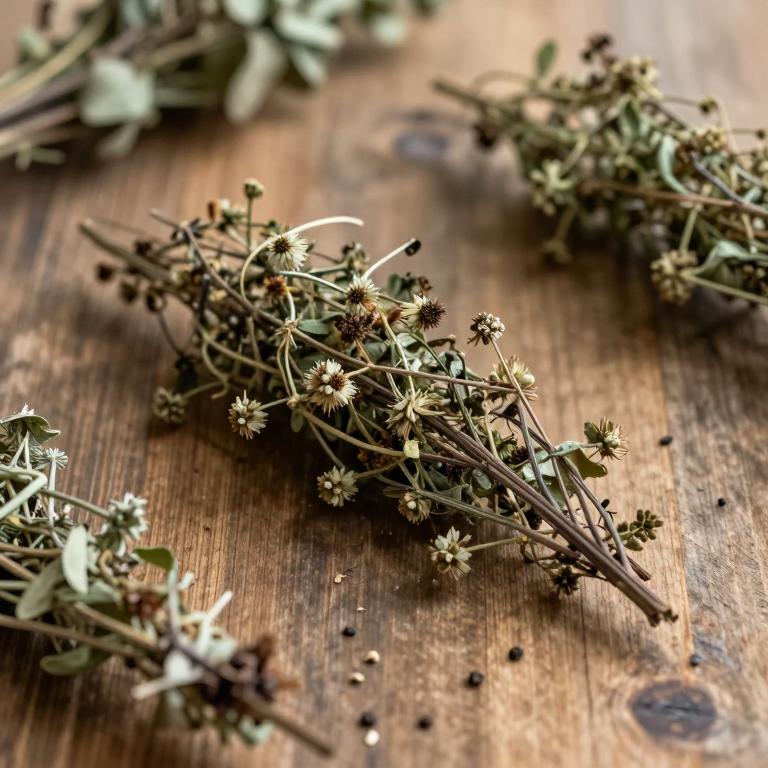
Names and Synonyms
Scientific Names
Accepted name
Vochysia divergensSources: Wikidata, Catalogue of Life
Taxonomical Classification
This plant belongs to the kingdom Plantae and the phylum Streptophyta. Within the class Equisetopsida and subclass Magnoliidae, it is classified under the order Myrtales. Finally, it is a member of the family Vochysiaceae and falls under the genus Vochysia.
| Rank | Classification |
|---|---|
| Kingdom | Plantae |
| Phylum | Streptophyta |
| Class | Equisetopsida |
| Subclass | Magnoliidae |
| Order | Myrtales |
| Family | Vochysiaceae |
| Genus | Vochysia |
Sources: The World Checklist of Vascular Plants (WCVP)
Distribution
This plant exhibits a specific distribution pattern within the South American continent. Its presence is recorded in the western regions of the continent, specifically within Bolivia. Furthermore, the species extends into the Brazilian territory. Within Brazil, its habitat is localized to the West-Central area. These locations define the known geographical range of Vochysia divergens.
| Region | Area |
|---|---|
| Western South America | Bolivia |
| Brazil | Brazil West-Central |
Sources: The World Checklist of Vascular Plants (WCVP)
Botanical Identification
Ecology
The ecology of Vochysia divergens is intrinsically linked to the seasonal hydrological cycles of its specific environment, as it is primarily found within the Floresta de Várzea. This specialized habitat consists of seasonally flooded forests located in the floodplains of large river systems, where the plant must adapt to significant fluctuations in water levels. During the high-water periods, the soil becomes saturated or completely submerged, necessitating physiological mechanisms to withstand periodic anoxia and root stress. As the waters recede, the plant thrives in the nutrient-rich sediments deposited by the floods, which support its growth and reproductive cycles. This dependency on the várzea ecosystem dictates its distribution patterns and its role within the complex trophic structures of these riparian forest communities.
- Habitat :
- Floresta de Várzea
Life history
The life history of Vochysia divergens is characterized by its status as a perennial species, allowing it to persist in its environment over many years and establish a stable presence within its ecological niche. Throughout its existence, the plant maintains an evergreen habit, ensuring that its foliage remains functional and intact across different seasons rather than undergoing a period of dormancy marked by leaf loss.
- Deciduousness :
- evergreen
- Lifecycle :
- perennial
Morphology
The morphology of Vochysia divergens is characterized by its stature as a woody tree, reaching a mean height of approximately 15 m, with a maximum potential height of the same dimension. As a terrestrial organism, it does not exhibit aquatic or semiaquatic tendencies, nor does it function as an epiphyte, remaining strictly terrestrial in its growth habit. The plant is independent in its nutritional requirements, functioning as a non-parasitic species rather than an obligatory or facultative parasite. In terms of structural support, it is classified as a self-supporting tree rather than a liana, vine, or climbing form, maintaining a stable and upright growth habit.
- Aquatic :
- terrestrial
- Climber :
- self-supporting
- Epiphyte :
- terrestrial
- Growth form :
- tree
- Parasite :
- independent
- Plant height mean:
- 15 m
- Woodiness :
- woody
Physiology
The physiology of Vochysia divergens is characterized by its metabolic processes and its specific relationship with soil nutrient cycling. Regarding its nitrogen metabolism, the plant does not function as a nitrogen fixer; it lacks the specialized symbiotic relationship with diazotrophic bacteria, such as Rhizobium, typically found in the root nodules of leguminous species. Consequently, it relies on the uptake of mineralized nitrogen, primarily in the form of nitrates and ammonium, from the surrounding soil through its root system to support its vegetative growth and reproductive cycles. Its physiological processes are adapted to its specific ecological niche, involving complex photosynthetic pathways and water regulation mechanisms that allow it to thrive in its native tropical environments, though it remains dependent on the availability of exogenous nitrogen sources within the ecosystem.
- Nitrogen fixer :
- no
Reproduction
The reproduction of Vochysia divergens is primarily driven by biotic mechanisms, characterized by a complex pollination syndrome that relies on living organisms to facilitate genetic exchange. The reproductive process is specifically adapted for ornithophily, as the plant exhibits a strong pollination syndrome centered around birds. This biological interaction is further refined through diverse ecological pathways, involving various biotic agents including insects and birds, which serve as the primary vectors for pollen transfer. By utilizing these biotic syndromes rather than abiotic factors like wind or water, the species ensures targeted and efficient pollination through its specialized relationships with local fauna.
- Pollination syndrome :
- bird
- Pollination syndrome :
- biotic
Sources: Global Inventory of Floras and Traits (GIFT)
Plant Parts
Vochysia divergens has 1 reported plant parts identified across 4 scientific publications and several other databases that are studied for medicinal purposes. The most consistently reported plant part include leaf.
| Plant part | Supporting sources | Consensus |
|---|---|---|
| Leaf | 4 supporting sources | ★★☆☆☆ |
Leaf
- Evidence-based complementary and alternative medicine : eCAM
- Frontiers in microbiology
- Natural product research
- Journal of ethnopharmacology
Chemicals
Vochysia divergens has 8 reported phytochemicals identified across 4 scientific publications and several other databases. The most consistently reported chemicals include 2,5-Dihydroxybenzyl alcohol, 5-Methoxyflavone, 5-Methylmellein, Daldinone A, Isocercosporin.
| Chemical | Supporting sources | Consensus |
|---|---|---|
| 2,5-Dihydroxybenzyl alcohol | 1 supporting sources | ★☆☆☆☆ |
| 5-Methoxyflavone | 1 supporting sources | ★☆☆☆☆ |
| 5-Methylmellein | 1 supporting sources | ★☆☆☆☆ |
| Daldinone A | 1 supporting sources | ★☆☆☆☆ |
| Isocercosporin | 1 supporting sources | ★☆☆☆☆ |
| RUTIN | 1 supporting sources | ★☆☆☆☆ |
| Sclerone | 1 supporting sources | ★☆☆☆☆ |
| lasiodiplodin | 1 supporting sources | ★☆☆☆☆ |
2,5-Dihydroxybenzyl alcohol
- Fitoterapia
5-Methoxyflavone
- Journal of ethnopharmacology
5-Methylmellein
- Natural product research
Daldinone A
- Natural product research
Isocercosporin
- Scientific reports
RUTIN
- Journal of ethnopharmacology
Sclerone
- Natural product research
lasiodiplodin
- Natural product research
Activities
Vochysia divergens has 3 reported activities identified across 4 scientific publications and several other databases. The most consistently reported activities include Antioxidant, Cytotoxic, Genotoxic.
| Activity | Supporting sources | Consensus |
|---|---|---|
| Antioxidant | 1 supporting sources | ★☆☆☆☆ |
| Cytotoxic | 1 supporting sources | ★☆☆☆☆ |
| Genotoxic | 1 supporting sources | ★☆☆☆☆ |
Antioxidant
- Evidence-based complementary and alternative medicine : eCAM
Cytotoxic
- Evidence-based complementary and alternative medicine : eCAM
Genotoxic
- Evidence-based complementary and alternative medicine : eCAM
Conditions
Vochysia divergens has 5 reported investigations on conditions identified across 4 scientific publications and several other databases. The most consistently reported conditions include asthma, diarrhea, respiratory infections, scarring, skin diseases.
| Condition | Supporting sources | Consensus |
|---|---|---|
| Asthma | 2 supporting sources | ★☆☆☆☆ |
| Diarrhea | 1 supporting sources | ★☆☆☆☆ |
| Respiratory infections | 1 supporting sources | ★☆☆☆☆ |
| Scarring | 1 supporting sources | ★☆☆☆☆ |
| Skin diseases | 1 supporting sources | ★☆☆☆☆ |
Asthma
- Evidence-based complementary and alternative medicine : eCAM
- Journal of ethnopharmacology
Diarrhea
- Journal of ethnopharmacology
Respiratory infections
- Evidence-based complementary and alternative medicine : eCAM
Scarring
- Evidence-based complementary and alternative medicine : eCAM
Skin diseases
- Evidence-based complementary and alternative medicine : eCAM
Preparations
Vochysia divergens has 7 reported preparations identified across 4 scientific publications and several other databases. The most consistently reported preparations include Infusions, MeOH fractions, aqueous leaf extract, decoctions, ethanolic extract.
| Preparation | Supporting sources | Consensus |
|---|---|---|
| Infusions | 1 supporting sources | ★☆☆☆☆ |
| Meoh fractions | 1 supporting sources | ★☆☆☆☆ |
| Aqueous leaf extract | 1 supporting sources | ★☆☆☆☆ |
| Decoctions | 1 supporting sources | ★☆☆☆☆ |
| Ethanolic extract | 1 supporting sources | ★☆☆☆☆ |
| Syrups | 1 supporting sources | ★☆☆☆☆ |
| Teas | 1 supporting sources | ★☆☆☆☆ |
Infusions
- Journal of ethnopharmacology
Meoh fractions
- Natural product research
Aqueous leaf extract
- Journal of ethnopharmacology
Decoctions
- Journal of ethnopharmacology
Ethanolic extract
- Evidence-based complementary and alternative medicine : eCAM
Syrups
- Evidence-based complementary and alternative medicine : eCAM
Teas
- Evidence-based complementary and alternative medicine : eCAM