Molave
Vitex parviflora · Accepted scientific name
Scientific literature: Very Sparse (4 studies) · ★☆☆☆☆
Molave, scientifically known as Vitex parviflora, is a majestic hardwood tree native to Southeast Asia. Renowned for its immense durability and strength, it holds significant ethnobotanical value. Traditional medicine utilizes its bark and leaves to treat various ailments, making it a vital resource in both ecological and therapeutic contexts.
- Family
- Lamiaceae
- Native range
- Asia-Tropical
- Parts used
- Leaf
- Common names
- Smallflower Chastetree
- Scientific synonyms
- Vitex Parviflora F. Sterilis · Vitex Parviflora Var. Puberulenta · 4 more
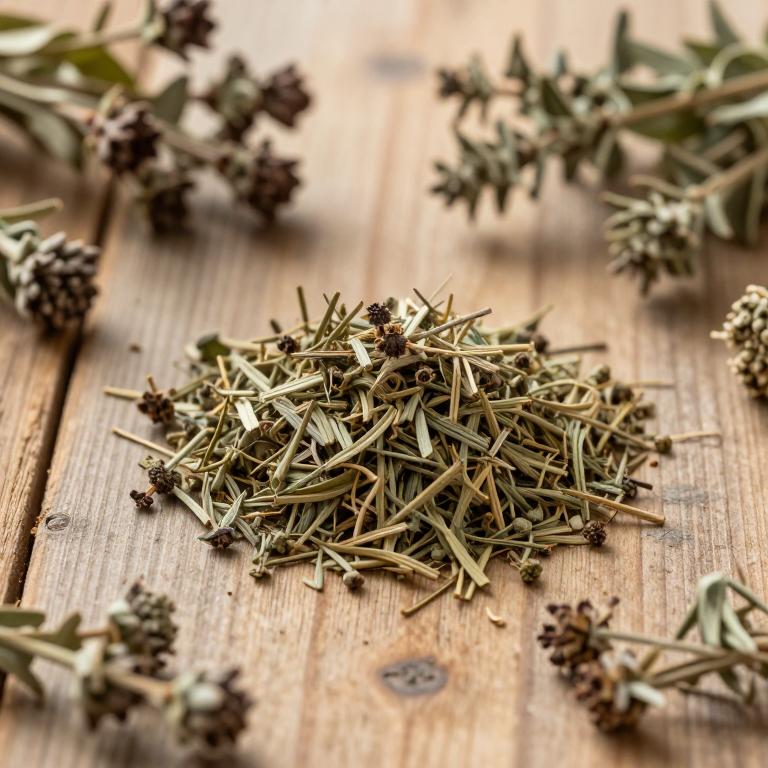
Names and Synonyms
Common Names
- smallflower chastetree
Scientific Names
Accepted name
Vitex parvifloraSynonyms
- Vitex parviflora f. sterilis
- Vitex parviflora var. puberulenta
- Vitex cofassus var. timorensis
- Vitex glandulosa
- Vitex littoralis
- Vitex geniculata
Sources: Wikidata, Catalogue of Life
Taxonomical Classification
This plant belongs to the kingdom Plantae and is classified under the phylum Streptophyta and class Equisetopsida. Within the subclass Magnoliidae, it is organized under the order Lamiales and the family Lamiaceae. Ultimately, its taxonomic identity is defined by its placement in the genus Vitex.
| Rank | Classification |
|---|---|
| Kingdom | Plantae |
| Phylum | Streptophyta |
| Class | Equisetopsida |
| Subclass | Magnoliidae |
| Order | Lamiales |
| Family | Lamiaceae |
| Genus | Vitex |
Sources: The World Checklist of Vascular Plants (WCVP)
Distribution
This plant exhibits a wide geographical distribution across several distinct oceanic and island regions. Within the Malesia botanical zone, it can be found throughout the Lesser Sunda Islands and the Maluku archipelago. Its presence extends further north into the Philippines and across the island of Sulawesi. Additionally, the species reaches into the Northwestern Pacific region. Specifically, it is documented to inhabit the Caroline Islands within this area.
| Region | Area |
|---|---|
| Malesia | Lesser Sunda Is. |
| Malesia | Maluku |
| Malesia | Philippines |
| Malesia | Sulawesi |
| Northwestern Pacific | Caroline Is. |
| Northwestern Pacific | Marianas |
| Central America | Panamá |
| Caribbean | Puerto Rico |
| Western South America | Colombia |
Sources: The World Checklist of Vascular Plants (WCVP)
Botanical Identification
Ecology
The ecology of Vitex parviflora is characterized by its ability to thrive across a diverse altitudinal gradient, spanning from sea level up to a maximum elevation of 1500 m AMSL. This wide elevational range, starting from 0 m AMSL, indicates a high degree of adaptability to varying climatic conditions and topographical shifts. By occupying habitats from lowland coastal or riparian zones to mid-elevation montane environments, the species can interface with a variety of microclimates, soil compositions, and moisture regimes. This broad ecological amplitude allows the plant to distribute itself across multiple ecological niches, ensuring resilience against localized environmental changes within its native range.
- Elevational range max:
- 1500 m AMSL
- Elevational range min:
- 0 m AMSL
Life history
The life history of Vitex parviflora is characterized by its nature as a perennial plant, allowing it to persist through multiple growing seasons. As a phanerophyte, its regenerative buds are located high above the ground on woody stems, a structural strategy that aids in its survival and growth patterns. The plant exhibits a deciduous habit, meaning it undergoes a seasonal shedding of its foliage, typically in response to environmental changes or temperature shifts. This combination of a long-lived lifecycle, a phanerophyte life form, and deciduousness defines its fundamental ecological presence and developmental rhythm.
- Deciduousness :
- deciduous
- Life form :
- phanerophyte
- Lifecycle :
- perennial
Morphology
The morphology of Vitex parviflora is characterized by its growth form as a woody tree, reaching a mean plant height of approximately 20 m. This species is strictly terrestrial in its habitat, functioning as a non-epiphytic organism, and does not exhibit any epiphytic tendencies. As a self-supporting plant, it does not possess climbing habits such as lianas or vines, maintaining a sturdy, upright structure. Furthermore, it is an independent organism that does not exhibit parasitic behavior, relying on its own physiological processes for survival.
- Aquatic :
- terrestrial
- Climber :
- self-supporting
- Epiphyte :
- terrestrial
- Growth form :
- tree
- Parasite :
- independent
- Plant height mean:
- 20 m
- Woodiness :
- woody
Physiology
The physiology of Vitex parviflora is characterized by a C3 photosynthetic pathway, a common mechanism among most woody dicotyledonous plants which involves the direct fixation of carbon dioxide through the Calvin cycle. In terms of nutrient acquisition, the plant does not function as a nitrogen fixer, meaning it relies on the uptake of nitrates or ammonium from the soil rather than establishing symbiotic relationships with nitrogen-fixing bacteria to convert atmospheric nitrogen.
- Nitrogen fixer :
- no
- Photosynthetic pathway :
- C3
Reproduction
The reproduction of Vitex parviflora is fundamentally driven by biotic mechanisms, characterized by a pollination syndrome that relies heavily on biological agents rather than abiotic factors. The reproductive process is primarily mediated through insect pollination, a trait that underscores its dependence on living organisms for successful fertilization. Within this framework, the plant exhibits specific interactions with various insect groups, including bees, butterflies, and other flying insects, which facilitate the transfer of pollen between flowers. This biotic pollination strategy ensures genetic exchange and the subsequent development of seeds, marking the plant's reproductive cycle as an integrated biological event centered on insect-mediated dispersal.
- Pollination syndrome :
- insect
- Pollination syndrome :
- biotic
Sources: Global Inventory of Floras and Traits (GIFT)
Plant Parts
Vitex parviflora has 1 reported plant parts identified across 2 scientific publications and several other databases that are studied for medicinal purposes. The most consistently reported plant part include leaf.
| Plant part | Supporting sources | Consensus |
|---|---|---|
| Leaf | 2 supporting sources | ★☆☆☆☆ |
Leaf
- Journal of natural products
- Asian Pacific journal of tropical medicine
Chemicals
Vitex parviflora has 2 reported phytochemicals identified across 2 scientific publications and several other databases. The most consistently reported chemicals include Agnuside, Negundoside.
| Chemical | Supporting sources | Consensus |
|---|---|---|
| Agnuside | 1 supporting sources | ★☆☆☆☆ |
| Negundoside | 1 supporting sources | ★☆☆☆☆ |
Agnuside
- Journal of natural products
Negundoside
- Journal of natural products
Preparations
Vitex parviflora has 2 reported preparations identified across 2 scientific publications and several other databases. The most consistently reported preparations include ethyl acetate extractive of the leaves, leaf methanol extracts.
| Preparation | Supporting sources | Consensus |
|---|---|---|
| Ethyl acetate extractive of the leaves | 1 supporting sources | ★☆☆☆☆ |
| Leaf methanol extracts | 1 supporting sources | ★☆☆☆☆ |
Ethyl acetate extractive of the leaves
- Journal of natural products
Leaf methanol extracts
- Asian Pacific journal of tropical medicine