Vismia macrophylla
Vismia macrophylla · Accepted scientific name
Scientific literature: Very Sparse (21 studies) · ★☆☆☆☆
Vismia macrophylla, scientifically known as Vismia macrophylla, is a versatile medicinal plant native to tropical forest ecosystems. Renowned for its bioactive compounds, particularly xanthones, it is traditionally utilized in various cultures to treat skin ailments, inflammation, and infections, offering significant potential for modern pharmacological research and development.
- Family
- Hypericaceae
- Native range
- Southern America
- Parts used
- Leaf
- Common names
- Not available
- Scientific synonyms
- Caopia Macrophylla · Vismia Macrophylla Var. Glabrescens · 5 more
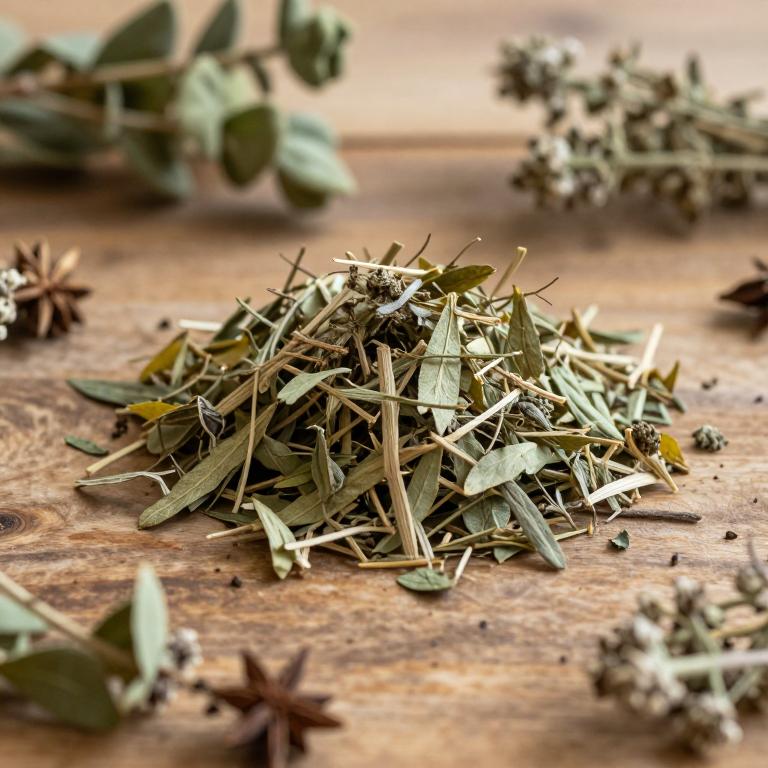
Names and Synonyms
Scientific Names
Accepted name
Vismia macrophyllaSynonyms
- Caopia macrophylla
- Vismia macrophylla var. glabrescens
- Vismia latifolia var. glabrescens
- Vismia latifolia var. reticulata
- Vismia reticulata
- Vismia angusta
- Hypericum reticulatum
Sources: Wikidata, Catalogue of Life
Taxonomical Classification
This plant belongs to the kingdom Plantae and is classified under the phylum Streptophyta and class Equisetopsida. Within the subclass Magnoliidae, it is organized under the order Malpighiales and the family Hypericaceae. Finally, it is categorized under the genus Vismia, specifically as the species Vismia macrophylla.
| Rank | Classification |
|---|---|
| Kingdom | Plantae |
| Phylum | Streptophyta |
| Class | Equisetopsida |
| Subclass | Magnoliidae |
| Order | Malpighiales |
| Family | Hypericaceae |
| Genus | Vismia |
Sources: The World Checklist of Vascular Plants (WCVP)
Distribution
This plant, Vismia macrophylla, exhibits a specific geographical range within the region of Central America. Its natural habitat extends through several different countries across this land bridge. Specifically, it can be found growing in the landscapes of Belize and Guatemala. The species also maintains a presence in the territories of Honduras and Nicaragua. Furthermore, its distribution continues southward into the tropical environments of Costa Rica.
| Region | Area |
|---|---|
| Central America | Belize |
| Central America | Costa Rica |
| Central America | Guatemala |
| Central America | Honduras |
| Central America | Nicaragua |
| Northern South America | French Guiana |
| Northern South America | Guyana |
| Northern South America | Suriname |
| Northern South America | Venezuela |
| Western South America | Bolivia |
Sources: The World Checklist of Vascular Plants (WCVP)
Botanical Identification
Ecology
The ecology of Vismia macrophylla is characterized by its adaptability across diverse forest ecosystems and a wide altitudinal gradient. This species inhabits a variety of environments, including coastal forests (Floresta Ciliar ou Galeria), terra firme forests, varzea forests, and ombrophilous (rainforest) forests. Its distribution spans from sea level up to an elevation of 1400 m AMSL, demonstrating a broad ecological amplitude that allows it to thrive in both lowland humid settings and higher montane elevations.
- Elevational range max:
- 1400 m AMSL
- Elevational range min:
- 0 m AMSL
- Habitat :
- Floresta Ciliar ou Galeria, Floresta de Terra Firme, Floresta de Várzea, Floresta Ombrófila (= Floresta Pluvial)
Life history
The life history of Vismia macrophylla is characterized by a perennial lifecycle, allowing the individual to persist in its environment over many years rather than completing its cycle within a single growing season. As a long-lived woody species, it undergoes a continuous developmental process that includes an initial establishment phase followed by sustained vegetative growth and periodic reproductive stages. This perennial nature enables the plant to accumulate significant biomass and establish a robust presence within its ecological niche, contributing to the structural complexity of its habitat through its enduring lifespan.
- Lifecycle :
- perennial
Morphology
The morphology of Vismia macrophylla is characterized by a woody growth form, specifically classified as a tree. It is a self-supporting plant that functions independently, without behaving as a parasite or an epiphyte, maintaining a strictly terrestrial existence. In terms of stature, the species exhibits significant vertical development, with a mean plant height of approximately 8 m and the capacity to reach a maximum height of up to 20 m.
- Aquatic :
- terrestrial
- Climber :
- self-supporting
- Epiphyte :
- terrestrial
- Growth form :
- tree
- Parasite :
- independent
- Plant height max:
- 20 m
- Plant height mean:
- 8 m
- Woodiness :
- woody
Physiology
The physiology of Vismia macrophylla is characterized by a C3 photosynthetic pathway, indicating a carbon fixation process typical of many tropical woody species that rely on the enzyme Rubisco under standard environmental conditions. Its leaf tissue demonstrates a consistent Leaf Dry Matter Content (LDMC) of 435.1 mg/g, a value that remains uniform across its measured range (minimum and maximum both at 435.1 mg/g), reflecting a specific structural investment in leaf density and biomass allocation. Furthermore, the plant does not function as a nitrogen fixer, meaning it relies on soil nitrogen availability rather than symbiotic diazotrophic processes to meet its nutritional requirements.
- Leaf dry matter content (LDMC) mean:
- 435.1 mg/g
- Nitrogen fixer :
- no
- Photosynthetic pathway :
- C3
Reproduction
The reproduction of Vismia macrophylla is characterized by the production of specialized seeds with specific morphological and mass properties. The seeds exhibit a consistent mass, with a recorded mean, minimum, and maximum value of 6e-04 g, indicating a highly uniform seed weight during development. In terms of dimensions, the seed length shows greater variability, ranging from a minimum of 1 mm to a maximum of 6 mm. These reproductive traits define the physical parameters of the progeny, which are essential for its dispersal and establishment within its natural habitat.
- Seed length max:
- 6 mm
- Seed length min:
- 1 mm
- Seed mass mean:
- 6e-04 g
Sources: Global Inventory of Floras and Traits (GIFT)
Plant Parts
Vismia macrophylla has 1 reported plant parts identified across 1 scientific publications and several other databases that are studied for medicinal purposes. The most consistently reported plant part include leaf.
| Plant part | Supporting sources | Consensus |
|---|---|---|
| Leaf | 1 supporting sources | ★☆☆☆☆ |
Leaf
- Natural product research
Chemicals
Vismia macrophylla has 14 reported phytochemicals identified across 1 scientific publications and several other databases. The most consistently reported chemicals include CATECHIN, Deacetylvismione A, FERRUGININ C, Glucodistylin, Harunganin.
| Chemical | Supporting sources | Consensus |
|---|---|---|
| CATECHIN | 1 supporting sources | ★☆☆☆☆ |
| Deacetylvismione A | 1 supporting sources | ★☆☆☆☆ |
| FERRUGININ C | 1 supporting sources | ★☆☆☆☆ |
| Glucodistylin | 1 supporting sources | ★☆☆☆☆ |
| Harunganin | 1 supporting sources | ★☆☆☆☆ |
| Maslinic acid | 1 supporting sources | ★☆☆☆☆ |
| Osajaxanthone | 1 supporting sources | ★☆☆☆☆ |
| VISMIONE B | 1 supporting sources | ★☆☆☆☆ |
| Vismiaquinone | 1 supporting sources | ★☆☆☆☆ |
| Vismin | 1 supporting sources | ★☆☆☆☆ |
CATECHIN
- Natural product research
Deacetylvismione A
- Journal of natural products
FERRUGININ C
- Journal of natural products
Glucodistylin
- Natural product research
Harunganin
- Journal of natural products
Maslinic acid
- Natural product research
Osajaxanthone
- Natural product research
VISMIONE B
- Journal of natural products
Vismiaquinone
- Journal of natural products
Vismin
- Journal of natural products
Conditions
Vismia macrophylla has 6 reported investigations on conditions identified across 1 scientific publications and several other databases. The most consistently reported conditions include Acinetobacter baumannii, Enterococcus faecalis, Escherichia coli, Pseudomonas aeruginosa, Staphylococcus aureus.
| Condition | Supporting sources | Consensus |
|---|---|---|
| Acinetobacter baumannii | 1 supporting sources | ★☆☆☆☆ |
| Enterococcus faecalis | 1 supporting sources | ★☆☆☆☆ |
| Escherichia coli | 1 supporting sources | ★☆☆☆☆ |
| Pseudomonas aeruginosa | 1 supporting sources | ★☆☆☆☆ |
| Staphylococcus aureus | 1 supporting sources | ★☆☆☆☆ |
| Lung cancer | 1 supporting sources | ★☆☆☆☆ |
Acinetobacter baumannii
- Natural product research
Enterococcus faecalis
- Natural product research
Escherichia coli
- Natural product research
Pseudomonas aeruginosa
- Natural product research
Staphylococcus aureus
- Natural product research
Lung cancer
- Journal of natural products
Preparations
Vismia macrophylla has 1 reported preparations identified across 1 scientific publications and several other databases. The most consistently reported preparations include ethanolic extract (VmL-Et).
| Preparation | Supporting sources | Consensus |
|---|---|---|
| Ethanolic extract (vml-et) | 1 supporting sources | ★☆☆☆☆ |
Ethanolic extract (vml-et)
- Natural product research