Vismia cayennensis
Vismia cayennensis · Accepted scientific name
Scientific literature: Very Sparse (22 studies) · ★☆☆☆☆
Vismia cayennensis, scientifically known as Vismia cayennensis, is a significant medicinal plant native to tropical rainforests. Renowned for its diverse phytochemical properties, it is traditionally utilized by indigenous communities to treat various ailments. Research continues to explore its potent bioactive compounds for potential applications in modern pharmacology and therapeutics.
- Family
- Hypericaceae
- Native range
- Southern America
- Parts used
- Leaf
- Common names
- Not available
- Scientific synonyms
- Vismia Floribunda · Caopia Cayennensis · 1 more
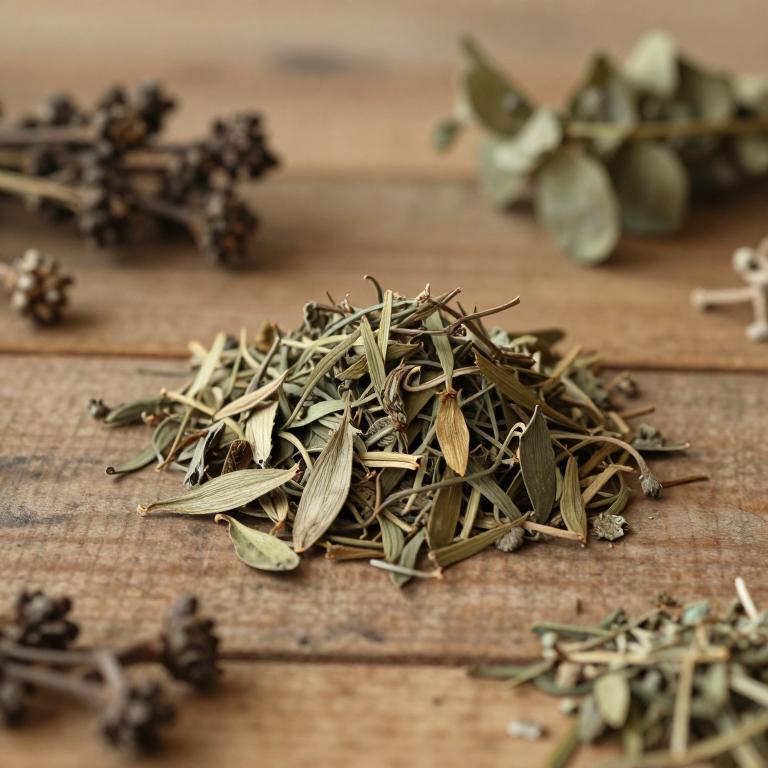
Names and Synonyms
Scientific Names
Accepted name
Vismia cayennensisSynonyms
- Vismia floribunda
- Caopia cayennensis
- Hypericum cayennense
Sources: Wikidata, Catalogue of Life
Taxonomical Classification
This plant, known as Vismia cayennensis, belongs to the kingdom Plantae within the phylum Streptophyta. It is further classified under the class Equisetopsida and subclass Magnoliidae, falling within the order Malpighiales. Finally, it is a member of the family Hypericaceae and is categorized under the genus Vismia.
| Rank | Classification |
|---|---|
| Kingdom | Plantae |
| Phylum | Streptophyta |
| Class | Equisetopsida |
| Subclass | Magnoliidae |
| Order | Malpighiales |
| Family | Hypericaceae |
| Genus | Vismia |
Sources: The World Checklist of Vascular Plants (WCVP)
Distribution
This plant is distributed across several specific regions within the Caribbean and Northern South America. In the Caribbean, its presence is documented within the islands of Trinidad and Tobago. Moving to the mainland, it can be found throughout the territory of Venezuela. The species also inhabits the Guiana Shield, specifically covering Guyana and Suriname. Finally, its geographical range extends into the region of French Guiana.
| Region | Area |
|---|---|
| Caribbean | Trinidad-Tobago |
| Northern South America | French Guiana |
| Northern South America | Guyana |
| Northern South America | Suriname |
| Northern South America | Venezuela |
| Western South America | Bolivia |
| Western South America | Colombia |
| Western South America | Ecuador |
| Western South America | Peru |
| Brazil | Brazil Northeast |
Sources: The World Checklist of Vascular Plants (WCVP)
Botanical Identification
Ecology
The ecology of Vismia cayennensis is characterized by its presence within specific altitudinal gradients in tropical forest ecosystems. This species occupies a specialized niche, primarily thriving within an elevational range that begins at 760 m AMSL and extends up to a maximum of 1380 m AMSL. This distribution suggests an adaptation to mid-elevation montane or submontane environments, where it must contend with specific moisture regimes and temperature fluctuations typical of these altitudes. The environmental constraints within this 620-meter vertical span influence its competitive interactions and its role within the local biodiversity of its native habitat.
- Elevational range max:
- 1380 m AMSL
- Elevational range min:
- 760 m AMSL
Life history
The life history of Vismia cayennensis is characterized by its status as a perennial organism, allowing it to persist in its environment over many years rather than completing its cycle in a single season. As a long-lived species, it follows a developmental trajectory that moves beyond the temporary stages of annuals or biennials, establishing a stable presence within its ecological niche. This perennial nature enables the plant to invest significant energy into structural growth and long-term survival, ensuring it can withstand seasonal fluctuations and contribute to the forest canopy or understory through multiple reproductive cycles throughout its extended lifespan.
- Lifecycle :
- perennial
Morphology
The morphology of Vismia cayennensis is characterized by its growth form as a woody tree, which functions as a self-supporting structure rather than a climber or vine. This species typically reaches a mean plant height of 10 m, though it can grow to a maximum height of 18 m. As a terrestrial plant, it does not exhibit aquatic or semiaquatic tendencies, nor does it function as an epiphyte; instead, it maintains an independent existence without acting as a parasite on other organisms.
- Aquatic :
- terrestrial
- Climber :
- self-supporting
- Epiphyte :
- terrestrial
- Growth form :
- tree
- Parasite :
- independent
- Plant height max:
- 18 m
- Plant height mean:
- 10 m
- Woodiness :
- woody
Physiology
The physiology of Vismia cayennensis is characterized by complex metabolic processes typical of tropical woody species, primarily focusing on efficient carbon assimilation and nutrient uptake within rainforest ecosystems. Its metabolic framework involves standard photosynthetic pathways to drive biomass production, yet it lacks the specialized symbiotic mechanisms required for atmospheric nitrogen conversion. Specifically, regarding its nutrient acquisition strategies, the plant is not a nitrogen fixer, meaning it does not possess the biological machinery to establish symbiotic relationships with nitrogen-fixing bacteria to convert molecular nitrogen into usable forms. Consequently, its nitrogen physiology is entirely dependent on the uptake of nitrates and ammonium from the soil through its root system, necessitating a high degree of efficiency in mineral absorption to support its growth and secondary metabolite production.
- Nitrogen fixer :
- no
Reproduction
The reproduction of Vismia cayennensis is characterized by a complex dispersal mechanism that integrates multiple environmental vectors. The plant primarily exhibits a zoochorous dispersal syndrome, relying on animal agents to transport its seeds across the landscape. However, its reproductive strategy is multifaceted, encompassing anemochorous, autochorous, and hydrochorous processes, which allows it to exploit various ecological pathways. This combination of specialized and unspecialized dispersal methods ensures that the species can colonize diverse habitats, utilizing wind, water, self-dispersal, and animal movement to maximize its reproductive success and spatial distribution.
- Dispersal syndrome :
- zoochorous
Sources: Global Inventory of Floras and Traits (GIFT)
Plant Parts
Vismia cayennensis has 1 reported plant parts identified across 1 scientific publications and several other databases that are studied for medicinal purposes. The most consistently reported plant part include leaf.
| Plant part | Supporting sources | Consensus |
|---|---|---|
| Leaf | 1 supporting sources | ★☆☆☆☆ |
Leaf
- Journal of ethnopharmacology
Chemicals
Vismia cayennensis has 2 reported phytochemicals identified across 1 scientific publications and several other databases. The most consistently reported chemicals include Vismiaquinone, betulinic acid.
| Chemical | Supporting sources | Consensus |
|---|---|---|
| Vismiaquinone | 1 supporting sources | ★☆☆☆☆ |
| betulinic acid | 1 supporting sources | ★☆☆☆☆ |
Vismiaquinone
- Journal of ethnopharmacology
betulinic acid
- Dr. Duke
Activities
Vismia cayennensis has 18 reported activities identified across 1 scientific publications and several other databases. The most consistently reported activities include Anthelmintic, AntiHIV, Antibacterial, Anticancer, Anticarcinomic.
| Activity | Supporting sources | Consensus |
|---|---|---|
| Anthelmintic | 1 supporting sources | ★☆☆☆☆ |
| AntiHIV | 1 supporting sources | ★☆☆☆☆ |
| Antibacterial | 1 supporting sources | ★☆☆☆☆ |
| Anticancer | 1 supporting sources | ★☆☆☆☆ |
| Anticarcinomic | 1 supporting sources | ★☆☆☆☆ |
| Antiedemic | 1 supporting sources | ★☆☆☆☆ |
| Antiinflammatory | 1 supporting sources | ★☆☆☆☆ |
| Antileukemic | 1 supporting sources | ★☆☆☆☆ |
| Antimalarial | 1 supporting sources | ★☆☆☆☆ |
| Antimelanomic | 1 supporting sources | ★☆☆☆☆ |
Anthelmintic
- Dr. Duke
AntiHIV
- Dr. Duke
Antibacterial
- Dr. Duke
Anticancer
- Dr. Duke
Anticarcinomic
- Dr. Duke
Antiedemic
- Dr. Duke
Antiinflammatory
- Dr. Duke
Antileukemic
- Dr. Duke
Antimalarial
- Dr. Duke
Antimelanomic
- Dr. Duke
Conditions
Vismia cayennensis has 1 reported investigations on conditions identified across 1 scientific publications and several other databases. The most consistently reported conditions include Leishmania infection.
| Condition | Supporting sources | Consensus |
|---|---|---|
| Leishmania infection | 1 supporting sources | ★☆☆☆☆ |
Leishmania infection
- Journal of ethnopharmacology
Preparations
Vismia cayennensis has 1 reported preparations identified across 1 scientific publications and several other databases. The most consistently reported preparations include Hexane extracts from the leaves.
| Preparation | Supporting sources | Consensus |
|---|---|---|
| Hexane extracts from the leaves | 1 supporting sources | ★☆☆☆☆ |
Hexane extracts from the leaves
- Journal of ethnopharmacology