Baboonwood
Virola surinamensis · Accepted scientific name
Scientific literature: Sparse (84 studies) · ★★☆☆☆
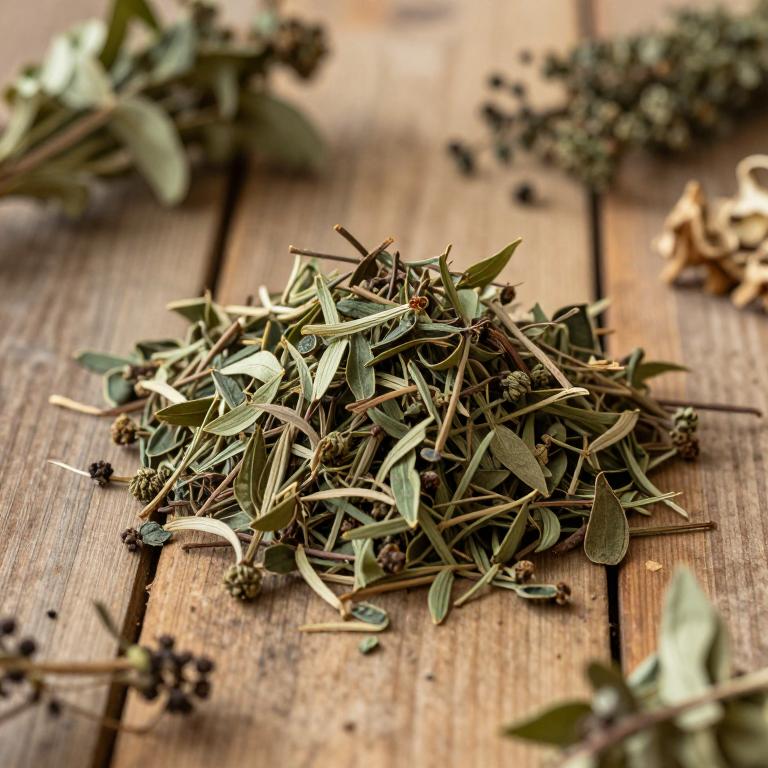
Baboonwood, scientifically known as Virola surinamensis, is a versatile medicinal tree native to tropical rainforests. Renowned for its potent bioactive compounds, it is traditionally used to treat various ailments, including skin infections and inflammation. Exploring its phytochemical properties offers promising potential for modern pharmacological developments and natural therapeutic applications.
Names and Synonyms
Common Names
- Baboonwood
- ucahuba-nut
- white ucuba
Scientific Names
Accepted name
Virola surinamensisSynonyms
- Palala gracilis
- Virola glaziovii
- Palala surinamensis
- Myristica surinamensis
- Myristica sebifera var. longifolia
- Myristica gracilis
- Virola glaziovii var. latifolia
- Virola carinata var. gracilis
Regional and Traditional Names
Spanish:
- Chalviande
- Chalviande
- cumala blanca
German:
- Baboen
Sources: Wikidata, Catalogue of Life
Taxonomical Classification
This plant belongs to the kingdom Plantae and the phylum Streptophyta, falling under the class Equisetopsida and subclass Magnoliidae. Within the order Magnoliales, it is classified under the family Myristicaceae. It is further identified by the genus Virola and the specific species name surinamensis.
| Rank | Classification |
|---|---|
| Kingdom | Plantae |
| Phylum | Streptophyta |
| Class | Equisetopsida |
| Subclass | Magnoliidae |
| Order | Magnoliales |
| Family | Myristicaceae |
| Genus | Virola |
Sources: The World Checklist of Vascular Plants (WCVP)
Distribution
This plant exhibits a specific geographical range concentrated within the tropical regions of the Caribbean and Northern South America. Within the Caribbean, its presence is documented in the islands of Trinidad and Tobago. Moving to the mainland, the species is widely distributed across the Guianas, including French Guiana, Guyana, and Suriname. Furthermore, its habitat extends into the northern territories of Venezuela. Collectively, these locations define the primary natural environment where this medicinal species can be found.
| Region | Area |
|---|---|
| Caribbean | Trinidad-Tobago |
| Northern South America | French Guiana |
| Northern South America | Guyana |
| Northern South America | Suriname |
| Northern South America | Venezuela |
| Western South America | Bolivia |
| Western South America | Colombia |
| Western South America | Ecuador |
| Western South America | Peru |
| Brazil | Brazil West-Central |
Sources: The World Checklist of Vascular Plants (WCVP)
Botanical Identification
Ecology
The ecology of Virola surinameensis is characterized by its presence across diverse forest ecosystems, specifically inhabiting riparian forests (Floresta Ciliar ou Galeria), terra firme forests (Floresta de Terra Firme), and varzea forests (Floresta de Várzea). This species demonstrates significant adaptability to varying hydrological conditions, ranging from seasonally flooded areas to more stable, non-flooded upland terrains. Its vertical distribution is found within a broad altitudinal gradient, spanning from sea level (0 m AMSL) up to an elevation of 1000 m AMSL.
- Elevational range max:
- 1000 m AMSL
- Elevational range min:
- 0 m AMSL
- Habitat :
- Floresta Ciliar ou Galeria, Floresta de Terra Firme, Floresta de Várzea
Life history
The life history of Virola surinameensis is characterized by its status as a perennial species, allowing it to persist in its ecosystem over many years rather than completing a single reproductive cycle. As an evergreen plant, it maintains its foliage throughout the year, providing continuous canopy cover and consistent photosynthetic activity regardless of the season.
- Deciduousness :
- evergreen
- Lifecycle :
- perennial
Morphology
The morphology of Virola surinameensis is characterized by its significant stature and robust structural development, typically manifesting as a large woody tree. It reaches impressive heights, with an average height of approximately 30 m and a maximum potential height of up to 37 m. As a terrestrial species, it grows independently in its environment without functioning as a parasite or an epiphyte. The plant is strictly self-supporting in its growth habit, lacking the climbing tendencies of vines or lianas, and relies on its strong, woody framework to maintain its vertical presence within its ecosystem.
- Aquatic :
- terrestrial
- Climber :
- self-supporting
- Epiphyte :
- terrestrial
- Growth form :
- tree
- Parasite :
- independent
- Plant height max:
- 37 m
- Plant height mean:
- 30 m
- Woodiness :
- woody
Physiology
The physiology of Virola surinamensis is characterized by a C3 photosynthetic pathway, indicating a standard carbon fixation process typical of many tropical woody species. Its leaf morphology and resource allocation strategies are reflected in a mean leaf dry matter content (LDMC) of 342 mg/g, a value that remains consistent across its minimum and maximum recorded measurements. The plant exhibits a mean leaf length of 16.2 cm and a mean leaf width of 6.65 cm, supported by a mean leaf thickness of 0.0285 mm. These dimensions contribute to a mean Specific Leaf Area (SLA) of 95.5 cm²/g, which is also the minimum and maximum value recorded for this trait, suggesting a highly stable leaf structure. Additionally, the species does not function as a nitrogen fixer, relying instead on soil nutrient availability rather than symbiotic nitrogen fixation.
- Leaf dry matter content (LDMC) mean:
- 342 mg/g
- Leaf length mean:
- 16.2 cm
- Leaf thickness mean:
- 0.0285 mm
- Leaf width mean:
- 6.65 cm
- Nitrogen fixer :
- no
- Photosynthetic pathway :
- C3
- Specific Leaf Area (SLA) min:
- 95.5 cm²/g
Reproduction
The reproduction of Virola surinamensis is characterized by the production of fleshy fruits that facilitate successful propagation. These fruits possess a mean length of 1.88 cm and a mean width of 1.52 cm, serving as the primary vessel for seed protection and dispersal. The plant utilizes a zoochorous dispersal syndrome, meaning its fleshy fruits are consumed and moved by animals, aiding in the distribution of its offspring. Within these fruits, the seeds vary significantly in size and weight; the seed mass ranges from a minimum of 1 g to a maximum of 2.48 g, with an average mass of approximately 1.91902 g. The seeds exhibit considerable morphological diversity, with lengths ranging from a minimum of 15 mm to a maximum of 30 mm (mean length of 17.5 mm), and widths reaching up to 14.2 mm. In terms of vertical dimension, the seed height reaches a maximum of 14.2 mm. The volumetric data for the seeds is consistent, showing a mean, minimum, and maximum seed volume of 2200 mm³, indicating a robust and substantial seed structure essential for the plant's life cycle.
- Dispersal syndrome :
- zoochorous
- Fruit dryness :
- fleshy
- Fruit length mean:
- 1.88 cm
- Fruit type :
- other
- Fruit width mean:
- 1.52 cm
- Seed height max:
- 14.2 mm
- Seed length max:
- 30 mm
- Seed length mean:
- 17.5 mm
- Seed length min:
- 15 mm
- Seed mass max:
- 2.48 g
- Seed mass mean:
- 1.91902 g
- Seed mass min:
- 1 g
- Seed volume max:
- 2200 mm³
- Seed width max:
- 14.2 mm
Sources: Global Inventory of Floras and Traits (GIFT)
Plant Parts
Virola surinamensis has 1 reported plant parts identified across 1 scientific publications and several other databases that are studied for medicinal purposes. The most consistently reported plant part include seed.
| Plant part | Supporting sources | Consensus |
|---|---|---|
| Seed | 1 supporting sources | ★☆☆☆☆ |
Seed
- Chemical & pharmaceutical bulletin
Chemicals
Virola surinamensis has 23 reported phytochemicals identified across 1 scientific publications and several other databases. The most consistently reported chemicals include Aristolene, Bicyclogermacrene, CAPRIC ACID, Decanoic acid, Elemicine.
| Chemical | Supporting sources | Consensus |
|---|---|---|
| Aristolene | 1 supporting sources | ★☆☆☆☆ |
| Bicyclogermacrene | 1 supporting sources | ★☆☆☆☆ |
| CAPRIC ACID | 1 supporting sources | ★☆☆☆☆ |
| Decanoic acid | 1 supporting sources | ★☆☆☆☆ |
| Elemicine | 1 supporting sources | ★☆☆☆☆ |
| FAT | 1 supporting sources | ★☆☆☆☆ |
| Flavonoids | 1 supporting sources | ★☆☆☆☆ |
| Germacrene D | 1 supporting sources | ★☆☆☆☆ |
| Lignans | 1 supporting sources | ★☆☆☆☆ |
| MYRISTIC ACID | 1 supporting sources | ★☆☆☆☆ |
Aristolene
- Journal of ethnopharmacology
Bicyclogermacrene
- Journal of ethnopharmacology
CAPRIC ACID
- Dr. Duke
Decanoic acid
- Dr. Duke
Elemicine
- Dr. Duke
FAT
- Dr. Duke
Flavonoids
- Planta medica
Germacrene D
- Journal of ethnopharmacology
Lignans
- Planta medica
MYRISTIC ACID
- Dr. Duke
Activities
Virola surinamensis has 51 reported activities identified across 1 scientific publications and several other databases. The most consistently reported activities include 5-Alpha-Reductase-Inhibitor, Allergenic, Alpha-Reductase-Inhibitor, Anemiagenic, AntiMS.
| Activity | Supporting sources | Consensus |
|---|---|---|
| 5-Alpha-Reductase-Inhibitor | 1 supporting sources | ★☆☆☆☆ |
| Allergenic | 1 supporting sources | ★☆☆☆☆ |
| Alpha-Reductase-Inhibitor | 1 supporting sources | ★☆☆☆☆ |
| Anemiagenic | 1 supporting sources | ★☆☆☆☆ |
| AntiMS | 1 supporting sources | ★☆☆☆☆ |
| Antiacne | 1 supporting sources | ★☆☆☆☆ |
| Antialopecic | 1 supporting sources | ★☆☆☆☆ |
| Antianaphylactic | 1 supporting sources | ★☆☆☆☆ |
| Antiandrogenic | 1 supporting sources | ★☆☆☆☆ |
| Antiarteriosclerotic | 1 supporting sources | ★☆☆☆☆ |
5-Alpha-Reductase-Inhibitor
- Dr. Duke
Allergenic
- Dr. Duke
Alpha-Reductase-Inhibitor
- Dr. Duke
Anemiagenic
- Dr. Duke
AntiMS
- Dr. Duke
Antiacne
- Dr. Duke
Antialopecic
- Dr. Duke
Antianaphylactic
- Dr. Duke
Antiandrogenic
- Dr. Duke
Antiarteriosclerotic
- Dr. Duke
Conditions
Virola surinamensis has 5 reported investigations on conditions identified across 1 scientific publications and several other databases. The most consistently reported conditions include Leishmaniasis, cancer, colon cancer, infections, malaria.
| Condition | Supporting sources | Consensus |
|---|---|---|
| Leishmaniasis | 1 supporting sources | ★☆☆☆☆ |
| Cancer | 1 supporting sources | ★☆☆☆☆ |
| Colon cancer | 1 supporting sources | ★☆☆☆☆ |
| Infections | 1 supporting sources | ★☆☆☆☆ |
| Malaria | 1 supporting sources | ★☆☆☆☆ |
Leishmaniasis
- Pharmaceutics
Cancer
- Journal of ethnopharmacology
Colon cancer
- Journal of ethnopharmacology
Infections
- Journal of ethnopharmacology
Malaria
- Journal of ethnopharmacology
Preparations
Virola surinamensis has 1 reported preparations identified across 1 scientific publications and several other databases. The most consistently reported preparations include ethanol extracts.
| Preparation | Supporting sources | Consensus |
|---|---|---|
| Ethanol extracts | 1 supporting sources | ★☆☆☆☆ |
Ethanol extracts
- Phytotherapy research : PTR