Viola philippica var. philippica
Viola philippica var. philippica · Accepted scientific name
Scientific literature: Very Sparse (0 studies) · ★☆☆☆☆
Viola philippica var. philippica is a unique botanical species that has garnered significant scientific interest due to its diverse therapeutic potential. The flowers of this plant are particularly notable for their rich concentration of bioactive compounds, including anthocyanins and MDA. Various preparations, such as aqueous methanol extracts and Viola yedoensis ethanol extracts, have been studied for their medicinal properties. Research indicates that these extracts may play a role in managing conditions like inflammation and atopic dermatitis. Furthermore, investigations into its chemical profile suggest potential applications in addressing complex health concerns involving Bacillus subtilis and HIV.
- Synonyms
- Viola Alisoviana · Viola Edanoi · 8 more
- Common names
- Not available
- Family
- Violaceae
- Distribution
- Not available
- Plant Parts
- Flower
Classification
Synonyms
Viola philippica var. philippica is a complex taxon that encompasses several notable botanical synonyms. Within its taxonomic history, it is identified by various names such as Viola alisoviana and Viola edanoi. The plant's diversity is further reflected in its association with Viola philippica f. candida. Additionally, researchers have linked this variety to Viola philippica subsp. munda in previous classifications. Finally, the name Viola tosaensis also serves as a recognized synonym within this specific botanical group.
Sources: The World Checklist of Vascular Plants (WCVP)
Taxonomy
Viola philippica var. philippica is a specialized member of the kingdom Plantae. Within this vast biological kingdom, it is categorized under the class Equisetopsida. The plant belongs to the order Malpighiales, which defines its evolutionary lineage. Further classification places it within the family Violaceae, showcasing its botanical connections. Ultimately, this variety is identified by its specific genus, Viola.
| Rank | Classification |
|---|---|
| Kingdom | Plantae |
| Phylum | Streptophyta |
| Class | Equisetopsida |
| Subclass | Magnoliidae |
| Order | Malpighiales |
| Family | Violaceae |
| Genus | Viola |
Sources: The World Checklist of Vascular Plants (WCVP)
Distribution
Geographic Regions
Viola philippica var. philippica exhibits a widespread distribution across the Asia-Temperate region, with a primary presence throughout various parts of China. This variety can be found spanning from the northern reaches of Inner Mongolia to the tropical landscapes of Hainan. Its range further extends through the diverse terrains of North-Central, South-Central, and Southeast China. Such a broad geographic spread highlights the plant's ability to adapt to multiple regional climates. Consequently, these interconnected habitats define the extensive natural footprint of this specific botanical variety.
Sources: The World Checklist of Vascular Plants (WCVP)
Identification
Biological Activities
Compounds
Viola philippica var. philippica serves as a fascinating subject of study due to its complex chemical profile. This specific variety contains various important secondary metabolites, including anthocyanins, which are known for their strong antioxidant and anti-cancer potential. In addition to these pigments, the plant is characterized by the presence of flavonoids. Research also indicates that coumarin is a significant component found within its chemical composition. Understanding these relationships is essential for exploring the plant's potential medicinal applications and growth requirements.
Conditions
Viola philippica var. philippica can be grown under various light conditions, including 100% full sunlight, 50% full sunlight, and 35% full sunlight. Research indicates that these higher light intensities are suitable for the plant's growth and maintain normal chloroplast structures. In contrast, the plant also responds to 5% full sunlight, though this lower intensity significantly reduces biomass and photosynthetic yield. Beyond cultivation, Viola philippica var. philippica is effective in treating 2,4-dinitrochlorobenzene-induced atopic dermatitis-like skin dysfunction. This medicinal property is demonstrated by the plant's ability to suppress inflammatory cytokines and inhibit T cell-mediated allergic immune responses.
Preparations
Viola philippica var. philippica is prepared as VYE, which serves as an abbreviation in studies investigating its therapeutic potential. This plant is also prepared as a Viola yedoensis ethanol extract to evaluate its anti-atopic effects against skin dysfunction. Furthermore, the species is processed as Violae Herba, a traditional medicinal herb used in Chinese medicine. Research also involves the preparation of aqueous methanol extracts from the plant to test for antibacterial activity. Finally, the plant is utilized in the form of an ethanol extract to identify its bioactive constituents and medicinal properties.
Parts used
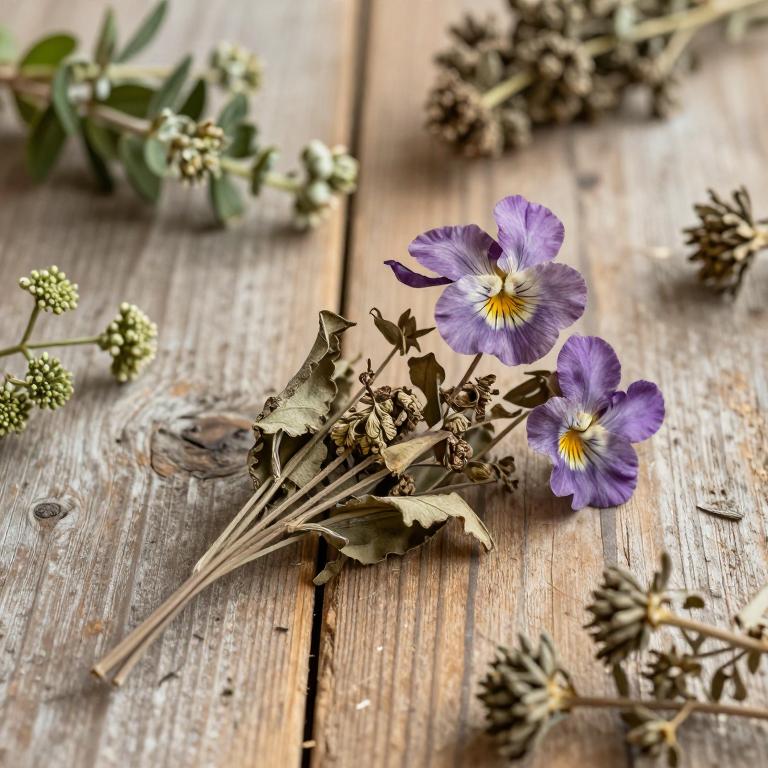
Viola philippica var. philippica possesses a distinctive flower that serves as a primary site for studying important plant secondary metabolites. Similar to other species in the genus, these floral components contain anthocyanins which offer significant antioxidant and potential anti-cancer properties. Recent advancements in analytical chemistry allow for the rapid separation and identification of these pigments through specialized high-performance liquid chromatography techniques. By analyzing the specific chemical compositions within the flowers, researchers can better understand the complex distribution of glycosides and acylation patterns. Ultimately, characterizing these floral constituents provides valuable insights that can enhance both ornamental breeding and medicinal applications.