Viola canescens
Viola canescens · Accepted scientific name
Scientific literature: Very Sparse (13 studies) · ★☆☆☆☆
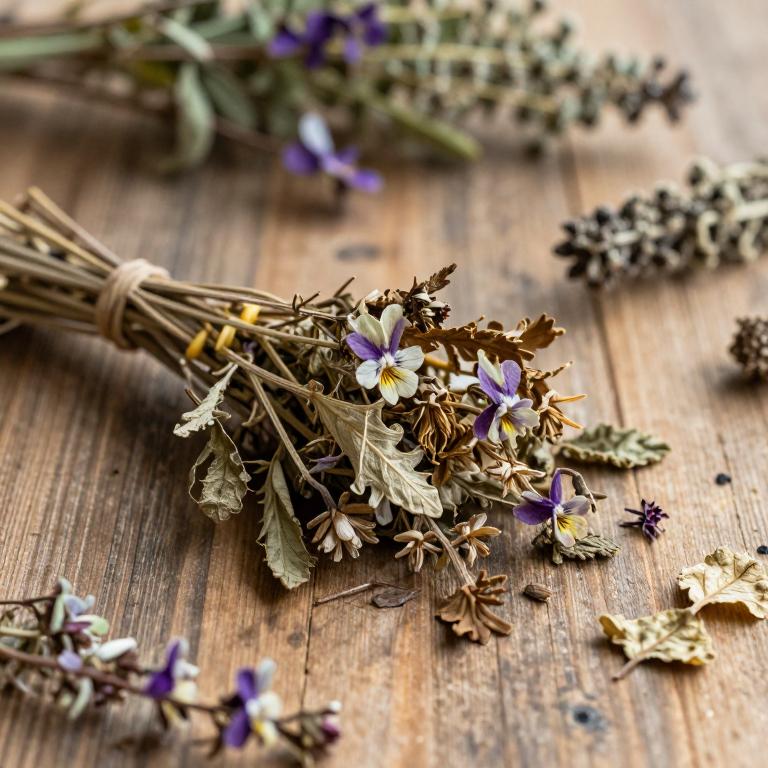
Viola canescens, scientifically known as Viola canescens, is a delicate perennial herb native to specific montane regions. Renowned for its vibrant blooms and unique ecological niche, this violet species holds significant interest in ethnobotany. Its traditional medicinal applications highlight its potential role in holistic wellness and natural healing practices.
- Family
- Violaceae
- Native range
- Asia-Tropical
- Parts used
- Flower · Leaf
- Common names
- Not available
- Scientific synonyms
- Viola Serpens Var. Canescens
Names and Synonyms
Scientific Names
Accepted name
Viola canescensSynonyms
- Viola serpens var. canescens
Sources: Wikidata
Taxonomical Classification
This plant belongs to the kingdom Plantae and is classified under the phylum Streptophyta and class Equisetopsida. Within the subclass Magnoliidae, it is organized under the order Malpighiales and the family Violaceae. Finally, it is identified by the genus Viola.
| Rank | Classification |
|---|---|
| Kingdom | Plantae |
| Phylum | Streptophyta |
| Class | Equisetopsida |
| Subclass | Magnoliidae |
| Order | Malpighiales |
| Family | Violaceae |
| Genus | Viola |
Sources: The World Checklist of Vascular Plants (WCVP)
Distribution
This plant is widely distributed across the diverse landscapes of the Indian Subcontinent. It can be found growing in the specific regions of Assam and throughout various parts of India. Its presence extends into the rugged terrains of the East Himalaya, highlighting its preference for mountainous environments. Additionally, the species is documented inhabiting the elevations of Nepal. Finally, its geographical range reaches into the western reaches of the subcontinent within Pakistan.
| Region | Area |
|---|---|
| Indian Subcontinent | Assam |
| Indian Subcontinent | East Himalaya |
| Indian Subcontinent | India |
| Indian Subcontinent | Nepal |
| Indian Subcontinent | Pakistan |
| Indian Subcontinent | West Himalaya |
Sources: The World Checklist of Vascular Plants (WCVP)
Botanical Identification
Ecology
The ecology of Viola canescens is characterized by its specific distribution within montane ecosystems, where it thrives across a distinct altitudinal gradient. This species is primarily found in high-altitude environments, occupying an elevational range that begins at 1500 m AMSL and extends up to a maximum of 2600 m AMSL. Within these parameters, the plant adapts to the unique climatic conditions and soil compositions typical of mid-to-high mountain zones, playing a specialized role in the vegetative structure of its native habitat.
- Elevational range max:
- 2600 m AMSL
- Elevational range min:
- 1500 m AMSL
Life history
The life history of Viola canescens is characterized by its status as a perennial, allowing the plant to persist through multiple growing seasons. As a perennial species, it avoids the rapid, single-season completion of annuals or the two-year cycle of biennials, instead establishing a stable presence in its habitat through repeated cycles of vegetative growth and reproduction. This life cycle enables the plant to develop more robust root systems and more complex foliage over time, contributing to its long-term survival and ability to endure varying environmental conditions across successive years.
- Lifecycle :
- perennial
Morphology
The morphology of Viola canescens is characterized by its growth form as a herb and a forb, exhibiting a non-woody structure throughout its vegetative body. This plant functions as a self-supporting climber, manifesting a growth habit that can be described as a liana or a vine, yet it maintains the ability to be self-supporting rather than being an obligatory climber. Furthermore, it is an independent organism, showing no parasitic tendencies toward other plants.
- Climber :
- self-supporting
- Growth form :
- herb
- Parasite :
- independent
- Woodiness :
- non-woody
Physiology
The physiological characteristics of the foliage in Viola canescens are defined by specific dimensional variations in leaf morphology that support its metabolic functions. The leaves exhibit a range of sizes, with a minimum leaf length of 1.5 cm and a maximum length reaching up to 3.5 cm, resulting in a calculated mean leaf length of 2.5 cm. Complementing these longitudinal dimensions, the leaf width fluctuates between a minimum of 2 cm and a maximum of 3 cm. These morphological parameters dictate the surface area available for gas exchange and photosynthetic activity, playing a crucial role in the plant's overall energy acquisition and physiological regulation.
- Leaf length max:
- 3.5 cm
- Leaf length mean:
- 2.5 cm
- Leaf length min:
- 1.5 cm
- Leaf width max:
- 3 cm
- Leaf width min:
- 2 cm
Reproduction
The reproduction of Viola canescens is closely tied to its seasonal flowering cycle, which is characterized by a relatively specific and concentrated period of activity. The flowering process typically begins in April, marking the onset of its reproductive phase. This flowering period remains active through the month of April, concluding within the same timeframe, though the specific timing can be considered variable depending on environmental conditions. This concentrated window of bloom facilitates the plant's pollination processes before transitioning into subsequent stages of seed development.
- Flowering time :
- Apr
Sources: Global Inventory of Floras and Traits (GIFT)
Plant Parts
Viola canescens has 2 reported plant parts identified across 2 scientific publications and several other databases that are studied for medicinal purposes. The most consistently reported plant part include flower, leaf.
| Plant part | Supporting sources | Consensus |
|---|---|---|
| Flower | 1 supporting sources | ★☆☆☆☆ |
| Leaf | 1 supporting sources | ★☆☆☆☆ |
Flower
- Plants (Basel, Switzerland)
Leaf
- Plants (Basel, Switzerland)
Chemicals
Viola canescens has 3 reported phytochemicals identified across 2 scientific publications and several other databases. The most consistently reported chemicals include EMETINE, Violanthin, quercetin.
| Chemical | Supporting sources | Consensus |
|---|---|---|
| EMETINE | 1 supporting sources | ★☆☆☆☆ |
| Violanthin | 1 supporting sources | ★☆☆☆☆ |
| quercetin | 1 supporting sources | ★☆☆☆☆ |
EMETINE
- Pharmaceuticals (Basel, Switzerland)
Violanthin
- Pharmaceuticals (Basel, Switzerland)
quercetin
- Pharmaceuticals (Basel, Switzerland)
Activities
Viola canescens has 1 reported activities identified across 2 scientific publications and several other databases. The most consistently reported activities include Cytotoxic.
| Activity | Supporting sources | Consensus |
|---|---|---|
| Cytotoxic | 1 supporting sources | ★☆☆☆☆ |
Cytotoxic
- Malaria journal
Conditions
Viola canescens has 7 reported investigations on conditions identified across 2 scientific publications and several other databases. The most consistently reported conditions include LeiShmania donovani, Plasmodium falciparum, cancer, diarrhea, gastrointestinal disorders.
| Condition | Supporting sources | Consensus |
|---|---|---|
| Leishmania donovani | 1 supporting sources | ★☆☆☆☆ |
| Plasmodium falciparum | 1 supporting sources | ★☆☆☆☆ |
| Cancer | 1 supporting sources | ★☆☆☆☆ |
| Diarrhea | 1 supporting sources | ★☆☆☆☆ |
| Gastrointestinal disorders | 1 supporting sources | ★☆☆☆☆ |
| Malaria | 1 supporting sources | ★☆☆☆☆ |
| Sore throat | 1 supporting sources | ★☆☆☆☆ |
Leishmania donovani
- Journal of ethnopharmacology
Plasmodium falciparum
- Journal of ethnopharmacology
Cancer
- PloS one
Diarrhea
- Pharmaceuticals (Basel, Switzerland)
Gastrointestinal disorders
- Pharmaceuticals (Basel, Switzerland)
Malaria
- Malaria journal
Sore throat
- Plants (Basel, Switzerland)
Preparations
Viola canescens has 1 reported preparations identified across 2 scientific publications and several other databases. The most consistently reported preparations include petroleum ether extract.
| Preparation | Supporting sources | Consensus |
|---|---|---|
| Petroleum ether extract | 1 supporting sources | ★☆☆☆☆ |
Petroleum ether extract
- Journal of ethnopharmacology