Vincetoxicum stauntonii
Vincetoxicum stauntonii · Accepted scientific name
Scientific literature: Very Sparse (18 studies) · ★☆☆☆☆
, scientifically known as Vincetoxicum stauntonii, is a perennial herb native to Australia, valued for its unique medicinal properties. Often found in shaded forest environments, this plant contains bioactive compounds traditionally used in indigenous practices to treat various ailments, offering a fascinating subject for botanical and pharmacological research.
- Family
- Apocynaceae
- Native range
- Asia-Temperate
- Parts used
- Root · Rhizome
- Common names
- Not available
- Scientific synonyms
- Pentasacme Stauntonii · Cynanchum Stauntonii · 3 more
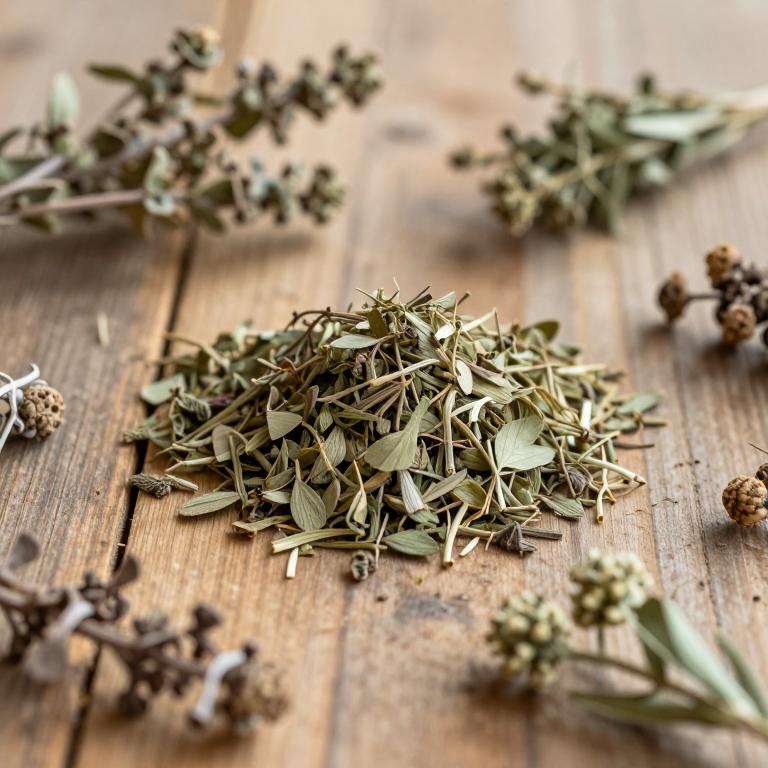
Names and Synonyms
Scientific Names
Accepted name
Vincetoxicum stauntoniiSynonyms
- Pentasacme stauntonii
- Cynanchum stauntonii
- Pentasacme brachyantha
- Cynanchum linearifolium
- Vincetoxicum linearifolium
Sources: Wikidata, Catalogue of Life
Taxonomical Classification
This plant, Vincetoxicum stauntonii, belongs to the kingdom Plantae and the phylum Streptophyta. Within the class Equisetopsida and subclass Magnoliidae, it is categorized under the order Gentianaales and the family Apocynaceae. Its specific classification is defined by the genus Vincetoxicum.
| Rank | Classification |
|---|---|
| Kingdom | Plantae |
| Phylum | Streptophyta |
| Class | Equisetopsida |
| Subclass | Magnoliidae |
| Order | Gentianales |
| Family | Apocynaceae |
| Genus | Vincetoxicum |
Sources: The World Checklist of Vascular Plants (WCVP)
Distribution
This plant exhibits a widespread distribution across several key regions in East and Southeast Asia. Within China, it can be found spanning from the South-Central provinces to the North-Central territories. Furthermore, its presence extends into the Southeast regions of the country as well. Beyond the Chinese borders, the species is also naturally distributed throughout the Indo-China peninsula. Specifically, it is documented to grow within the tropical landscapes of Vietnam.
| Region | Area |
|---|---|
| China | China South-Central |
| China | China North-Central |
| China | China Southeast |
| Indo-China | Vietnam |
Sources: The World Checklist of Vascular Plants (WCVP)
Botanical Identification
Morphology
The morphology of Vincetoxicum stauntonii is characterized by its growth habit, typically reaching a plant height with a mean of approximately 1 m. The structure of the plant is classified as non-woody, reflecting its herbaceous nature.
- Plant height mean:
- 1 m
- Woodiness :
- non-woody
Physiology
The physiology of Vincetoxicum stauntonii is characterized by distinct morphological dimensions of its foliage that support its metabolic processes. The plant exhibits significant variation in leaf size, with leaf lengths ranging from a minimum of 6 cm to a maximum of 13 cm, while maintaining an average length of approximately 9.5 cm. This longitudinal development is paired with a notably narrow leaf width, which fluctuates between a minimum of 0.3 cm and a maximum of 0.5 cm, resulting in a mean width of 0.4 cm. These specific architectural proportions of the leaves suggest a specialized surface-area-to-volume ratio, which plays a critical role in the plant's gas exchange, transpiration rates, and light absorption efficiency within its natural habitat.
- Leaf length max:
- 13 cm
- Leaf length mean:
- 9.5 cm
- Leaf length min:
- 6 cm
- Leaf width max:
- 0.5 cm
- Leaf width mean:
- 0.4 cm
- Leaf width min:
- 0.3 cm
Reproduction
The reproduction of Vincetoxicum stauntonii is characterized by the development of distinct fruit structures that exhibit highly consistent morphological dimensions. The fruit is notably elongated, with a mean length of 9 cm, a maximum length of 9 cm, and a minimum length that also remains constant at 9 cm. In terms of lateral development, the fruit maintains a uniform width throughout its growth cycle; the mean fruit width is recorded at 0.6 cm, which aligns perfectly with both the maximum and minimum width measurements of 0.6 cm. This lack of variance in the fruit's dimensions suggests a highly stabilized reproductive morphology within the species.
- Fruit length max:
- 9 cm
- Fruit width max:
- 0.6 cm
Sources: Global Inventory of Floras and Traits (GIFT)
Plant Parts
Vincetoxicum stauntonii has 2 reported plant parts identified across 5 scientific publications and several other databases that are studied for medicinal purposes. The most consistently reported plant part include root, rhizome.
| Plant part | Supporting sources | Consensus |
|---|---|---|
| Root | 3 supporting sources | ★★☆☆☆ |
| Rhizome | 2 supporting sources | ★☆☆☆☆ |
Root
- Journal of natural products
- BioMed research international
- Journal of biotechnology
Rhizome
- Natural product research
- Journal of biotechnology
Chemicals
Vincetoxicum stauntonii has 10 reported phytochemicals identified across 5 scientific publications and several other databases. The most consistently reported chemicals include 18-HYDROXYCORTICOSTERONE, Betalain, Glaucogenin E, Jurubine, Saponins.
| Chemical | Supporting sources | Consensus |
|---|---|---|
| 18-HYDROXYCORTICOSTERONE | 1 supporting sources | ★☆☆☆☆ |
| Betalain | 1 supporting sources | ★☆☆☆☆ |
| Glaucogenin E | 1 supporting sources | ★☆☆☆☆ |
| Jurubine | 1 supporting sources | ★☆☆☆☆ |
| Saponins | 1 supporting sources | ★☆☆☆☆ |
| Tomatidine | 1 supporting sources | ★☆☆☆☆ |
| acetylcholine | 1 supporting sources | ★☆☆☆☆ |
| carbachol | 1 supporting sources | ★☆☆☆☆ |
| cortisone | 1 supporting sources | ★☆☆☆☆ |
| cynatratoside B | 1 supporting sources | ★☆☆☆☆ |
18-HYDROXYCORTICOSTERONE
- Journal of biotechnology
Betalain
- Journal of biotechnology
Glaucogenin E
- Natural product research
Jurubine
- Journal of biotechnology
Saponins
- Journal of biotechnology
Tomatidine
- Journal of biotechnology
acetylcholine
- Phytotherapy research : PTR
carbachol
- Phytotherapy research : PTR
cortisone
- Journal of biotechnology
cynatratoside B
- Journal of natural products
Activities
Vincetoxicum stauntonii has 1 reported activities identified across 5 scientific publications and several other databases. The most consistently reported activities include Antitussive.
| Activity | Supporting sources | Consensus |
|---|---|---|
| Antitussive | 1 supporting sources | ★☆☆☆☆ |
Antitussive
- Journal of natural products
Preparations
Vincetoxicum stauntonii has 4 reported preparations identified across 5 scientific publications and several other databases. The most consistently reported preparations include 95% ethanol extract, dried roots, rhizomes, roots.
| Preparation | Supporting sources | Consensus |
|---|---|---|
| 95% ethanol extract | 1 supporting sources | ★☆☆☆☆ |
| Dried roots | 1 supporting sources | ★☆☆☆☆ |
| Rhizomes | 1 supporting sources | ★☆☆☆☆ |
| Roots | 1 supporting sources | ★☆☆☆☆ |
95% ethanol extract
- BioMed research international
Dried roots
- Journal of natural products
Rhizomes
- Journal of biotechnology
Roots
- Journal of biotechnology