Indian Ipecac
Vincetoxicum indicum · Accepted scientific name
Scientific literature: Sparse (74 studies) · ★★☆☆☆
Indian Ipecac, scientifically known as Vincetoxicum indicum, is a significant medicinal herb valued in traditional pharmacology. Renowned for its potent bioactive compounds, it is primarily utilized for its emetic properties and its ability to treat various gastrointestinal ailments. Understanding its chemical profile is essential for safe, therapeutic applications.
- Family
- Apocynaceae
- Native range
- Africa
- Parts used
- Leaf
- Common names
- Indian Ipecac · Antamul
- Scientific synonyms
- Tylophora Indica
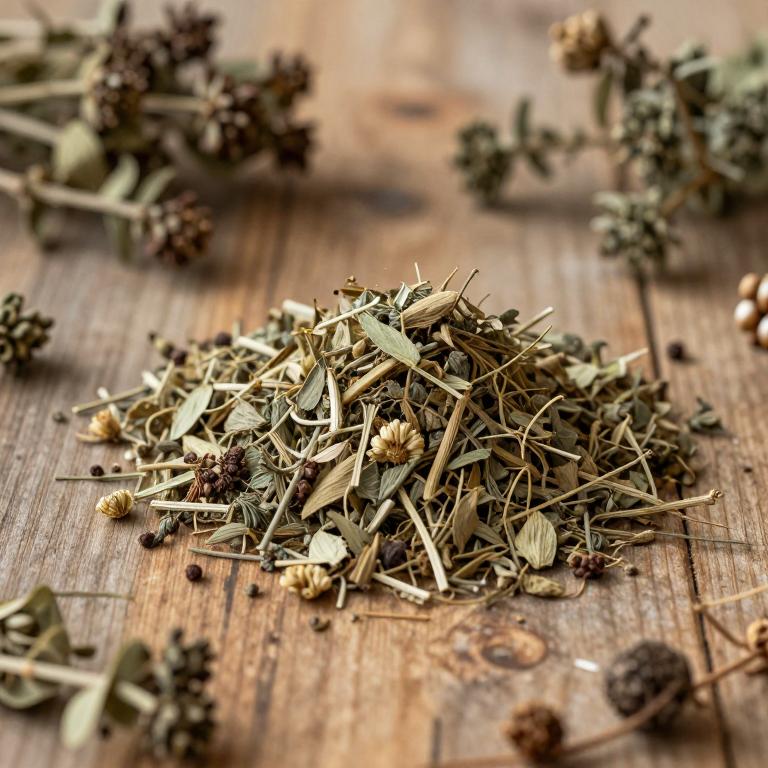
Names and Synonyms
Common Names
- Indian Ipecac
- antamul
Scientific Names
Accepted name
Vincetoxicum indicumSynonyms
- Tylophora indica
Sources: Wikidata, Catalogue of Life
Taxonomical Classification
This plant, known scientifically as Vincetoxicum indicum, belongs to the kingdom Plantae and the phylum Streptophyta. Within the class Equisetopsida and subclass Magnoliidae, it is categorized under the order Gentianales. Finally, it is classified under the family Apocynaceae within the genus Vincetoxicum.
| Rank | Classification |
|---|---|
| Kingdom | Plantae |
| Phylum | Streptophyta |
| Class | Equisetopsida |
| Subclass | Magnoliidae |
| Order | Gentianales |
| Family | Apocynaceae |
| Genus | Vincetoxicum |
Sources: The World Checklist of Vascular Plants (WCVP)
Distribution
This plant exhibits a diverse geographical distribution spanning across several key regions. Within the Indian Subcontinent, it can be found growing in the state of Assam and throughout Bangladesh. Its presence also extends significantly into the Western Indian Ocean islands. Specifically, it is documented in the island nations of Mauritius and the Seychelles. Additionally, the species is known to inhabit the island of Réunion within the same oceanic region.
| Region | Area |
|---|---|
| Western Indian Ocean | Mauritius |
| Western Indian Ocean | Réunion |
| Western Indian Ocean | Seychelles |
| Indian Subcontinent | Assam |
| Indian Subcontinent | Bangladesh |
| Indian Subcontinent | India |
| Indian Subcontinent | Laccadive Is. |
| Indian Subcontinent | Sri Lanka |
| Indo-China | Andaman Is. |
| Indo-China | Cambodia |
Sources: The World Checklist of Vascular Plants (WCVP)
Botanical Identification
Morphology
The morphology of Vincetoxicum indicum is characterized by its growth form as a non-woody herb that functions as an obligatory vine. This plant typically reaches an average height of 1.5 m and exhibits a climbing habit as a liana to navigate its environment. It is a terrestrial species, meaning it is neither aquatic nor an epiphyte, growing independently in its habitat without being a parasite or relying on other plants for structural support through epiphytic mechanisms.
- Aquatic :
- terrestrial
- Climber :
- vine
- Climber :
- obligatory
- Epiphyte :
- terrestrial
- Growth form :
- herb
- Parasite :
- independent
- Plant height mean:
- 1.5 m
- Woodiness :
- non-woody
Physiology
The physiology of Vincetoxicum indicum is characterized by complex metabolic processes geared toward survival in diverse ecological niches, involving specialized mechanisms for nutrient uptake and secondary metabolite synthesis. As a perennial herb, its physiological framework relies on efficient photosynthetic pathways to drive biomass production, supported by a robust vascular system that facilitates the translocation of water and minerals. Regarding its interaction with soil nutrients, the plant does not function as a nitrogen fixer; it lacks the symbiotic relationship with diazotrophic bacteria, such as Rhizobium, required to convert atmospheric nitrogen into ammonia. Consequently, its nitrogen acquisition is strictly dependent on the uptake of nitrates and ammonium ions present in the soil through its root system. This metabolic dependency dictates its growth patterns and nutritional requirements within its habitat.
- Nitrogen fixer :
- no
Sources: Global Inventory of Floras and Traits (GIFT)
Plant Parts
Vincetoxicum indicum has 1 reported plant parts identified across 2 scientific publications and several other databases that are studied for medicinal purposes. The most consistently reported plant part include leaf.
| Plant part | Supporting sources | Consensus |
|---|---|---|
| Leaf | 2 supporting sources | ★☆☆☆☆ |
Leaf
- Planta
- Biochimica et biophysica acta. Molecular and cell biology of lipids
Chemicals
Vincetoxicum indicum has 25 reported phytochemicals identified across 2 scientific publications and several other databases. The most consistently reported chemicals include Tylophorine, Tylophorinidine, TYLOPHORININE, Indole-3-butyric acid, Lupeol.
| Chemical | Supporting sources | Consensus |
|---|---|---|
| Tylophorine | 5 supporting sources | ★★★☆☆ |
| Tylophorinidine | 4 supporting sources | ★★☆☆☆ |
| TYLOPHORININE | 3 supporting sources | ★★☆☆☆ |
| Indole-3-butyric acid | 2 supporting sources | ★☆☆☆☆ |
| Lupeol | 2 supporting sources | ★☆☆☆☆ |
| indole-3-acetic acid | 2 supporting sources | ★☆☆☆☆ |
| quercetin | 2 supporting sources | ★☆☆☆☆ |
| (-)-Tylophorine | 1 supporting sources | ★☆☆☆☆ |
| 2-isopentyladenine | 1 supporting sources | ★☆☆☆☆ |
| 6-Benzyladenine | 1 supporting sources | ★☆☆☆☆ |
Tylophorine
- Dr. Duke
- Plant cell reports
- Planta
- 3 Biotech
- Biochimica et biophysica acta. Molecular and cell biology of lipids
Tylophorinidine
- Dr. Duke
- 3 Biotech
- Biochimica et biophysica acta. Molecular and cell biology of lipids
- Plants (Basel, Switzerland)
TYLOPHORININE
- Plants (Basel, Switzerland)
- 3 Biotech
- Biochimica et biophysica acta. Molecular and cell biology of lipids
Indole-3-butyric acid
- Physiology and molecular biology of plants : an international journal of functional plant biology
- PloS one
Lupeol
- Natural product research
- Plants (Basel, Switzerland)
indole-3-acetic acid
- Physiology and molecular biology of plants : an international journal of functional plant biology
- Plant cell reports
quercetin
- Computers in biology and medicine
- Plants (Basel, Switzerland)
(-)-Tylophorine
- Plants (Basel, Switzerland)
2-isopentyladenine
- Plant cell reports
6-Benzyladenine
- Plant cell reports
Activities
Vincetoxicum indicum has 29 reported activities identified across 2 scientific publications and several other databases. The most consistently reported activities include Antispasmodic, Amebicide, Antiallergic, Antianaphylactic, Antiarthritic.
| Activity | Supporting sources | Consensus |
|---|---|---|
| Antispasmodic | 2 supporting sources | ★☆☆☆☆ |
| Amebicide | 1 supporting sources | ★☆☆☆☆ |
| Antiallergic | 1 supporting sources | ★☆☆☆☆ |
| Antianaphylactic | 1 supporting sources | ★☆☆☆☆ |
| Antiarthritic | 1 supporting sources | ★☆☆☆☆ |
| Antiasthmatic | 1 supporting sources | ★☆☆☆☆ |
| Anticancer | 1 supporting sources | ★☆☆☆☆ |
| Antiedemic | 1 supporting sources | ★☆☆☆☆ |
| Antifeedant | 1 supporting sources | ★☆☆☆☆ |
| Antihistaminic | 1 supporting sources | ★☆☆☆☆ |
Antispasmodic
- Dr. Duke
- The British homoeopathic journal
Amebicide
- Dr. Duke
Antiallergic
- Dr. Duke
Antianaphylactic
- Dr. Duke
Antiarthritic
- Dr. Duke
Antiasthmatic
- Dr. Duke
Anticancer
- Biochimica et biophysica acta. Molecular and cell biology of lipids
Antiedemic
- Dr. Duke
Antifeedant
- Dr. Duke
Antihistaminic
- Dr. Duke
Preparations
Vincetoxicum indicum has 3 reported preparations identified across 2 scientific publications and several other databases. The most consistently reported preparations include ethanolic extract, mother tincture, stem cuttings.
| Preparation | Supporting sources | Consensus |
|---|---|---|
| Ethanolic extract | 1 supporting sources | ★☆☆☆☆ |
| Mother tincture | 1 supporting sources | ★☆☆☆☆ |
| Stem cuttings | 1 supporting sources | ★☆☆☆☆ |
Ethanolic extract
- Journal of ethnopharmacology
Mother tincture
- The British homoeopathic journal
Stem cuttings
- Physiology and molecular biology of plants : an international journal of functional plant biology