white swallowwort
Vincetoxicum hirundinaria · Accepted scientific name
Scientific literature: Very Sparse (5 studies) · ★☆☆☆☆
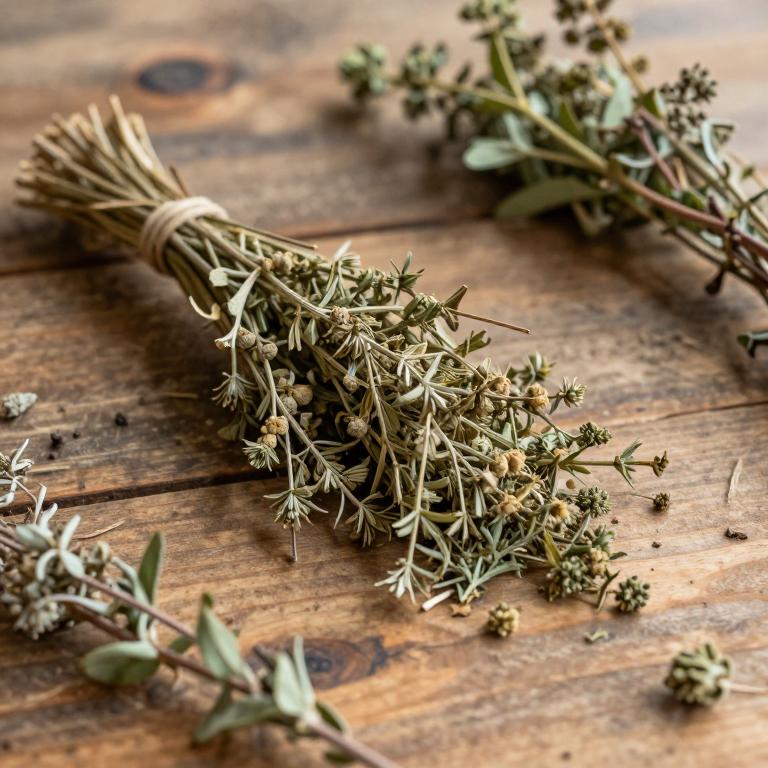
White swallowwort, scientifically known as Vincetoxicum hirundiinaria, is a perennial herbaceous plant native to various temperate regions. Often recognized by its clusters of small, fragrant, greenish-white flowers, it belongs to the Apocynaceae family. While historically noted in traditional contexts, its complex chemical profile requires careful study and caution.
Names and Synonyms
Common Names
- white swallowwort
- German ipecac
- swallowwort
- Swallow-wort
- white swallow-wort
- common vincetoxicum
Scientific Names
Accepted name
Vincetoxicum hirundinariaSynonyms
- Alexitoxicon vincetoxicum
- Cynanchum vincetoxicum
- Asclepias vincetoxicum
Regional and Traditional Names
Spanish:
- Cynanchum vincetoxicum var. vincetoxicum
- Cynanchum luteum
- Cynanchum vincetoxicum var vincetoxicum
- Centósigo
- Centosigo
- Vencetosigo
- Vincetoxico
- Cynanchum vincetoxicum
- Vencetorigo
- Pimiento de monte
- Vincetosigo
- Vincetósigo
- Antitoxicum officinale
- Mataveneno
- Cynanchum laxum
- Matatosigo
- vencetósigo
- vence-veneno
- vincetóxico
- hirundinaria
- matatósigo
- centósigo
- hirundinaria
- matatósigo
- mataveneno
- pimiento de monte
- vence-veneno
- vencetorigo
- vencetosigo
- vencetósigo
- vincetósigo
- vincetóxico
German:
- Schwalbenwurz
- Sankt-Lorenzkraut
- Sankt-Lorenz-Wurzel
- Weiße Schwalbenwurz
- dompte-venin
- weiße Schwalbenwurz
- Artengruppe Schwalbenwurz
- Schwalbenwurz
- Sankt-Lorenz-Wurzel
- Sankt-Lorenzkraut
French:
- Dompte-venin
- Dompte-venin officinal
- dompte-venin
- dompte-venin officinal
Sources: Wikidata, Catalogue of Life
Taxonomical Classification
This plant belongs to the kingdom Plantae and the phylum Streptophyta, falling under the class Equisetopsida and subclass Magnoliidae. Within the order Gentianales, it is classified under the family Apocynaceae. It is specifically identified by its genus, Vincetoxicum, and its species name, Vincetoxicum hirundinaria.
| Rank | Classification |
|---|---|
| Kingdom | Plantae |
| Phylum | Streptophyta |
| Class | Equisetopsida |
| Subclass | Magnoliidae |
| Order | Gentianales |
| Family | Apocynaceae |
| Genus | Vincetoxicum |
Sources: The World Checklist of Vascular Plants (WCVP)
Distribution
This plant exhibits a specific distribution pattern across several regions of the European continent. In Northern Europe, its presence is documented in Denmark, Finland, Norway, and Sweden. The species also extends its range into Middle Europe, where it can be found in Austria. This distribution highlights a preference for both Scandinavian territories and Central European landscapes. Consequently, its geographical footprint spans a significant portion of the northern and central latitudes.
| Region | Area |
|---|---|
| Northern Europe | Denmark |
| Northern Europe | Finland |
| Northern Europe | Norway |
| Northern Europe | Sweden |
| Middle Europe | Austria |
| Middle Europe | Belgium |
| Middle Europe | Czechia-Slovakia |
| Middle Europe | Germany |
| Middle Europe | Hungary |
| Middle Europe | Netherlands |
Sources: The World Checklist of Vascular Plants (WCVP)
Botanical Identification
Ecology
The ecology of Vincetoxicum hirundinaria is characterized by its preference for specific geological substrates and high-altitude environments. This species is typically found colonizing calcareous rocks, which suggests a specialized niche within limestone-rich or alkaline terrains. Its distribution is strictly confined to high-elevation zones, occupying a vertical range that begins at 2,100 m AMSL and extends up to a maximum of 3,700 m AMSL. This altitudinal profile indicates an adaptation to alpine or subalpine conditions, where it must withstand the unique climatic pressures associated with such significant elevations.
- Elevational range max:
- 3700 m AMSL
- Elevational range min:
- 2100 m AMSL
- Habitat :
- CALCAREOUS ROCKS
Life history
The life history of Vincetoxicum hirundinaria is characterized by its status as a perennial plant, allowing it to persist through multiple growing seasons. It functions as a hemicryptophyte, a life form where the perennating buds are located at the soil surface, protected by leaf litter or soil. The plant exhibits a deciduous nature, shedding its foliage annually as it undergoes a seasonal dormancy period.
- Deciduousness :
- deciduous
- Life form :
- hemicryptophyte
- Lifecycle :
- perennial
Morphology
The morphology of Vincetoxicum hirundinaria is characterized by its growth form as a non-woody herb, specifically classified as a forb. It functions as an independent organism, neither acting as a parasite nor an epiphyte, and maintains a strictly terrestrial habitat. The plant exhibits an erect shoot orientation and is self-supporting rather than acting as a liana or vine. In terms of stature, it typically reaches a mean height of 0.75 m, though individual specimens may vary in size, ranging from a minimum height of 0.2 m to a maximum height of 1.2 m.
- Aquatic :
- terrestrial
- Climber :
- self-supporting
- Epiphyte :
- terrestrial
- Growth form :
- herb
- Growth form :
- forb
- Parasite :
- independent
- Plant height max:
- 1.2 m
- Plant height mean:
- 0.75 m
- Plant height min:
- 0.2 m
- Shoot orientation :
- erect
- Woodiness :
- non-woody
Physiology
The physiology of Vincetoxicum hirundinaria is characterized by a C3 photosynthetic pathway, a common metabolic strategy for carbon fixation in many temperate plant species. The plant exhibits a non-carnivorous nutritional strategy, relying on autotrophic processes rather than the capture of prey for nitrogen. Morphologically, its foliage is defined by a mean leaf size of 15.135 cm², which contributes to a relatively high Specific Leaf Area (SLA) with a mean value of 536 cm²/g, suggesting a leaf structure optimized for efficient light interception and gas exchange.
- Carnivory :
- non-carnivorous
- Leaf size mean:
- 15.135 cm²
- Photosynthetic pathway :
- C3
- Specific Leaf Area (SLA) mean:
- 536 cm²/g
Reproduction
The reproduction of Vincetoxicum hirundinaria is a complex process characterized by sexual reproduction, as both asexual reproduction and self-fertilization are absent. The flowering period typically begins in May and continues through August. The plant utilizes a biotic pollination syndrome, specifically relying on insects, with flies identified as a key pollinator group. Once fertilization occurs, the plant produces fruit in the form of a capsule. This capsule is dehiscent, meaning it opens at maturity to release its seeds. The seeds themselves are quite small, with a mean mass of approximately 0.00730725 g, ranging from a minimum of 0.00675 g to a maximum of 0.007633 g. Following release, the plant employs an anemochorous dispersal syndrome, utilizing the wind to transport its seeds to new locations.
- Dehiscence :
- dehiscent
- Dispersal syndrome :
- anemochorous
- Flowering time :
- May
- Flowering time :
- Aug
- Fruit type :
- capsule
- Pollination syndrome :
- insect
- Pollination syndrome :
- fly
- Pollination syndrome :
- biotic
- Reproduction asexual :
- absent
- Seed mass max:
- 0.007633 g
- Seed mass mean:
- 0.00730725 g
- Seed mass min:
- 0.00675 g
- Self fertilization :
- absent
Sources: Global Inventory of Floras and Traits (GIFT)
Chemicals
Vincetoxicum hirundinaria has 3 reported phytochemicals identified across 0 scientific publications and several other databases. The most consistently reported chemicals include (-)-(R)-13aalpha-Secoantofine, Plant Sterols, hancokinol.
| Chemical | Supporting sources | Consensus |
|---|---|---|
| (-)-(R)-13aalpha-Secoantofine | 1 supporting sources | ★☆☆☆☆ |
| Plant Sterols | 1 supporting sources | ★☆☆☆☆ |
| hancokinol | 1 supporting sources | ★☆☆☆☆ |
(-)-(R)-13aalpha-Secoantofine
- Journal of natural products
Plant Sterols
- Fitoterapia
hancokinol
- Fitoterapia