Vigna acuminata
Vigna luteola · Accepted scientific name
Scientific literature: Very Sparse (2 studies) · ★☆☆☆☆
Vigna acuminata, scientifically known as Vigna luteola, is a versatile climbing legume valued for its significant therapeutic potential. Often found in tropical regions, this plant is rich in bioactive compounds. It is traditionally utilized in various medicinal practices to treat ailments ranging from inflammation to digestive disorders and skin conditions.
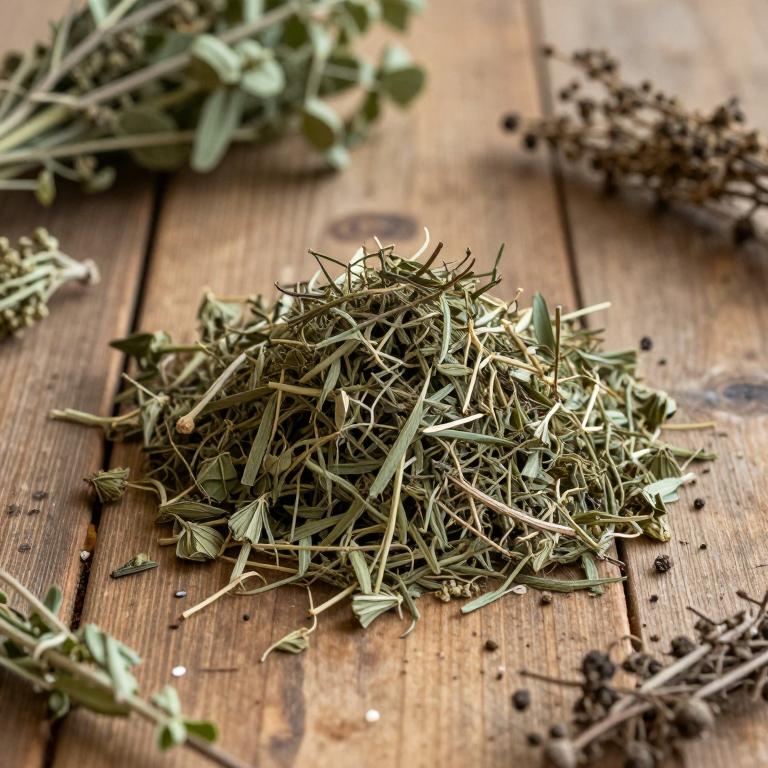
Names and Synonyms
Common Names
- Hairypod Cowpea
- Akwari
- Dalrymple Vigna
- Kashilka
- Lubiya Tajyib
- Mare
- Wild Cowpea
Scientific Names
Accepted name
Vigna luteolaSynonyms
- Dolichos helicopus
- Vigna luteola var. villosa
- Vigna villosa f. violacea
- Scytalis helicopus var. major
- Scytalis helicopus var. minor
- Dolichos gangeticus
- Dolichos luteolus
- Dolichos mexicanus
- Dolichos niloticus
- Dolichos repens
- Vigna longepedunculata
- Lablab javanicus
- Vigna brasiliensis
- Vigna brachystachys
- Phasellus violaceus
- Calopogonium pedunculatum
- Phaseolus marinus
- Scytalis helicopus
- Phaseolus luteolus
- Vigna repens var. luteola
- Vigna repens var. angustifolia
- Vigna gangetica
- Dolichos glycinoides
- Vigna repens var. glabra
- Vigna repens var. villosa
- Vigna helicopus
- Vigna luteola var. angustifolia
- Vigna glabra var. angustifolia
- Vigna hirsuta
- Vigna holstii
- Vigna nilotica
- Vigna nigerica
- Vigna bukobensis
- Vigna acuminata
- Vigna villosa
Regional and Traditional Names
Spanish:
- Frijol Cimarrón
- Porotillo
French:
- Antaka
- Famehifary
- Gilibande
- Goko
- Indola a kwakwa
- Ka vuhivahi
- Kavuhivuhi
- Masheke
- Mugulula
- Telourayy
- Toshimbo-shimbo
- Umrakuku
- Vahipoko
- Vahisanjy
- Pois jaune
Sources: Wikidata, Catalogue of Life
Taxonomical Classification
This plant belongs to the kingdom Plantae and is classified within the phylum Streptophyta and the class Equisetopsida. Following its placement in the subclass Magnoliidae and the order Fabales, it is categorized under the family Fabaceae. Ultimately, it is identified by the genus Vigna, specifically as the species Vigna luteola.
| Rank | Classification |
|---|---|
| Kingdom | Plantae |
| Phylum | Streptophyta |
| Class | Equisetopsida |
| Subclass | Magnoliidae |
| Order | Fabales |
| Family | Fabaceae |
| Genus | Vigna |
Sources: The World Checklist of Vascular Plants (WCVP)
Distribution
This plant exhibits a wide geographical distribution spanning across several regions of the African continent. In Northern Africa, its presence is specifically noted within the borders of Egypt. Moving toward West Tropical Africa, the species can be found in the nation of Benin. It also thrives in the West Tropical African territories of Burkina and Ghana. Finally, its range extends further west to include the country of Guinea-Bissau.
| Region | Area |
|---|---|
| Northern Africa | Egypt |
| West Tropical Africa | Benin |
| West Tropical Africa | Burkina |
| West Tropical Africa | Ghana |
| West Tropical Africa | Guinea-Bissau |
| West Tropical Africa | Guinea |
| West Tropical Africa | Ivory Coast |
| West Tropical Africa | Liberia |
| West Tropical Africa | Niger |
| West Tropical Africa | Senegal |
Sources: The World Checklist of Vascular Plants (WCVP)
Botanical Identification
Ecology
The ecology of Vigna luteola is characterized by its preference for riverine habitats, where it thrives in the moisture-rich environments typically found along the banks of rivers and watercourses. This species exhibits a broad altitudinal distribution, occupying a wide ecological gradient that begins at sea level (0 m AMSL) and extends up to a maximum elevation of 1600 m AMSL. This extensive elevational range allows the plant to adapt to diverse climatic conditions ranging from lowland tropical zones to higher-altitude riparian ecosystems.
- Elevational range max:
- 1600 m AMSL
- Elevational range min:
- 0 m AMSL
- Habitat :
- riverine
Life history
The life history of Vigna luteola is characterized by a versatile lifecycle that can be described as perennial, though it exhibits significant adaptability across different environmental conditions. In terms of its biological structure and survival strategy, the plant manifests different life forms depending on its ecological context; it can function as a therophyte, completing its life cycle through seeds, or exhibit characteristics of a phanerophyte.
- Life form :
- phanerophyte
- Life form :
- therophyte
- Lifecycle :
- perennial
Morphology
The morphology of Vigna luteola is characterized by its growth form as a non-woody herb and forb. It functions as an obligatory climber, specifically exhibiting a vine habit, and is an independent organism rather than a parasite. This terrestrial species is not an epiphyte, maintaining a strictly land-based existence. In terms of stature, the plant exhibits significant variability in height, with a minimum recorded measurement of 0.3 m, a maximum of 1.51 m, and a mean plant height of approximately 3 m.
- Aquatic :
- terrestrial
- Climber :
- vine
- Climber :
- obligatory
- Epiphyte :
- terrestrial
- Growth form :
- herb
- Growth form :
- forb
- Parasite :
- independent
- Plant height max:
- 1.51 m
- Plant height mean:
- 3 m
- Plant height min:
- 0.3 m
- Woodiness :
- non-woody
Physiology
The physiology of Vigna luteola is characterized by a C3 photosynthetic pathway, which dictates its carbon fixation processes and metabolic efficiency. The plant exhibits significant morphological variability in its foliar structures, with leaf lengths ranging from a minimum of 2.5 cm to a maximum of 10 cm. Correspondingly, the leaf width varies from a minimum of 0.4 cm to a maximum of 5 cm. Furthermore, the plant plays a vital role in nutrient cycling through its ability to function as a nitrogen fixer, utilizing symbiotic relationships to enhance soil fertility.
- Leaf length max:
- 10 cm
- Leaf length min:
- 2.5 cm
- Leaf width max:
- 5 cm
- Leaf width min:
- 0.4 cm
- Nitrogen fixer :
- yes
- Photosynthetic pathway :
- C3
Reproduction
The reproduction of Vigna luteola is characterized by the development of fruit in the form of a pod, which serves as the vessel for its seeds. These fruits are dehiscent, meaning they split open at maturity to facilitate the release of the offspring. The seeds themselves exhibit a relatively small mass, with a mean weight of approximately 0.0278 g, ranging from a minimum of 0.0246 g to a maximum of 0.03145 g. Regarding the movement of its progeny, the plant utilizes multiple dispersal syndromes, specifically employing hydrochorous mechanisms—where water acts as the primary vector—alongside autochorous processes, which involve self-dispersal mechanisms to spread seeds away from the parent plant.
- Dehiscence :
- dehiscent
- Dispersal syndrome :
- hydrochorous
- Dispersal syndrome :
- autochorous
- Fruit type :
- pod
- Seed mass max:
- 0.03145 g
- Seed mass mean:
- 0.027813333 g
- Seed mass min:
- 0.0246 g
Sources: Global Inventory of Floras and Traits (GIFT)
Chemicals
Vigna luteola has 2 reported phytochemicals identified across 0 scientific publications and several other databases. The most consistently reported chemicals include kaempferol, quercetin.
| Chemical | Supporting sources | Consensus |
|---|---|---|
| kaempferol | 1 supporting sources | ★☆☆☆☆ |
| quercetin | 1 supporting sources | ★☆☆☆☆ |
kaempferol
- Phytochemistry
quercetin
- Phytochemistry