vetches
Vicia · Accepted scientific name
Scientific literature: Very Sparse (9 studies) · ★☆☆☆☆
Vetches, scientifically known as Vicia, is a diverse genus of herbaceous plants within the legume family. Renowned for their nitrogen-fixing capabilities, these plants serve vital roles in soil enrichment and sustainable agriculture. Many species also possess unique medicinal properties, offering potential therapeutic benefits in traditional and modern herbal medicine.
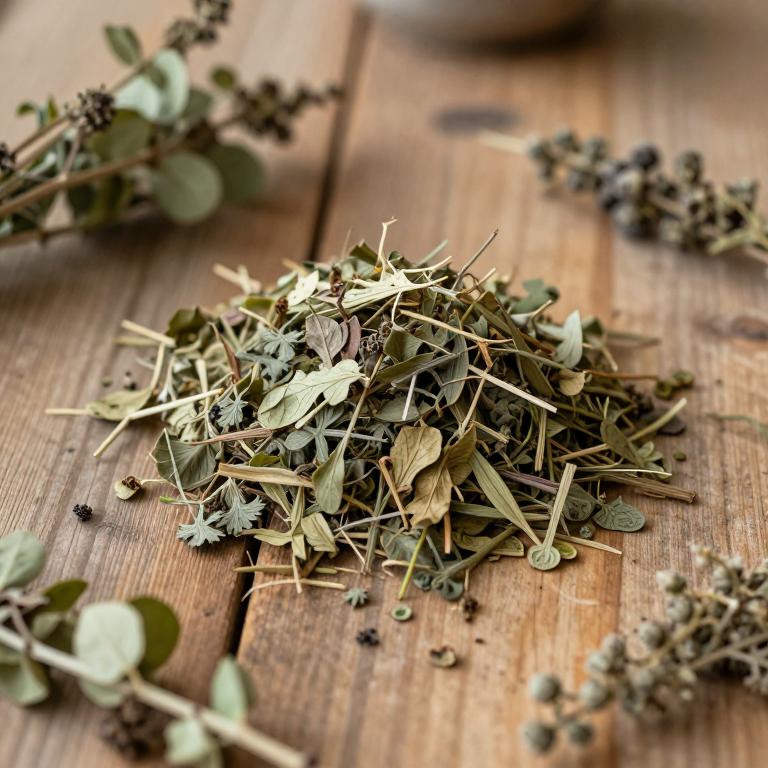
Names and Synonyms
Common Names
- vetch
- Vetches
- lentils
Scientific Names
Accepted name
ViciaSynonyms
- Ervilia
- Ervum
- Coppoleria
- Parallosa
- Bona
- Sellunia
- Wiggersia
- Rhynchium
- Tuamina
- Endiusa
- Lens
- Orobella
- Atossa
- Abacosa
- Lentilla
- Swantia
- Vicioides
- Hypechusa
- Vicilla
- Cujunia
- Anatropostylia
- Faba
- Arachus
Regional and Traditional Names
German:
- Wicken
- Linse
- Wicke
- Wicken
French:
- Faba
- Vesce
- vesce
- vesces
Sources: Wikidata, Catalogue of Life
Taxonomical Classification
This plant belongs to the kingdom Plantae and the phylum Streptophyta, situated within the class Equisetopsida and subclass Magnoliidae. It is further classified under the order Fabales and the family Fabaceae. Ultimately, it is identified by the genus Vicia.
| Rank | Classification |
|---|---|
| Kingdom | Plantae |
| Phylum | Streptophyta |
| Class | Equisetopsida |
| Subclass | Magnoliidae |
| Order | Fabales |
| Family | Fabaceae |
| Genus | Vicia |
Sources: The World Checklist of Vascular Plants (WCVP)
Distribution
This plant exhibits a specific distribution pattern concentrated within the regions of Northern Europe. Its presence is documented across various island territories, including the Faroe Islands and Iceland. It can also be found growing throughout the landscapes of Great Britain. Furthermore, the species inhabits the northern territories of Denmark and Finland. This collection of locations highlights its preference for the unique climates found in the northernmost reaches of the continent.
| Region | Area |
|---|---|
| Northern Europe | Denmark |
| Northern Europe | Finland |
| Northern Europe | Føroyar |
| Northern Europe | Great Britain |
| Northern Europe | Iceland |
| Northern Europe | Ireland |
| Northern Europe | Norway |
| Northern Europe | Svalbard |
| Northern Europe | Sweden |
| Middle Europe | Austria |
Sources: The World Checklist of Vascular Plants (WCVP)
Chemicals
Vicia has 7 reported phytochemicals identified across 0 scientific publications and several other databases. The most consistently reported chemicals include ABA, Ba(2+), Ca(2+), Cl(-), K(+).
| Chemical | Supporting sources | Consensus |
|---|---|---|
| ABA | 1 supporting sources | ★☆☆☆☆ |
| Ba(2+) | 1 supporting sources | ★☆☆☆☆ |
| Ca(2+) | 1 supporting sources | ★☆☆☆☆ |
| Cl(-) | 1 supporting sources | ★☆☆☆☆ |
| K(+) | 1 supporting sources | ★☆☆☆☆ |
| K+ | 1 supporting sources | ★☆☆☆☆ |
| alpha-Dendrotoxin | 1 supporting sources | ★☆☆☆☆ |
ABA
- Proceedings of the National Academy of Sciences of the United States of America
Ba(2+)
- Proceedings of the National Academy of Sciences of the United States of America
Ca(2+)
- Proceedings of the National Academy of Sciences of the United States of America
Cl(-)
- Proceedings of the National Academy of Sciences of the United States of America
K(+)
- Proceedings of the National Academy of Sciences of the United States of America
K+
- The Journal of membrane biology
alpha-Dendrotoxin
- The Journal of membrane biology
Preparations
Vicia has 3 reported preparations identified across 0 scientific publications and several other databases. The most consistently reported preparations include extracts, germinated Vicia beans, juice.
| Preparation | Supporting sources | Consensus |
|---|---|---|
| Extracts | 1 supporting sources | ★☆☆☆☆ |
| Germinated vicia beans | 1 supporting sources | ★☆☆☆☆ |
| Juice | 1 supporting sources | ★☆☆☆☆ |
Extracts
- Poultry science
Germinated vicia beans
- Mutation research
Juice
- Chemistry & biodiversity