Hard Vetch
Vicia monantha · Accepted scientific name
Scientific literature: Very Sparse (1 studies) · ★☆☆☆☆
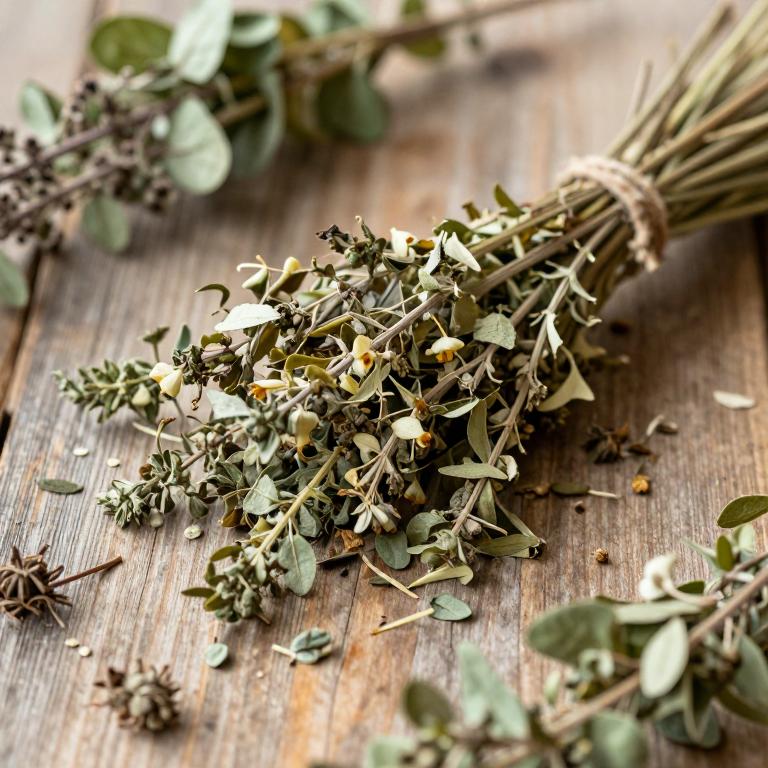
Hard Vetch, scientifically known as Vicia monantha, is a resilient legume native to various European landscapes. Characterized by its delicate purple flowers and climbing habit, this plant plays a vital role in nitrogen fixation, enhancing soil fertility. While primarily used in ecological restoration, it holds significant botanical interest.
Names and Synonyms
Common Names
- Hard Vetch
- bard vetch
- spurred vetch
- square-stem vetch
- barn vetch
- single-flowered vetch
Scientific Names
Accepted name
Vicia monanthaSynonyms
- Lathyrus monanthos
- Coppoleria monantha
- Vicia villosa subsp. monantha
Regional and Traditional Names
Spanish:
- algarroba
German:
- einblütige Wicke
French:
- vesce uniflore
Sources: Wikidata, Catalogue of Life
Taxonomical Classification
This plant belongs to the kingdom Plantae within the phylum Streptophyta and the class Equisetopsida. As a member of the subclass Magnoliidae and the order Fabales, it is classified under the family Fabaceae. Finally, it is specifically identified by the genus Vicia, which includes the species Vicia monantha.
| Rank | Classification |
|---|---|
| Kingdom | Plantae |
| Phylum | Streptophyta |
| Class | Equisetopsida |
| Subclass | Magnoliidae |
| Order | Fabales |
| Family | Fabaceae |
| Genus | Vicia |
Sources: The World Checklist of Vascular Plants (WCVP)
Distribution
This plant exhibits a diverse geographical range across several regions of Europe. In Middle Europe, its presence is specifically documented within Germany. Moving toward the Mediterranean, it can be found across various parts of Southwestern Europe. Within this southern region, the species inhabits France as well as the islands of Sardegna and the Baleares. Finally, its distribution extends through the mainland of Spain.
| Region | Area |
|---|---|
| Middle Europe | Germany |
| Southwestern Europe | Baleares |
| Southwestern Europe | France |
| Southwestern Europe | Sardegna |
| Southwestern Europe | Spain |
| Southeastern Europe | Greece |
| Southeastern Europe | Italy |
| Southeastern Europe | Sicilia |
| Northern Africa | Algeria |
| Northern Africa | Egypt |
Sources: The World Checklist of Vascular Plants (WCVP)
Botanical Identification
Ecology
The ecology of Vicia monantha is characterized by its ability to thrive across a diverse altitudinal gradient, occupying an elevational range that spans from 400 m AMSL to a maximum of 1300 m AMSL. This species demonstrates significant adaptability to various landscape types, frequently establishing itself within crop fields and occurring in sandy soil substrates.
- Elevational range max:
- 1300 m AMSL
- Elevational range min:
- 400 m AMSL
- Habitat :
- crop fields, sand
Life history
The life history of Vicia monantha is characterized by its classification as an annual species, completing its entire biological cycle from germination to seed production within a single growing season. In terms of its structural growth habit and survival strategy, the plant is categorized as a therophyte, meaning it exists primarily as a seed during unfavorable periods and relies on rapid seasonal development to reach maturity. This life form ensures its ability to exploit ephemeral resources and complete its reproductive phase before environmental conditions become limiting.
- Life form :
- therophyte
- Lifecycle :
- annual
Morphology
The morphology of Vicia monantha is characterized by its growth form as a non-woody herb and forb, typically exhibiting an independent lifestyle without being a parasite or an epiphyte, as it maintains a terrestrial habit. The plant is relatively small in stature, with a height ranging from a minimum of 0.05 m to a maximum of 0.3 m. Its shoots display an ascending orientation, and it functions as an obligatory climber to navigate its environment.
- Aquatic :
- terrestrial
- Climber :
- obligatory
- Epiphyte :
- terrestrial
- Growth form :
- herb
- Growth form :
- forb
- Parasite :
- independent
- Plant height max:
- 0.3 m
- Plant height min:
- 0.05 m
- Shoot orientation :
- ascending
- Woodiness :
- non-woody
Physiology
The physiology of Vicia monantha is characterized by a C3 photosynthetic pathway, a common metabolic strategy that facilitates carbon fixation under moderate environmental conditions. The plant's vegetative morphology is defined by its leaf dimensions, which exhibit significant variability to optimize light interception and gas exchange. Specifically, the leaves possess a length ranging from a minimum of 5 cm to a maximum of 7 cm, while their width is notably narrow, varying from a minimum of 0.1 cm to a maximum of 0.8 cm. These structural parameters suggest a specialized leaf architecture tailored to its specific ecological niche.
- Leaf length max:
- 7 cm
- Leaf length min:
- 5 cm
- Leaf width max:
- 0.8 cm
- Leaf width min:
- 0.1 cm
- Photosynthetic pathway :
- C3
Reproduction
The reproduction of Vicia monantha is characterized by a specific phenological cycle and distinct morphological traits. The flowering period for this species typically begins in April and concludes in February, representing a broad seasonal window. Once pollination is successful, the plant develops fruit in the form of a pod. These pods are dehiscence-type structures, meaning they split open at maturity to facilitate the dispersal of seeds. The seeds produced exhibit specific mass variations, with a mean seed mass of approximately 0.0306883335 g. Individual seed weights fluctuate within a range, reaching a minimum of 0.02341 g and a maximum of 0.0459 g.
- Dehiscence :
- dehiscent
- Flowering time :
- Apr
- Flowering time :
- Feb
- Fruit type :
- pod
- Seed mass max:
- 0.0459 g
- Seed mass mean:
- 0.0306883335 g
- Seed mass min:
- 0.02341 g
Sources: Global Inventory of Floras and Traits (GIFT)
Chemicals
Vicia monantha has 1 reported phytochemicals identified across 0 scientific publications and several other databases. The most consistently reported chemicals include Flavonoids.
| Chemical | Supporting sources | Consensus |
|---|---|---|
| Flavonoids | 1 supporting sources | ★☆☆☆☆ |
Flavonoids
- Scientific reports