cultivated lentil
Vicia lens · Accepted scientific name
Scientific literature: Very Extensive (783 studies) · ★★★★★
Cultivated lentil, scientifically known as Vicia lens, is a nutrient-dense legume revered for its exceptional medicinal properties. Rich in essential proteins, fiber, and vital antioxidants, it supports digestive health, stabilizes blood sugar, and promotes cardiovascular wellness. This versatile plant serves as a foundational superfood for holistic nutritional therapy.
- Family
- Fabaceae
- Native range
- Europe
- Parts used
- Seed
- Common names
- Cultivated Lentil · Lentil
- Scientific synonyms
- Lathyrus Lens · Lens Culinaris · 4 more
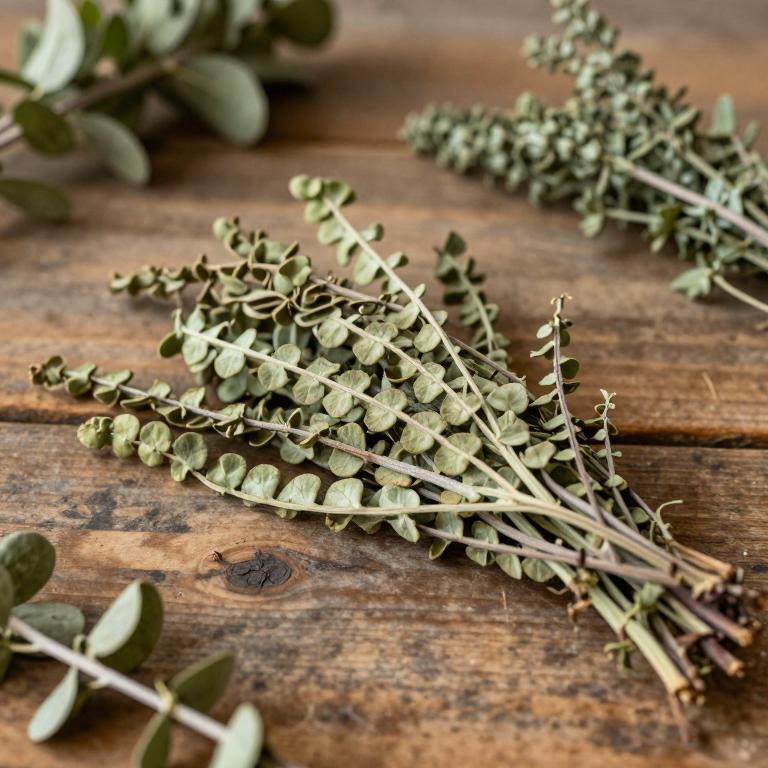
Names and Synonyms
Common Names
- cultivated lentil
- lentil
Scientific Names
Accepted name
Vicia lensSynonyms
- Lathyrus lens
- Lens culinaris
- Lentilla lens
- Orobus lens
- Ervum lens
- Cicer lens
Regional and Traditional Names
German:
- Küchen-Linse
French:
- lentille
- lentille cultivée
Sources: Wikidata, Catalogue of Life
Taxonomical Classification
This plant belongs to the kingdom Plantae and the phylum Streptophyta, falling under the class Equisetopsida and subclass Magnoliidae. It is classified within the order Fabales and the family Fabaceae. Ultimately, its taxonomic identity is defined by its placement in the genus Vicia.
| Rank | Classification |
|---|---|
| Kingdom | Plantae |
| Phylum | Streptophyta |
| Class | Equisetopsida |
| Subclass | Magnoliidae |
| Order | Fabales |
| Family | Fabaceae |
| Genus | Vicia |
Sources: The World Checklist of Vascular Plants (WCVP)
Distribution
This plant exhibits a wide distribution across several key regions of the European continent. In Northern Europe, its presence is documented in both Great Britain and Ireland. Moving toward Middle Europe, the species can be found growing in the landscapes of Austria. It also maintains a significant presence within the territories of Czechia-Slovakia. Finally, the plant is commonly distributed throughout Germany, completing its regional range.
| Region | Area |
|---|---|
| Northern Europe | Great Britain |
| Northern Europe | Ireland |
| Middle Europe | Austria |
| Middle Europe | Czechia-Slovakia |
| Middle Europe | Germany |
| Middle Europe | Hungary |
| Middle Europe | Switzerland |
| Southwestern Europe | Corse |
| Southwestern Europe | France |
| Southwestern Europe | Portugal |
Sources: The World Checklist of Vascular Plants (WCVP)
Botanical Identification
Ecology
The ecology of Vicia lens is defined by its broad altitudinal distribution across diverse mountainous terrains, allowing it to occupy various ecological niches within its habitat. This species demonstrates significant environmental plasticity, with an elevational range that spans from a minimum of 700 m AMSL to a maximum of 2800 m AMSL. The plant thrives across these varied vertical gradients, maintaining a mean elevation of approximately 2600 m AMSL, which suggests a strong ecological preference for high-altitude environments and alpine or sub-alpine zones. This wide vertical spread enables the species to adapt to varying temperature regimes, atmospheric pressures, and moisture levels characteristic of different mountain strata.
- Elevational range max:
- 2800 m AMSL
- Elevational range mean:
- 2600 m AMSL
- Elevational range min:
- 700 m AMSL
Life history
The life history of Vicia lens is characterized by its classification as an annual plant, meaning it completes its entire developmental cycle—from germination to seed production—within a single growing season. As a therophyte, its survival strategy relies on producing hardy seeds that remain dormant in the soil during unfavorable conditions, allowing the species to persist across seasons despite the absence of living above-ground structures. This life cycle ensures rapid colonization and reproduction, with the plant focusing its energy on quick growth and prolific seed dispersal to secure the next generation before the onset of environmental stress.
- Life form :
- therophyte
- Lifecycle :
- annual
Morphology
The morphology of Vicia lens is characterized by its growth form as a non-woody herb and forb. It is a terrestrial plant that functions as an independent organism, lacking parasitic or epiphytic tendencies. The plant exhibits a self-supporting climbing habit rather than being an obligatory or facultative liana, maintaining an erect shoot orientation. In terms of stature, the plant is relatively low-growing, with a height that typically ranges from a minimum of 0.15 m to a maximum of 0.75 m, resulting in an average plant height of approximately 0.3125 m.
- Aquatic :
- terrestrial
- Climber :
- self-supporting
- Epiphyte :
- terrestrial
- Growth form :
- herb
- Growth form :
- forb
- Parasite :
- independent
- Plant height max:
- 0.75 m
- Plant height mean:
- 0.3125 m
- Plant height min:
- 0.15 m
- Shoot orientation :
- erect
- Woodiness :
- non-woody
Physiology
The physiology of Vicia lens is characterized by a C3 photosynthetic pathway, which dictates its carbon fixation processes and metabolic efficiency. As a non-carnivorous species, it relies on standard autotrophic nutrient acquisition, though it possesses a specialized capacity for nitrogen fixation, allowing it to convert atmospheric nitrogen into a usable form. The vegetative structure features an alternate leaf arrangement, with individual leaves displaying an elliptic form. These leaves exhibit significant morphological variability in size, with lengths ranging from a minimum of 0.7 cm to a maximum of 2.5 cm, and widths spanning from 0.2 cm to 0.7 cm.
- Carnivory :
- non-carnivorous
- Leaf arrangement :
- alternate
- Leaf form :
- elliptic
- Leaf length max:
- 2.5 cm
- Leaf length min:
- 0.7 cm
- Leaf width max:
- 0.7 cm
- Leaf width min:
- 0.2 cm
- Nitrogen fixer :
- yes
- Photosynthetic pathway :
- C3
Reproduction
The reproduction of Vicia lens is primarily driven by sexual processes, as asexual reproduction is absent. The flowering period typically commences in June and concludes in July, producing white flowers that range in length from 0.4 cm to 0.9 cm. These flowers utilize a biotic pollination syndrome, specifically relying on insects to facilitate the transfer of pollen. Once fertilized—a process supported by the presence of self-fertilization—the plant develops a capsule-type fruit. These fruits vary in size, with lengths ranging from 0.6 cm to 2 cm and widths between 0.35 cm and 0.8 cm. The resulting seeds are characterized by a mean mass of approximately 0.035175 g (ranging from 0.0283 g to 0.0489 g) and a consistent volume of 36 mm³. Dispersal is achieved through an autochorous syndrome, where the plant utilizes internal mechanisms to distribute its seeds.
- Dispersal syndrome :
- autochorous
- Flower colour :
- white
- Flower length max:
- 0.9 cm
- Flower length min:
- 0.4 cm
- Flowering time :
- Jun
- Flowering time :
- Jul
- Fruit length max:
- 2 cm
- Fruit length min:
- 0.6 cm
- Fruit type :
- capsule
- Fruit width max:
- 0.8 cm
- Fruit width min:
- 0.35 cm
- Pollination syndrome :
- insect
- Pollination syndrome :
- biotic
- Reproduction asexual :
- absent
- Seed mass max:
- 0.0489 g
- Seed mass mean:
- 0.035175 g
- Seed mass min:
- 0.0283 g
- Seed volume max:
- 36 mm³
- Self fertilization :
- present
Sources: Global Inventory of Floras and Traits (GIFT)
Plant Parts
Vicia lens has 1 reported plant parts identified across 1 scientific publications and several other databases that are studied for medicinal purposes. The most consistently reported plant part include seed.
| Plant part | Supporting sources | Consensus |
|---|---|---|
| Seed | 1 supporting sources | ★☆☆☆☆ |
Seed
- The Journal of biological chemistry
Chemicals
Vicia lens has 157 reported phytochemicals identified across 1 scientific publications and several other databases. The most consistently reported chemicals include STARCH, methionine, Lectin, cystine, lysine.
| Chemical | Supporting sources | Consensus |
|---|---|---|
| STARCH | 5 supporting sources | ★★★☆☆ |
| methionine | 5 supporting sources | ★★★☆☆ |
| Lectin | 3 supporting sources | ★★☆☆☆ |
| cystine | 3 supporting sources | ★★☆☆☆ |
| lysine | 3 supporting sources | ★★☆☆☆ |
| riboflavin | 3 supporting sources | ★★☆☆☆ |
| AMYLOSE | 2 supporting sources | ★☆☆☆☆ |
| Ash | 2 supporting sources | ★☆☆☆☆ |
| FAT | 2 supporting sources | ★☆☆☆☆ |
| Flavonoids | 2 supporting sources | ★☆☆☆☆ |
STARCH
- Dr. Duke
- The American journal of clinical nutrition
- Die Naturwissenschaften
- The Journal of nutrition
- Archivos latinoamericanos de nutricion
methionine
- Dr. Duke
- Reproduction, nutrition, development
- Plant foods for human nutrition (Dordrecht, Netherlands)
- Archivos latinoamericanos de nutricion
- Annals of nutrition & metabolism
Lectin
- Proceedings of the National Academy of Sciences of the United States of America
- The Journal of biological chemistry
- Journal of biochemistry
cystine
- Dr. Duke
- Reproduction, nutrition, development
- Plant foods for human nutrition (Dordrecht, Netherlands)
lysine
- Dr. Duke
- Reproduction, nutrition, development
- Archivos latinoamericanos de nutricion
riboflavin
- Dr. Duke
- Zeitschrift fur Lebensmittel-Untersuchung und -Forschung
- Archivos latinoamericanos de nutricion
AMYLOSE
- Carbohydrate research
- Zeitschrift fur Ernahrungswissenschaft. Journal of nutritional sciences. Supplementa
Ash
- Dr. Duke
- Zeitschrift fur Lebensmittel-Untersuchung und -Forschung
FAT
- Dr. Duke
- Plant foods for human nutrition (Dordrecht, Netherlands)
Flavonoids
- Phytotherapy research : PTR
- Molecules (Basel, Switzerland)
Activities
Vicia lens has 540 reported activities identified across 1 scientific publications and several other databases. The most consistently reported activities include Antioxidant, Antispasmodic, 5-Alpha-Reductase-Inhibitor, 5-HETE-Inhibitor, ACE-Inhibitor.
| Activity | Supporting sources | Consensus |
|---|---|---|
| Antioxidant | 2 supporting sources | ★☆☆☆☆ |
| Antispasmodic | 2 supporting sources | ★☆☆☆☆ |
| 5-Alpha-Reductase-Inhibitor | 1 supporting sources | ★☆☆☆☆ |
| 5-HETE-Inhibitor | 1 supporting sources | ★☆☆☆☆ |
| ACE-Inhibitor | 1 supporting sources | ★☆☆☆☆ |
| Abortifacient | 1 supporting sources | ★☆☆☆☆ |
| Absorbent | 1 supporting sources | ★☆☆☆☆ |
| Acaricide | 1 supporting sources | ★☆☆☆☆ |
| Acarifuge | 1 supporting sources | ★☆☆☆☆ |
| Acidulant | 1 supporting sources | ★☆☆☆☆ |
Antioxidant
- Dr. Duke
- Food chemistry
Antispasmodic
- Dr. Duke
- Phytotherapy research : PTR
5-Alpha-Reductase-Inhibitor
- Dr. Duke
5-HETE-Inhibitor
- Dr. Duke
ACE-Inhibitor
- Dr. Duke
Abortifacient
- Dr. Duke
Absorbent
- Dr. Duke
Acaricide
- Dr. Duke
Acarifuge
- Dr. Duke
Acidulant
- Dr. Duke
Preparations
Vicia lens has 6 reported preparations identified across 1 scientific publications and several other databases. The most consistently reported preparations include An extract, Crude extract of Lens culinaris, cooked whole food grain legumes, lentil meal, protein concentrates.
| Preparation | Supporting sources | Consensus |
|---|---|---|
| An extract | 1 supporting sources | ★☆☆☆☆ |
| Crude extract of lens culinaris | 1 supporting sources | ★☆☆☆☆ |
| Cooked whole food grain legumes | 1 supporting sources | ★☆☆☆☆ |
| Lentil meal | 1 supporting sources | ★☆☆☆☆ |
| Protein concentrates | 1 supporting sources | ★☆☆☆☆ |
| Seed extracts | 1 supporting sources | ★☆☆☆☆ |
An extract
- Molecular medicine reports
Crude extract of lens culinaris
- Phytotherapy research : PTR
Cooked whole food grain legumes
- Archivos latinoamericanos de nutricion
Lentil meal
- Archivos latinoamericanos de nutricion
Protein concentrates
- Archivos latinoamericanos de nutricion
Seed extracts
- Biological chemistry Hoppe-Seyler